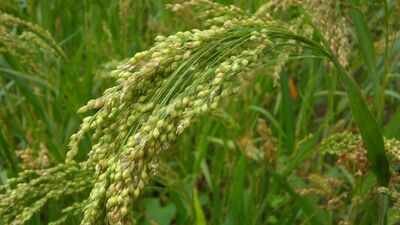
Seen from the air, Channel Country in outback Australia looks like a vast, living tapestry. A web of rivers and creeks fans out across more than 280,000 square kilometres of desert, creating one of the world’s last truly free‑flowing arid river systems. In the heart of this landscape, in southwest Queensland, live the Mithaka people.For at least 3,000 years, Mithaka ancestors built and maintained a sophisticated trade and exchange system that stretched across the continent. At the centre of their economy were plants. More than 200 species were used for food, medicine, tools, shelter and ceremony, reflecting an intimate, long‑term relationship with local ecosystems.One of those plants is channel millet (Echinochloa turneriana), a native grass that Mithaka people harvested for thousands of years. Now, a new paper published in the journal Nature Communications, has revealed that this seemingly modest desert plant carries a highly unusual genetic signature: it has 12 copies of each chromosome.Scientists say that this odd trait, combined with other features, is often associated with domestication—and may help the plant survive the boom‑and‑bust cycles of life in Channel Country.
Plants at the heart of Mithaka life
Australian archaeology has only recently begun to explore in detail how First Nations peoples managed and interacted with plants. In other parts of the world, genomic research has already transformed our understanding of ancient agriculture and plant use—from maize and beans in the Americas to rice and millet in Asia. Similar tools are now being used to understand how Aboriginal peoples shaped vegetation and food landscapes in Australia.Earlier genetic work has already produced striking insights. For example, studies in northeast New South Wales and southeast Queensland showed that Aboriginal communities deliberately spread black bean (Castanospermum australe), a nutritious native seed, beyond its natural range.
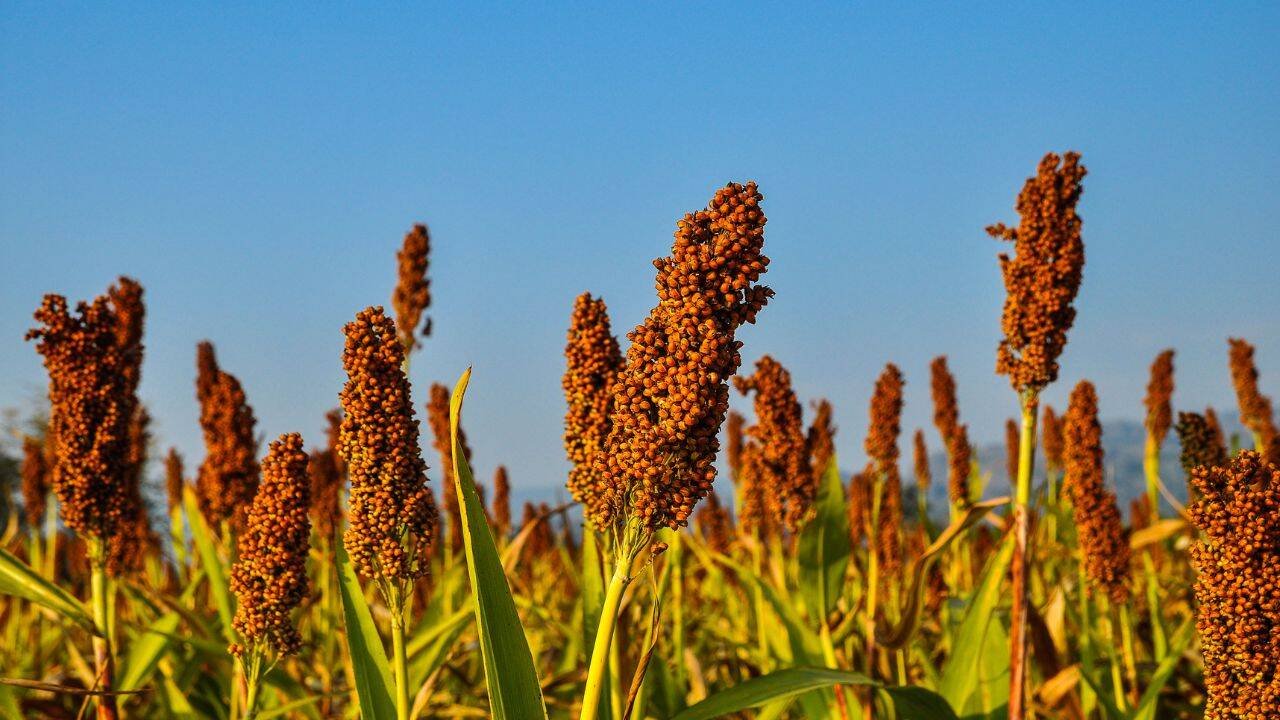
Representative image
For the Mithaka people, archaeology paints an equally rich picture. Previous research has documented hundreds of grinding stone quarries where seeds from native grasses, herbs, shrubs and trees were processed. These sites are connected across the landscape, forming a cultural network that reflects deep ecological knowledge and long‑term food planning. This landscape has recently been added to Australia’s National Heritage List, recognising its exceptional significance.
Channel millet: a flood-driven native grain
Channel millet is a robust native grass that can grow more than a metre tall. It flourishes after floods, carpeting river plains with dense fields of waving seed heads. At these times, it was a crucial seasonal food source for Aboriginal people.Historical observers noticed its abundance and use. In 1884, explorer Augustus Gregory reported “fields of 1,000 acres of millet” along the Cooper Creek floodplain and described people cutting the stalks halfway up. And early pastoralist and writer Alice Duncan‑Kemp described Aboriginal women processing “ugar” or “egar”, grass seeds resembling canary seed, along the Diamantina River. The new study builds on this historical and archaeological foundation by looking inside the plant itself, at its genome.
A genome unlike most plants
When researchers sequenced the DNA of channel millet, they expected complexity, but the results were still surprising. Many plants and animals, including humans, have two copies of each chromosome, one from each parent. Channel millet, by contrast, has 12 copies of every chromosome.This condition is called polyploidy, where an organism acquires multiple sets of chromosomes, often through events like chromosome duplication or hybridisation. Polyploidy is common in some domesticated crops like wheat, rice, and sugarcane. Each have multiple chromosome sets, which can contribute to larger grains, greater vigour, and improved resilience.Importantly, polyploidy itself is not proof of domestication. Nature has been producing polyploid plants for millions of years without human help. However, humans have learned to accelerate and exploit this trait, sometimes accidentally and sometimes deliberately, by encouraging chromosome doubling in crops to improve yield and hardiness.In channel millet, this unusually high chromosome number suggests the plant has evolved a powerful genetic toolkit to cope with its environment.
Surviving a boom-and-bust desert
Channel Country is defined by extremes. Periods of drought can last years, decimating plant populations. Then, floodwaters arrive, transforming dry riverbeds into flowing channels and filling floodplains with life.Channel millet appears to be finely tuned to this cycle as during extended dry spells, above‑ground plants largely disappear. The species survives as underground seeds, lying dormant. When floodwaters spread across the plain, those seeds germinate quickly, producing broad fields of grass in a short window of opportunity.Having 12 copies of each chromosome may help the plant endure these severe fluctuations. Polyploid plants often show: Enhanced vigour, greater tolerance to stress, more flexible responses to environmental change.In channel millet, extra chromosome sets likely provide genetic redundancy and diversity, making it easier for populations to bounce back after near‑total die‑offs, much like high‑performing hybrid crops do in agriculture.
Traits linked to domestication, without farms
Beyond the chromosome count, scientists have also noted other traits in channel millet that are often seen in domesticated grains like relatively large seeds, which are easier to collect and process; low shattering, meaning ripe seeds don’t easily fall off the plant on their own, making harvest more efficient.These features are common in crops that humans have selected over generations, such as wheat or barley. In those cases, people deliberately or unconsciously favoured plants that held onto their seeds longer, produced bigger grains, or were easier to harvest.In Channel Country, however, there is no evidence of formal “farming” in the modern sense. Instead, long‑term harvesting, seed processing, and possibly selective gathering by Aboriginal people may have influenced which channel millet plants thrived. The genetic pattern hints at a deep, subtle interaction between people and this native grass, one shaped by thousands of years of careful observation and use rather than plowed fields and fences.
Lessons for future foods
Today, Mithaka people are keen to learn more about plants such as channel millet and how past human interactions can inform future food systems. Native grains that were once central to Aboriginal economies are being revisited as potential climate‑resilient crops for modern Australia.The discovery that channel millet carries 12 chromosome copies and displays traits associated with domestication adds a new layer to this conversation. It suggests that native plants may hold hidden genetic strengths well suited to environments with extreme variability; long‑term Aboriginal plant use has likely shaped the traits of these species in ways science is only beginning to understand; and genomics, archaeology and Indigenous knowledge together can reveal new possibilities for sustainable, culturally grounded food futures.Seen from above, Channel Country is a mosaic of rivers and sand. Seen more closely, it is a living archive of human‑plant relationships stretching back millennia. In the tall grasses of channel millet and the stories of the Mithaka people, scientists are finding that the past may hold vital clues for how to feed ourselves in a changing climate.Thinking about this story, what interests you more: the way Aboriginal communities worked with native grains over thousands of years, or the idea that a desert grass with 12 chromosome copies might inspire future climate‑resilient crops?