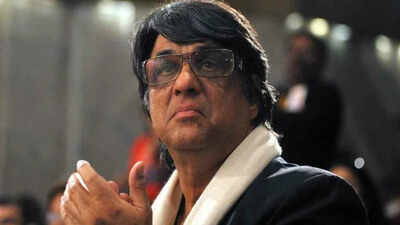
Actor-producer Mukesh Khanna has once again sparked a debate over India’s national anthem and national song. The actor, known for ‘Shaktimaan’ and ‘Mahabharat’, has reiterated his demand that ‘Vande Mataram’ should replace ‘Jana Gana Mana’ as the country’s national anthem. Mukesh Khanna has previously made similar remarks and has now repeated his position in a recent interaction, questioning the historical context of ‘Jana Gana Mana’ and arguing that ‘Vande Mataram’ should receive greater national prominence.
Mukesh Khanna questions Jana Gana Mana
Speaking to IANS, Khanna claimed that ‘Jana Gana Mana’ was written during British rule and connected its lyrics to the then British monarch George V.“Vande Mataram has been unnecessarily turned into a controversy. My comments about Jana Gana Mana have gone viral. But I reiterate that it cannot be my national anthem. It was written during the British era, when George Pancham (George V, the former king of the United Kingdom) was there, and India was under British rule. The words ‘Jana Gana Mana Adhinayak’ refer to the ruler and describe him as the one who determines India’s destiny,” he said.Khanna further questioned the interpretation of the song and said he believed ‘Vande Mataram’ was more closely associated with devotion to the motherland.“If we consider the literal meaning of these verses, it raises questions about whom the song is addressing. I believe Vande Mataram, which expresses devotion to the motherland, should be given greater national significance. We lived under British rule for many years, and even after independence, we continue to value English education more. India has its own rich traditions of education.”
Mukesh Khanna’s earlier claim about Queen Elizabeth
Khanna has also previously made a different claim about the person to whom he believes ‘Jana Gana Mana’ was dedicated. In an earlier interview, he had said the song was written as a tribute to Queen Elizabeth.“I said this three years ago: ‘Vande Mataram’ should be made a national anthem. ‘Jana Gana Mana’ is not the national anthem of our country. It was a tribute to Queen Elizabeth. Rabindranath Tagore wrote the song in praise of her,” he had said.That claim was widely challenged because Queen Elizabeth II was born in 1926, while ‘Jana Gana Mana’ was first publicly performed in 1911. Contemporary reports have also revisited Tagore’s historical explanations surrounding the song.
Khanna wants Vande Mataram to gain greater prominence
Khanna has said he wants ‘Vande Mataram’ to receive a more prominent position in national life. He also revealed that he has recorded his own version of the song.“I have recorded a Vande Mataram song for seven minutes which should become iconic,” he said in his earlier comments.His remarks come at a time when ‘Vande Mataram’ has received renewed attention in official national observances. Recent reports said the song was given the same legal protection as the national anthem under the Prevention of Insults to National Honour (Amendment) Bill, 2026.
Mukesh Khanna continues to make outspoken statements
Khanna has frequently attracted attention for his outspoken views on subjects ranging from the entertainment industry to social and political issues. His latest comments have once again placed him at the centre of a public debate, this time over the status and historical interpretation of India’s national anthem and national song.After Sharmila Tagore and Kangana Ranaut, Mukesh Khanna weighs in on the ‘Jana Gana Mana’ versus ‘Vande Mataram’ national anthem debate and questions its British-era origins: ‘Even after independence, we continue to value English education more’Actor-producer Mukesh Khanna has once again sparked a debate over India’s national anthem and national song. The actor, known for ‘Shaktimaan’ and ‘Mahabharat’, has reiterated his demand that ‘Vande Mataram’ should replace ‘Jana Gana Mana’ as the country’s national anthem. Mukesh Khanna has previously made similar remarks and has now repeated his position in a recent interaction, questioning the historical context of ‘Jana Gana Mana’ and arguing that ‘Vande Mataram’ should receive greater national prominence.
Mukesh Khanna questions Jana Gana Mana
Speaking to IANS, Khanna claimed that ‘Jana Gana Mana’ was written during British rule and connected its lyrics to the then British monarch George V.“Vande Mataram has been unnecessarily turned into a controversy. My comments about Jana Gana Mana have gone viral. But I reiterate that it cannot be my national anthem. It was written during the British era, when George Pancham (George V, the former king of the United Kingdom) was there, and India was under British rule. The words ‘Jana Gana Mana Adhinayak’ refer to the ruler and describe him as the one who determines India’s destiny,” he said.Khanna further questioned the interpretation of the song and said he believed ‘Vande Mataram’ was more closely associated with devotion to the motherland.“If we consider the literal meaning of these verses, it raises questions about whom the song is addressing. I believe Vande Mataram, which expresses devotion to the motherland, should be given greater national significance. We lived under British rule for many years, and even after independence, we continue to value English education more. India has its own rich traditions of education.”
Mukesh Khanna’s earlier claim about Queen Elizabeth
Khanna has also previously made a different claim about the person to whom he believes ‘Jana Gana Mana’ was dedicated. In an earlier interview, he had said the song was written as a tribute to Queen Elizabeth.“I said this three years ago: ‘Vande Mataram’ should be made a national anthem. ‘Jana Gana Mana’ is not the national anthem of our country. It was a tribute to Queen Elizabeth. Rabindranath Tagore wrote the song in praise of her,” he had said.That claim was widely challenged because Queen Elizabeth II was born in 1926, while ‘Jana Gana Mana’ was first publicly performed in 1911. Contemporary reports have also revisited Tagore’s historical explanations surrounding the song.
Khanna wants Vande Mataram to gain greater prominence
Khanna has said he wants ‘Vande Mataram’ to receive a more prominent position in national life. He also revealed that he has recorded his own version of the song.“I have recorded a Vande Mataram song for seven minutes which should become iconic,” he said in his earlier comments.His remarks come at a time when ‘Vande Mataram’ has received renewed attention in official national observances. Recent reports said the song was given the same legal protection as the national anthem under the Prevention of Insults to National Honour (Amendment) Bill, 2026.
Mukesh Khanna continues to make outspoken statements
Khanna has frequently attracted attention for his outspoken views on subjects ranging from the entertainment industry to social and political issues. His latest comments have once again placed him at the centre of a public debate, this time over the status and historical interpretation of India’s national anthem and national song.
More about the ‘Jana Gana Mana’ debate
The debate around ‘Vande Mataram’ has returned to the spotlight, particularly over its distinction from India’s National Anthem, ‘Jana Gana Mana’. Written by Bankim Chandra Chatterjee in the 1870s and included in ‘Anandamath’, the song became an important symbol of India’s freedom movement. While its opening stanzas celebrate the motherland, later verses invoke Hindu deities including Durga, Lakshmi and Saraswati.Veteran actor Sharmila Tagore recently expressed reservations about certain portions of the song, saying, “My point of view is that there are many religious people who believe in one single God, not many Gods. In ‘Vande Mataram’, there is a stanza which says that many Gods are mentioned in ‘Vande Mataram’.”
Kangana Ranaut responds to Sharmila Tagore
Sharmila’s remarks soon drew a response from actor and politician Kangana Ranaut. Sharing a video of the veteran actress’ interview on her Instagram Stories, Kangana said she respected Sharmila for openly expressing her reservations but questioned her interpretation of the song from an artistic perspective.“I appreciate that Sharmila ji has spoken about her reservation on Vande Mataram, but I am shocked as an artist how can her views on art/poetry can be so limiting and contrived, in any poetry or song words are metaphors, a poet or artist uses all kinds of imaginations draws unbelievable parallels to bring about the desirable effect, Vande Matram is the spirit of freedom struggle Bankim Chandra ji is compelling the nation to awaken the Shakti within, how can you reduce such a great piece of art to mere religious practice.”
Kangana highlights symbolism in poetry
Kangana further argued that references to Shakti in poetry should not necessarily be viewed only through a religious lens. According to her, such imagery can also represent strength, courage and the spirit of awakening.She invoked Swami Vivekananda’s famous words while making her point and urged people to look beyond religious divisions when interpreting artistic and literary works.The discussion has once again brought attention to the different ways ‘Vande Mataram’ is understood, with questions surrounding its historical significance, literary symbolism and religious references continuing to generate debate.