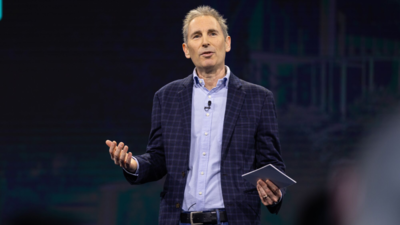
Amazon CEO Andy Jassy has said it would be a “historic mistake” for the US to pull back on building AI data centres, just weeks after a midterm election in which voters turned against the facilities in large numbers. Speaking at Semafor’s Silicon Valley & The World event, Jassy argued that slowing down now would hand China the chance to set the rules for artificial intelligence.“I cannot fathom any scenario where the United States stops building data centres and allows another country like China to establish all the norms,” Jassy said, as reported by Semafor. He added that the US would regret such a move “for a very long time.”Jassy did not brush the backlash aside, though. He acknowledged that tech companies need to “do it better and partner more closely with our communities.”
Amazon plans to spend around $220 billion on AI infrastructure this year
Few executives have more riding on the AI buildout than Jassy, who has directed hundreds of billions of dollars into data centres around the world. He reaffirmed that Amazon’s capital expenditure will be around $220 billion this year and “meaningfully more” next year. He did not share a figure for 2027.In a TV interview after the event, Jassy went a step further. He said it would be a “catastrophic” mistake for the US to fall significantly behind China, and that the country had underinvested in its power grid even before AI came along. He compared the current buildout to the highways and bridges the US built in the 1950s.The White House is making a similar China argument. On Friday, President Donald Trump threatened a “tremendous tax” on American companies that build AI data centres outside the country. “We’re not going to allow our companies to build data centres outside of our country,” he told reporters, adding that the US could fall behind China if the backlash slows construction at home. Trump said he had not yet told his staff about the plan, and it is not clear how it would be enforced. His advice to wary communities was to negotiate with tech companies for tax breaks, lower utility bills and direct payments. “Make them pay you. Make them pay your community,” he said.Amazon is also bringing in outside money for some of its facilities. Blackstone’s data centre trust has agreed to buy a 75% stake in two joint ventures that hold 13 AWS buildings, in a deal valued at about $5 billion.
Voters and newly elected Democrats want new data centre projects paused
The backlash Jassy and Trump are responding to was one of the defining issues of this month’s midterms. Democrats swept the elections, and voters rejected data centre development in nearly all of 41 local ballot measures. In one post-election voter poll, 56% of voters said AI and data centres were a crucial or major factor in how they voted.Several winning Democrats made data centres part of their victory speeches. “I do not work for data centres,” Ohio Senator-elect Sherrod Brown told supporters. Senator Bernie Sanders has since called for a national data centre moratorium.The pressure is building at the state level too. Incoming Texas Governor Gina Hinojosa has pledged to halt new data centre approvals until the state passes laws to protect residents. Texas alone is home to 27% of planned data centre capacity in the US, according to Wells Fargo.Public opinion was shifting well before the vote. A Pew Research Center survey conducted between July and August found that 54% of Americans think data centres are mostly bad for the environment, up from 39% in January. Half said they are mostly bad for home energy costs, while 60% said they would be uncomfortable with a new data centre operating in their area.Electricity bills are a big part of that worry. In a separate survey by researchers at Yale and George Mason University, 59% of Americans said they expect their power bills to go up if a data centre opens nearby. Only 15% said they would support one being built in their local area, while 56% said they would oppose it.