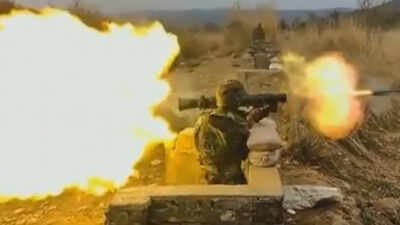
Amid a modernisation drive, the Army plans to induct 450 new M4 variants of the battle-tested Carl Gustaf 84mm shoulder‑fired rocket launcher designed by Swedish firm Saab.The weapon will provide infantry units with an even lighter system, improving firepower and effectiveness, particularly for troops deployed in mountainous regions in J&K and Ladakh.The Carl Gustaf M4, weighing under seven kilograms, is significantly lighter than its predecessors, making it easier for soldiers to carry in demanding conditions.The earlier M2 version weighed 14 kg, while the M3 variant came in at 10 kg. The new launcher can effectively engage targets up to 1,000 metres away, offering accuracy and adaptability across diverse combat scenarios.It is designed to operate in extreme temperatures, with the Request for Proposal (RFP) specifying an effective operating range from 50°C to -20°C, allowing deployment from the freezing Himalayan frontier to the scorching deserts of Rajasthan.A wide range of ammunition, which gives the system its versatility, is manufactured domestically by Munitions India Limited. This range allows the weapon to engage targets from exposed manpower to main battle tanks. Broadly, the ammunition fired by this system falls into two categories: lethal and non‑lethal.On the non‑lethal side, the target practice tracer round is used for training and simulates the trajectory of live ammunition. The smoke round is designed to create smoke screens that conceal the movement of friendly troops and obscure enemy observation. The illumination round provides battlefield lighting during night operations, enhancing visibility for troops engaging the enemy.Among lethal options, the High Explosive Dual Purpose (HEDP) round is a versatile munition capable of penetrating lightly armoured vehicles and field fortifications while simultaneously producing fragmentation for anti‑personnel use.The anti‑tank round is specifically designed to penetrate armoured targets, giving infantry units a reliable option against enemy armour. Together, these rounds offer a comprehensive suite of capabilities for training, concealment, illumination, anti‑armour engagements and other combat requirements of frontline troops.The army’s association with the Carl Gustaf system dates back to the mid‑1970s. The first supplies arrived in 1974, followed by a cooperation agreement in 1976 that enabled local production of earlier variants, according to the weapon’s manufacturer. Since then, the M2 and later the M3 versions have become an organic part of the infantry’s firepower, deployed effectively in both conventional and counter‑insurgency operations.The Carl Gustaf M4 is now being produced in Jhajjar district of Haryana at a Saab facility. The plant, fully foreign‑owned under India’s liberalised defence investment policy, is the country’s first fully foreign‑owned defence manufacturing unit. It is intended to produce weapons for both domestic requirements and export markets.