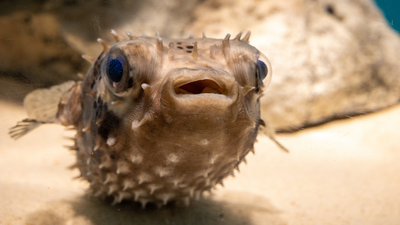
Anyone remotely familiar with poisonous foods would know about fugu. It is a Japanese delicacy so dangerous that chefs need special training and a licence to prepare it. One wrong cut could leave traces of tetrodotoxin, a potent neurotoxin.Pufferfish are notorious for carrying this deadly chemical in their bodies, using it as a defence against predators. But it turns out that their survival strategy begins much earlier than adulthood. A new study has found that mother pufferfish pass on another, almost non-toxic chemical to their offspring, one that can make potential predators spit them out almost as soon as they take a bite.Maybe the real meaning of motherly love is giving your babies a little poison to keep them safe.
Background to the study
Pufferfish belonging to the genus Takifugu are known for their ability to accumulate tetrodotoxin (TTX), one of the most potent naturally occurring neurotoxins. It interferes with the movement of sodium ions through nerve cells, disrupting the signals that allow nerves and muscles to communicate. In severe cases, exposure can cause paralysis, including of the muscles needed for breathing.Interestingly, pufferfish do not simply manufacture all this poison themselves. They acquire it through their diet, particularly by consuming toxin-bearing marine organisms. They can store it in different tissues, including their liver and ovaries, without suffering the same effects as animals that are vulnerable to the toxin.Their young, however, face a different problem. Newly hatched pufferfish are tiny, have limited mobility and are particularly vulnerable to being eaten. They cannot rely on their size or strength to escape predators. Previous research has established that mothers transfer TTX to their eggs, giving their offspring a chemical defence even before they hatch.But researchers suspected that there was more to this arrangement than the presence of a deadly toxin.A study published in iScience, investigated another chemical found alongside TTX in pufferfish: 5,6,11-trideoxytetrodotoxin, or TDT. It is a close chemical relative of tetrodotoxin but has very little toxicity. Rather than killing or paralysing predators, it appears to act as a warning signal that makes them reject their prey.
A rather unpleasant first bite
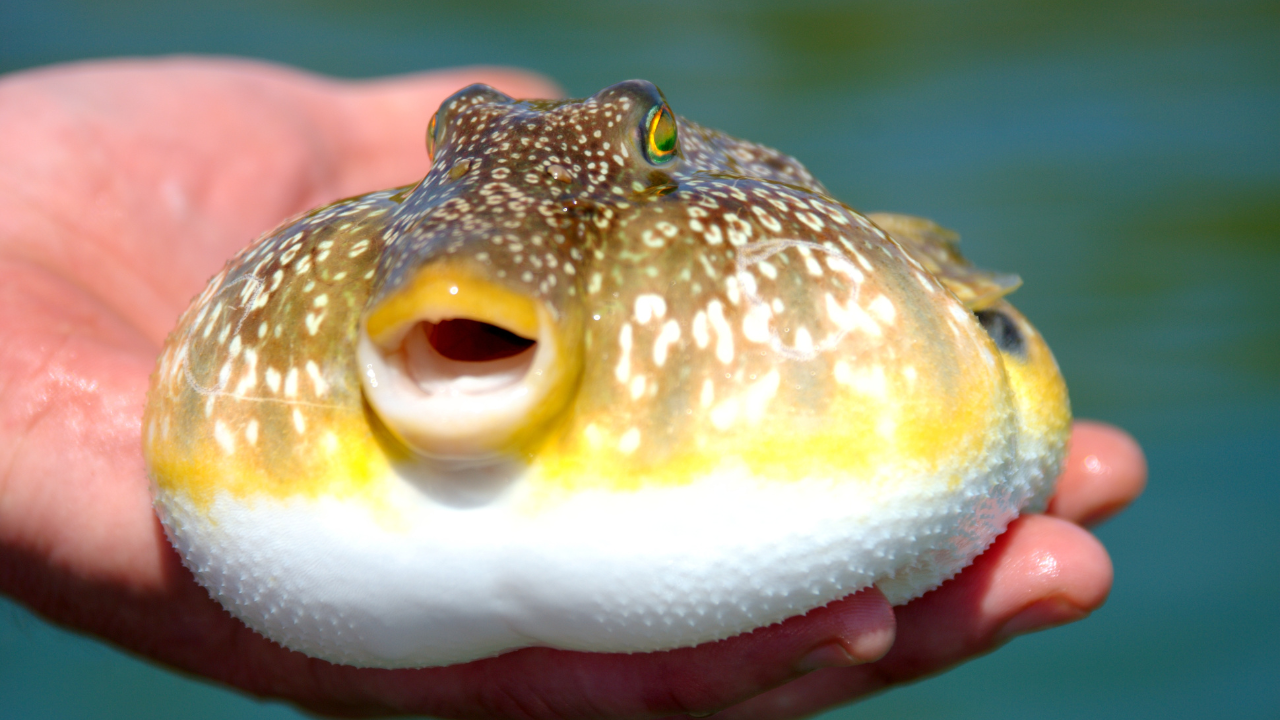
Study finds that pufferfish can be poisonous to predators.
To understand how the chemical worked, researchers studied grass pufferfish (Takifugu alboplumbeus) larvae and exposed them to two species of predatory fish: the nibbler (Girella punctata) and Japanese flounder (Paralichthys olivaceus).The team first prepared pufferfish larvae containing TTX, TDT, both chemicals or neither. To do this, they administered the respective compounds to female pufferfish before spawning, allowing the chemicals to be passed on to their offspring. The researchers then examined the larvae and confirmed that both compounds were present across their outer skin, or epidermis. The larvae were approximately one day old when they were introduced to the predators.What followed was rather interesting. The predatory fish did not necessarily avoid the tiny pufferfish swimming in front of them. They actively caught the larvae, took them into their mouths and then promptly spat them out. However, the response depended on which chemical the larvae carried.The nibblers consistently rejected larvae containing TDT, but readily ate those containing only TTX. Japanese flounders, on the other hand, rejected larvae carrying either chemical. This suggested that TDT could discourage predators that were not deterred by the actual neurotoxin.The researchers also wanted to make sure that the fish were not simply learning from one another. In the initial experiments, several predators were placed together, which meant one fish could potentially learn to avoid the larvae after watching another spit one out. To rule this out, they repeated the experiments with individual predators, each exposed to a larva separately. The responses remained consistent. Even fish with no previous exposure to the toxins rejected the chemical-bearing larvae. This suggested that the predators appeared to have an innate sensory response to the chemical, recognising it as something unpleasant upon contact.
Not all poison needs to be deadly
The findings offer a new perspective on how pufferfish protect themselves during their earliest stages of life. While TTX can provide a lethal chemical defence against certain predators, it may not work quickly enough, or at all, against others. TDT offers a different solution. It triggers an immediate rejection, giving the tiny fish a chance to escape before they are swallowed.Interestingly, TDT may have another purpose within the pufferfish community itself. Previous research has found that pufferfish can detect the chemical through their sense of smell and are attracted to it. In other words, the same substance that acts as a warning signal to predators may serve as a social signal among pufferfish.There is still more to understand about how predators detect TDT and which sensory receptors are responsible for the response. The researchers also point out that other chemical, physical and behavioural defences may contribute to the larvae’s survival in the wild.For now, the study shows that protecting offspring does not always require giving them a deadly weapon. Sometimes, a chemical that simply tells a predator to spit its food out can be just as useful.