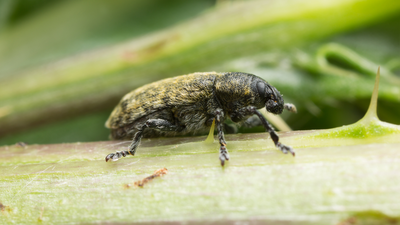
A biological control programme launched in the United States more than five decades ago has become a cautionary example of how attempts to manage invasive species can produce unexpected ecological consequences. According to a USDA Forest Service assessment of invasive species in the Southwest, the thistle seedhead weevil (Rhinocyllus conicus) was introduced to the US between 1969 and 1972 to help control musk thistle and other invasive thistles. The insect was expected to weaken the plants by attacking their reproductive structures and reducing seed production. However, after becoming established and spreading beyond its original release areas, the weevil also began feeding on native thistles. Its impact eventually extended to numerous native species, including endangered native thistles. The case highlights the difficulty of ensuring that a biological control organism remains focused on its intended target once it has been released into a complex natural ecosystem.Why musk thistle was targetedMusk thistle (Carduus nutans) is a non-native flowering plant belonging to the sunflower family. It can become a serious weed in rangelands, roadsides and disturbed areas because of its ability to spread rapidly and compete with existing vegetation. The plant’s reproductive ability is a major reason for its persistence. It produces numerous seeds that can be dispersed by wind, water and animals and can also be transported unintentionally by people, vehicles and equipment.Once established across large areas, musk thistle can be difficult to control. This made biological control an attractive option. Instead of repeatedly removing the plants or treating them with herbicides, scientists hoped that a natural enemy could suppress their ability to reproduce.The weevil’s intended jobThe thistle seedhead weevil, Rhinocyllus conicus, is native to Europe and was selected because it feeds on thistles. The insect’s life cycle made it particularly useful for the intended purpose. Adult females lay eggs around developing thistle flower heads. After hatching, the larvae enter the flower heads and feed on plant tissue and developing seeds.This means the insect attacks the plant at an important point in its life cycle. If fewer seeds mature successfully, fewer new plants may be produced in the following generation. The US releases began in 1969 and continued through 1972. The objective was to establish populations of the weevil that could naturally suppress invasive thistles over time.
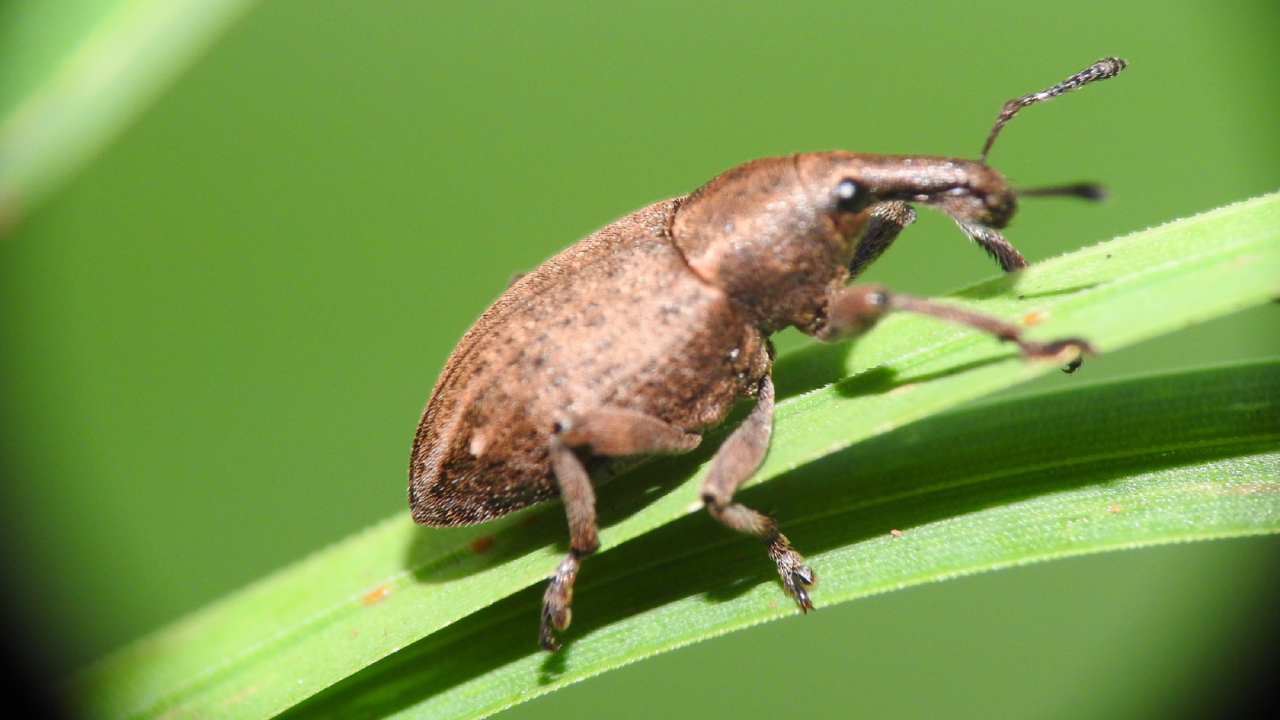
Weevil (Representative Image, Canva)
The unexpected spreadThe strategy encountered a major problem after the weevil became established. Rather than remaining associated only with the invasive thistles that scientists wanted to control, R. conicus began using native thistles as hosts. As the insect spread from its release locations, it encountered members of the native “Cirsium” genus and attacked their flower heads.This was particularly concerning because native thistles have an ecological role of their own. They can provide resources for insects and other wildlife and form part of naturally occurring plant communities. The problem was therefore not simply that the weevil had found another food source. It was that an introduced biological control agent was placing additional pressure on native plants that had not been its intended targets.Rare species faced another threatThe consequences were especially significant for native thistles with small or vulnerable populations. The USDA Forest Service assessment specifically identifies the endangered Sacramento Mountain thistle (Cirsium vinaceum) in southern New Mexico as a native species attacked by the seedhead weevil. For a rare plant, damage to reproductive structures can be particularly important. If insects repeatedly consume developing seeds, the number of new plants that can establish may decline.Scientific research has also documented the weevil’s use of native thistles. According to a study published in Environmental Entomology, researchers noted concerns over the weevil feeding on at least 25 native Cirsium species and found that it could complete its development on two native species under controlled conditions.Why seed production mattersThe weevil’s impact is closely connected to how thistles reproduce. Flower heads are where seeds develop, so an insect that feeds inside these structures can directly interfere with reproduction. Even if an individual plant survives, losing a substantial portion of its viable seeds can affect how successfully it reproduces.This distinction is important. Biological control does not necessarily need to kill the target plant to influence its population. Reducing reproduction over several generations can gradually weaken a population. However, this same mechanism becomes a problem when the insect attacks a native species. A rare thistle may already produce relatively few seeds or occupy only a small geographical range. Additional seed losses could therefore add pressure to an already vulnerable population.A problem that was difficult to reverseOne of the biggest challenges with biological control is that releasing an organism is fundamentally different from applying a chemical treatment. A pesticide application can eventually stop when people stop applying it. An introduced insect, however, can reproduce and disperse on its own. Once it becomes established, controlling its movement can be extremely difficult.That is what made the spread of Rhinocyllus conicus particularly significant. The weevil was no longer simply an experimental tool being used at selected sites. It had become part of the wider environment and could encounter plants outside the original target group.Restrictions on the weevilAs concerns about its effects on native thistles grew, the approach changed. The USDA Forest Service reports that interstate shipments of the weevil are no longer permitted by the US Department of Agriculture’s Animal and Plant Health Inspection Service.The change reflects a broader principle in invasive-species management: biological control agents need to be evaluated not only for their ability to attack a target pest, but also for the possibility that they may affect related native species.The larger lessonThe story of Rhinocyllus conicus does not mean that biological control can never work. In some situations, carefully selected natural enemies can play an important role in managing invasive species. But the thistle seedhead weevil demonstrates why those decisions require long-term ecological thinking. An organism introduced to solve one problem can encounter other species once it is released into the environment. In this case, an insect brought from Europe to help suppress invasive thistles eventually attacked native thistles, including an endangered species. The episode is therefore a reminder that controlling invasive species is not simply about eliminating the unwanted plant. It is also about understanding the wider ecosystem and ensuring that the proposed solution does not create a new threat to the species that conservation efforts are intended to protect.