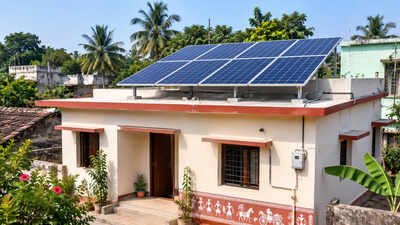
Government housing schemes have traditionally focused on enabling home ownership by providing financial assistance to beneficiaries through loans or grants. However, while most housing schemes primarily focus on providing permanent homes, reducing the long-term cost of occupying those homes has received comparatively less policy attention. Odisha, on the contrary, is painting a different picture.
PMAY beneficiaries get rooftop solar option
The state government has decided to integrate PM Surya Ghar: Muft Bijli Yojana with housing schemes such as the Pradhan Mantri Awas Yojana (PMAY), allowing beneficiaries to opt for subsidised rooftop solar systems along with their homes. The move aims to promote clean energy adoption while reducing electricity costs for economically weaker households.According to the state government, installing rooftop solar systems will remain optional for beneficiaries. Urban households choosing a 1 kW solar system will be eligible for a Rs 30,000 subsidy from the centre and an additional Rs 25,000 from the Odisha government, leaving the beneficiary to contribute only around Rs 1,875. The initiative is expected to improve energy access while lowering monthly electricity bills for homeowners.
Lower electricity bills improve housing affordability
Housing affordability is determined not only by the purchase price but also by recurring expenses such as electricity, water and maintenance. Lower power bills through rooftop solar can reduce the lifetime cost of homeownership, making government-supported housing more financially sustainable for low-income families.The initiative also reflects a broader shift towards green housing. While energy-efficient features have largely been associated with premium residential projects, including rooftop solar panels into affordable housing extends the benefits to a wider segment of the population, reducing the long-term cost of owning and living in a house.