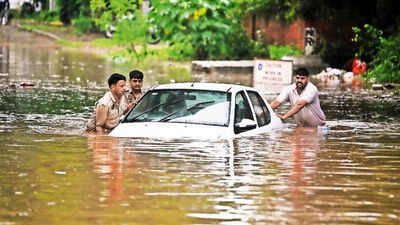
CHANDIGARH: Chandigarh was designed to be different — a city of sectors, wide roads, planned green spaces and carefully engineered infrastructure.Yet, every monsoon, the same question returns: how can a city built around such meticulous planning repeatedly turn into a maze of flooded roads, stranded vehicles and submerged markets? Tuesday’s deluge offered another uncomfortable answer.A mere two hours of intense rain was enough to expose how vulnerable parts of the city have become.
72.4mm and the city starts to sink
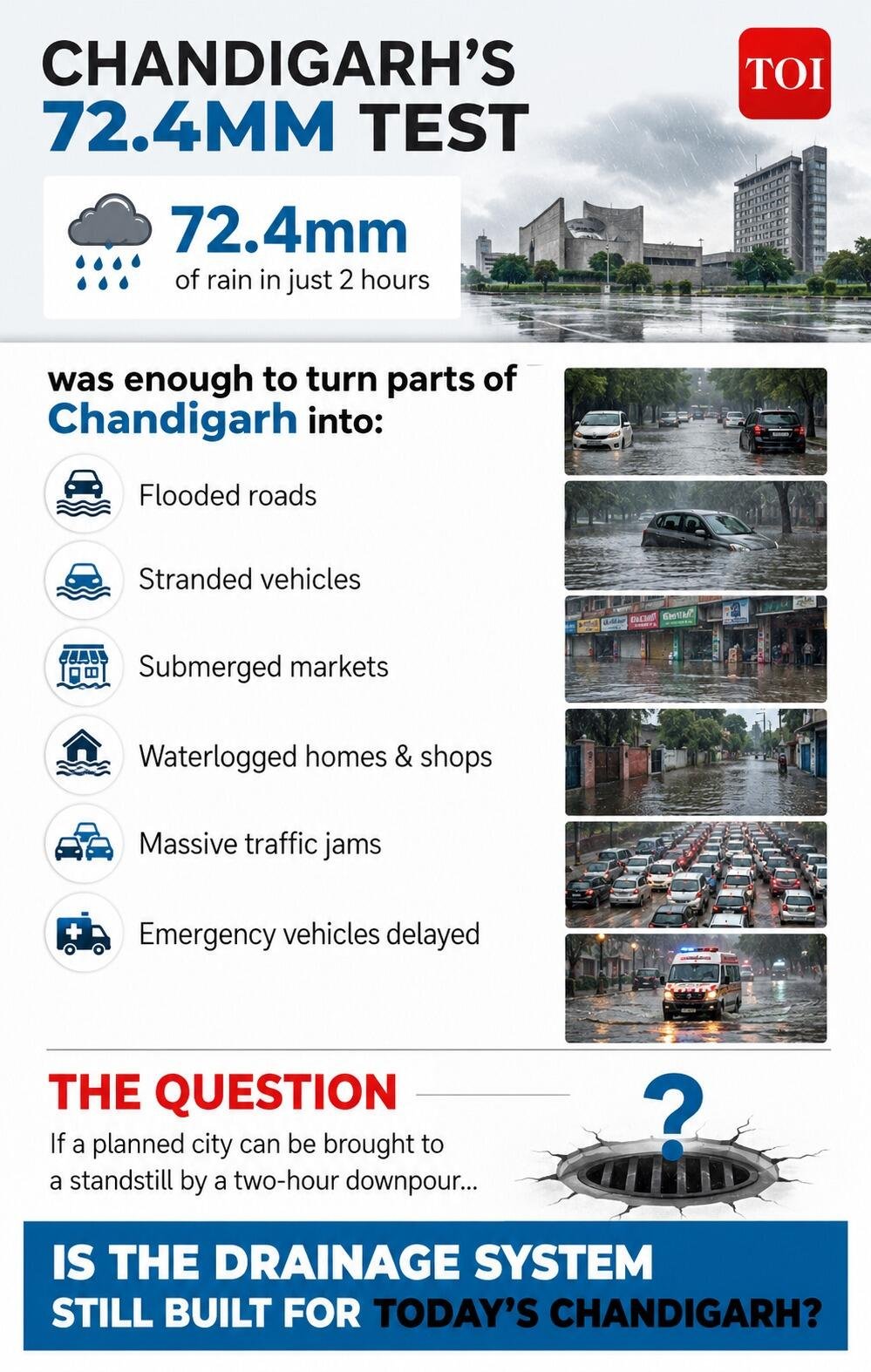
72.4 mm of rain brought Chandigarh’s drainage system to a standstill
The city got 72.4mm of rain in just two hours, the heaviest two-hour downpour of the current monsoon season.What followed was something familiar but harder to ignore as an occasional monsoon quirk: roads turned into rivers, cars were stranded in waist-high water, houses and shops were flooded and thousands of commuters were stuck in traffic jams.The worst affected stretches were not in one corner of Chandigarh. Rapid water accumulation was reported in Sectors 17, 22, 24, 36, 37, 42 and 43, as well as along Jan Marg, Madhya Marg, Industrial Area Phases I and II, Hallomajra and areas around the Old Secretariat.Water seeped into corridors and basements of Sector 22, one of the busiest commercial centers of the city, flooded parking areas and shopkeepers had to resort to flex boards, mops and rags to keep water out.
When roads in Chandigarh are no longer roads
More troubling was the state of the city’s traffic network. Vehicles crawled through submerged stretches, bumper-to-bumper, two-wheelers struggled to negotiate potholes and hidden manholes and many cars broke down while trying to cross flooded junctions.
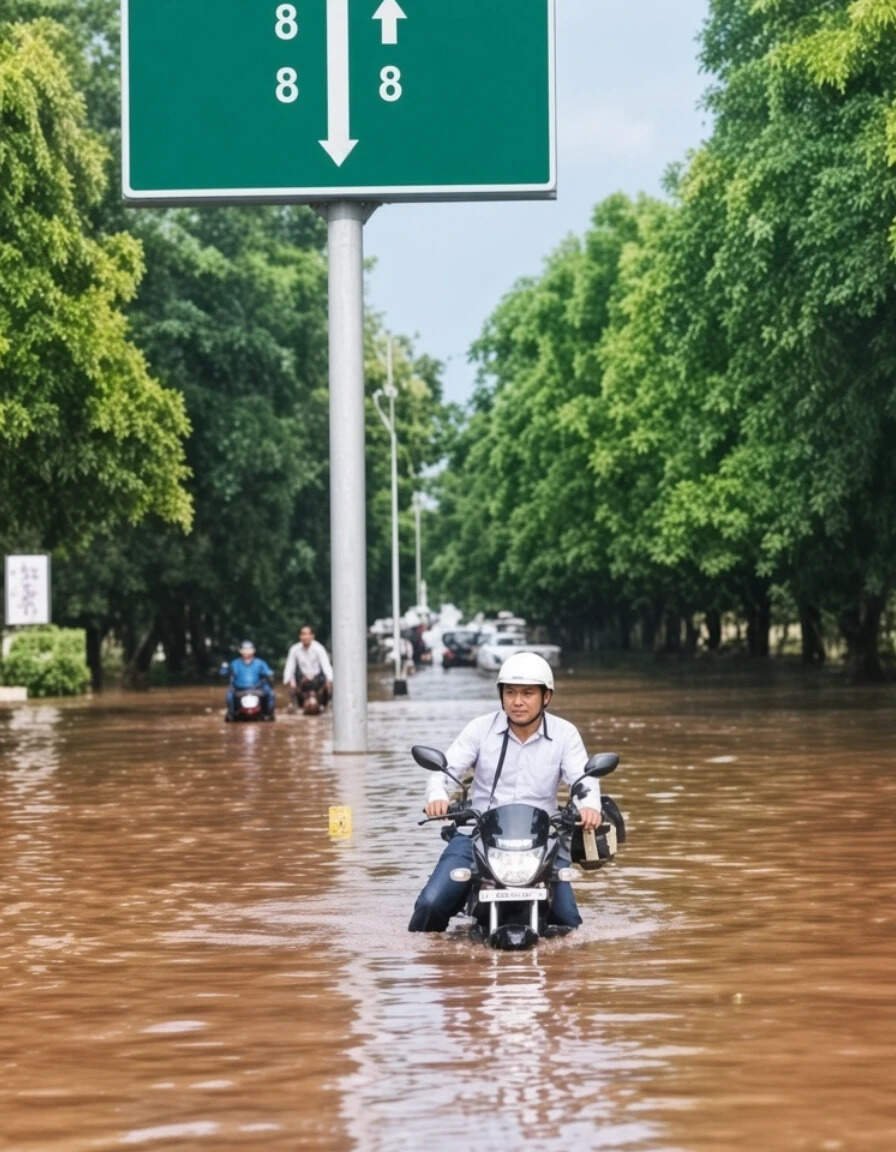
Two-wheelers struggle amid severe waterlogging
Ambulances heading to PGIMER were reportedly stranded on Madhya Marg, showing how quickly a waterlogging problem can turn into an emergency-services crisis.Residents also complained about the poor management of traffic when it was most needed. Police personnel were said to be scarce on parts of Madhya Marg, including the stretch between Transport Light Point and the IAF Museum light point.Some places saw barricades coming up but commuters said there was little on-ground help to divert traffic or guide motorists through alternate routes. In a city where traffic was normally orderly, the lack of visible intervention became a problem in itself.
A road literally washed away
The rain didn’t just flood roads, it wrecked one. A portion of the carriageway on Madhya Marg between Transport Light Point and Grain Market Chowk reportedly caved in or washed away, forcing the traffic police to divert traffic coming from Panchkula through the road behind Police Lines toward ITI Light Point.The incident pointed to another vulnerability, that of road infrastructure itself becoming the next victim if drainage systems fail.Downed trees and limbs also added to the disruption. Trees or branches had fallen on the roads in several places, including Sector 22, making the already congested carriageways narrower and posing additional hazards.
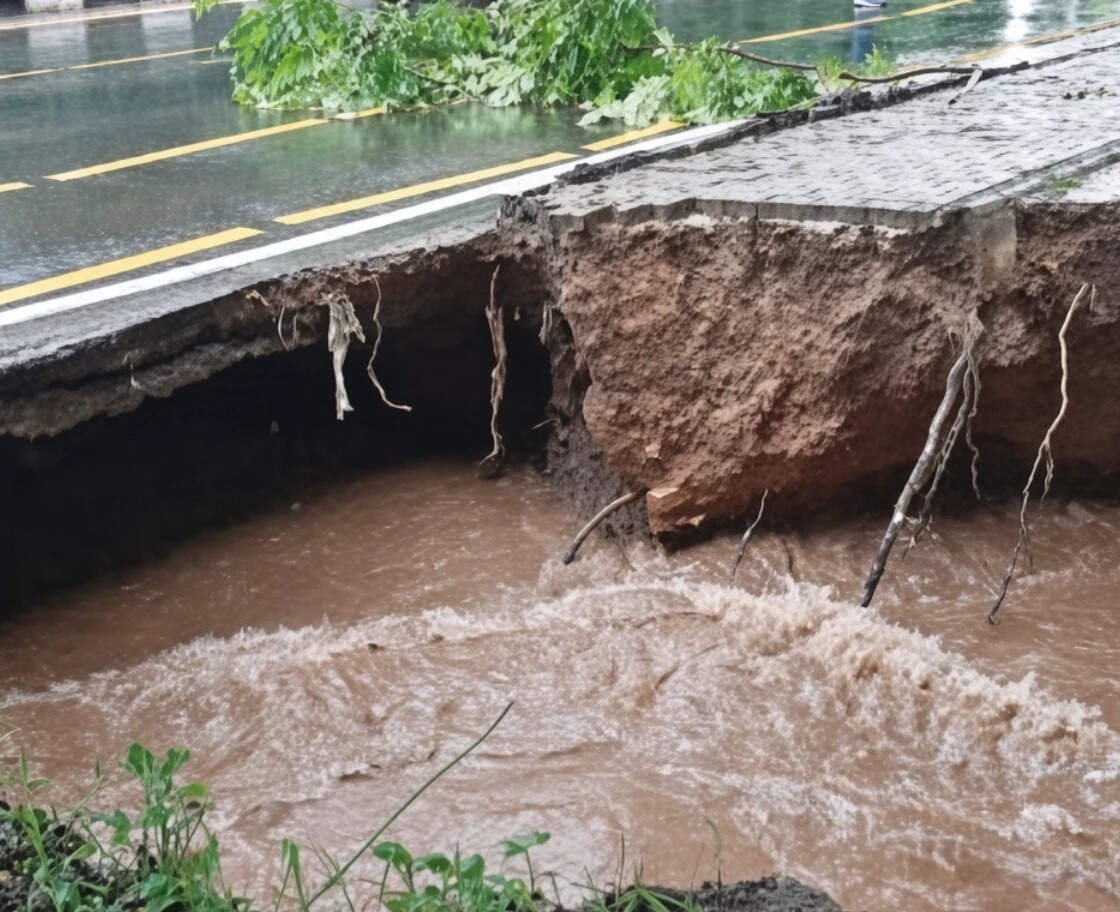
A footpath caved
It was not just that motorists would be late getting home. Residents said a badly clogged or blocked road can delay ambulances, fire trucks and other emergency vehicles when every second counts.
City’s drainage problem predates Tuesday rain
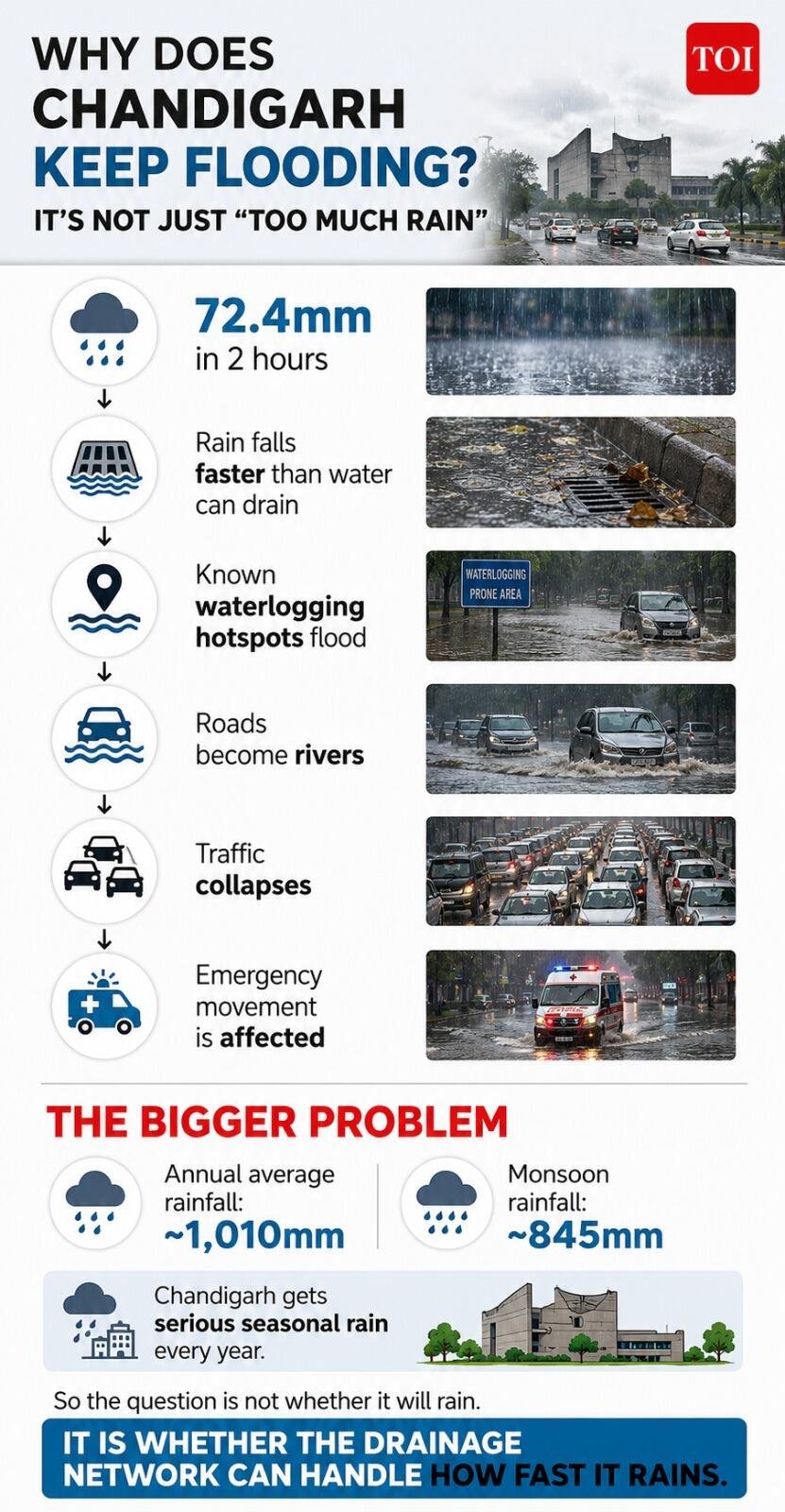
Reasons for Chandigarh getting flooded
Thus, the problem of Chandigarh is not that it rained. The problem is that known amounts of rain still result in predictable failures in known places.The Municipal Corporation undertakes cleaning and desilting of road gullies and storm water drains before the monsoon every year. But several waterlogging hotspots keep flooding.This means that cleaning alone cannot compensate for an aging or inadequate drainage network.The figures offer us a useful context. According to Central Ground Water Board data, Chandigarh receives an annual average rainfall of about 1,009.8mm, of which about 844.9mm falls during the monsoon.So, the city’s drainage infrastructure has to cope with serious seasonal rainfall, not freak events, as a basic design parameter.
It is not just a case of ‘too much rain’
Another irony. In fact, Chandigarh had a rainfall deficit earlier in the monsoon. The city received 240.2mm till July 25, against the normal of 359.6mm for June-July, a deficit of around 33%.July itself had 200.9mm against a normal of 204mm. The lesson is a good one: a city doesn’t need a season’s worth of excess rain to flood. And a short furious spell can swamp the system if rain falls faster than the water can drain away.
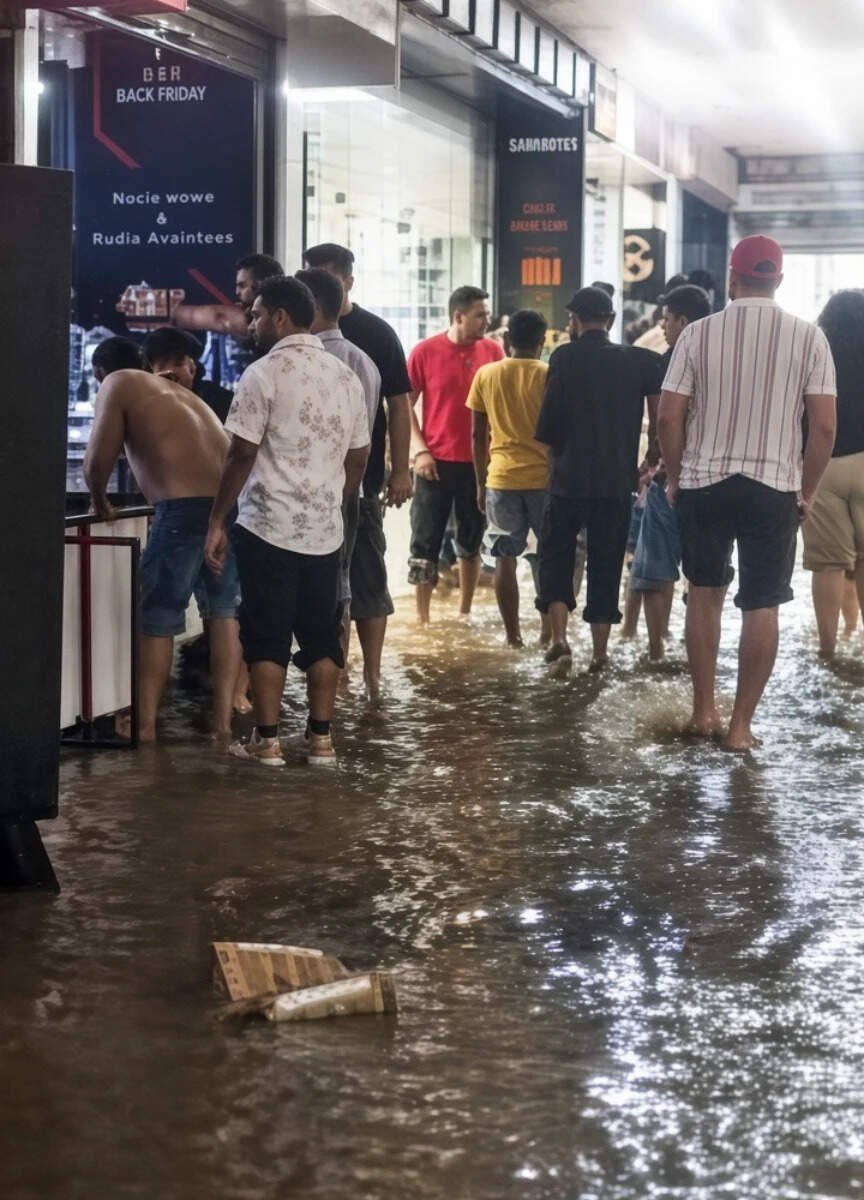
Floodwaters entered shops
But the problem is no longer confined to Chandigarh. Residents across Mohali, Zirakpur, Kharar and Nayagaon were in the same familiar cycle on Tuesday.In Mohali’s Sector 70 and Phase 11, school buses, cars, two-wheelers and pedestrians were seen passing through stagnant water on waterlogged streets.Not only were flooded roads an inconvenience for children and elderly residents, they also increased the risk of slips and falls and exposure to unhygienic stagnant water.
Planned city, unplanned outcome?
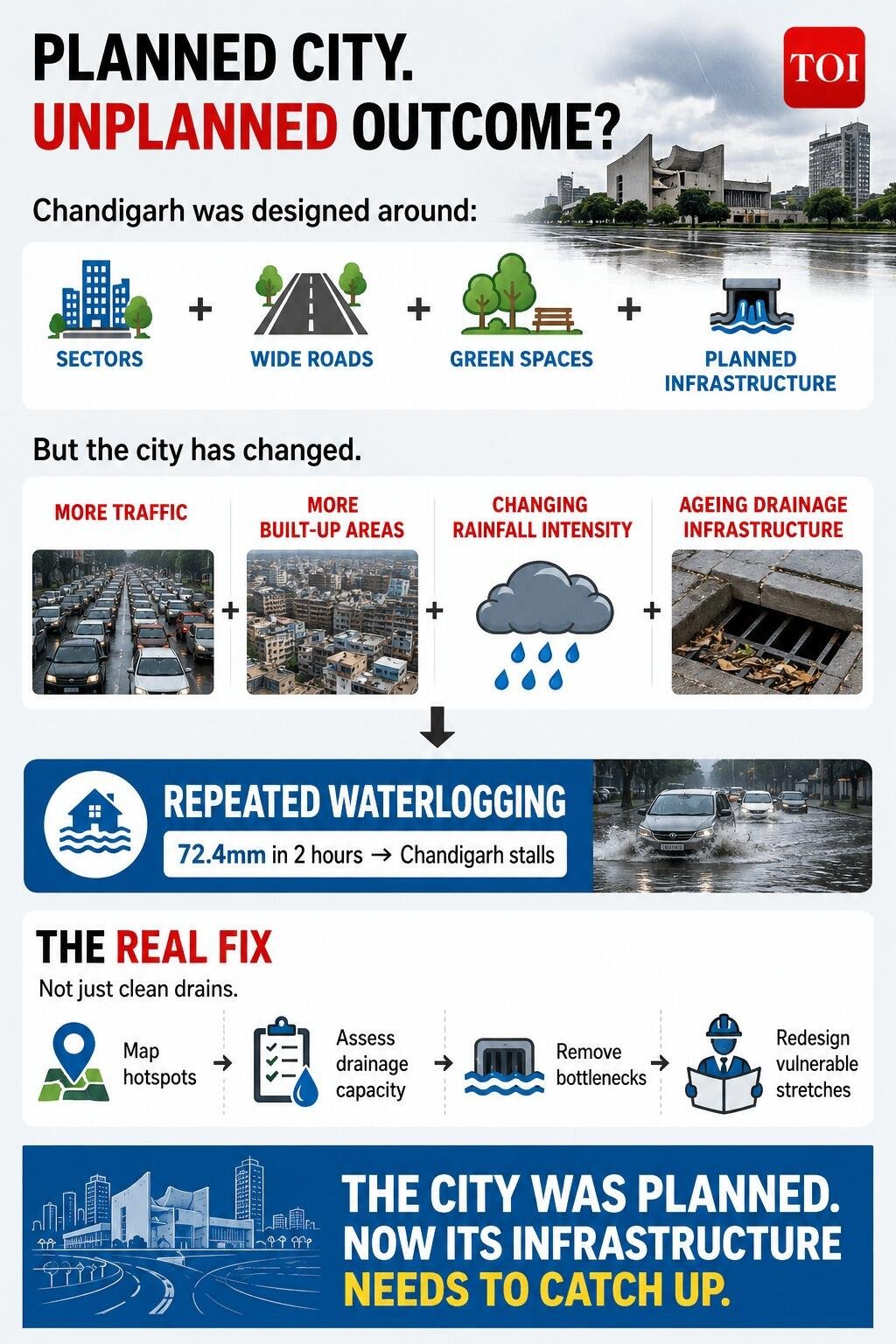
City was planned but the outcome is unplanned
This is where the larger conversation on Chandigarh’s monsoon problem is needed. The city was planned, zoned and built with infrastructure in mind.But a city planned with infrastructure for an earlier era may become vulnerable when asked to cope with today’s rainfall intensity, traffic volumes, construction patterns and expanding urbanization. The thing is not that the drains were cleaned before the monsoon.The question that has become is whether the entire storm-water system still holds up for the city of Chandigarh.So the flooding on Tuesday should not end with water being pumped out, fallen trees cleared and the damaged carriageway repaired.These are essential emergency responses, but they are not a flood management strategy. The real test is whether the administration can identify all recurring hotspots, map drainage capacity against rainfall intensity, clear bottlenecks and redesign vulnerable stretches before the next cloudburst does the audit for it.
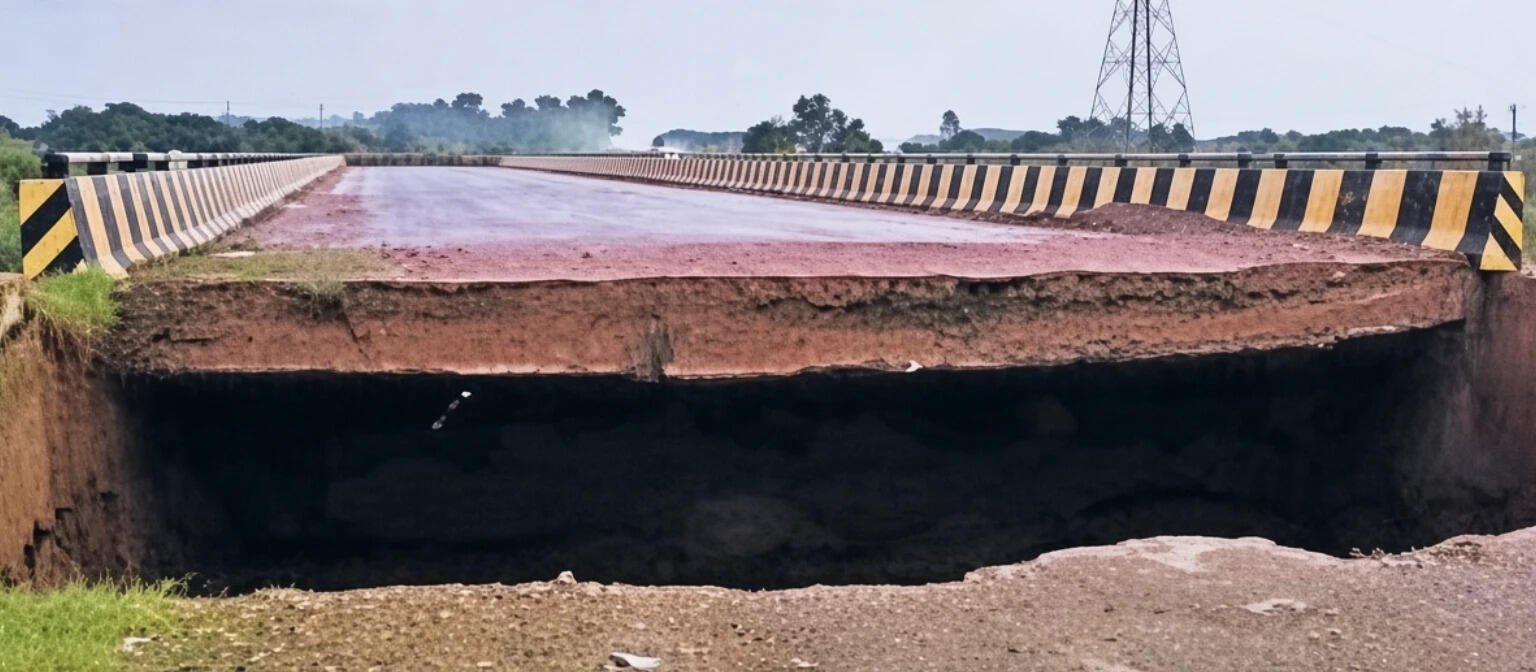
Bridge damaged after heavy rain
Because the problem with Chandigarh is not that it has never been planned. It’s that the city has changed faster than some of the infrastructure under it.If 72.4mm of rain in two hours can bring Sector 17, Sector 22, Madhya Marg and several peripheral areas to a halt, the question for policymakers is not when will it rain again.How many more monsoons will it take for Chandigarh’s drainage system to catch up to the city it was meant to serve?