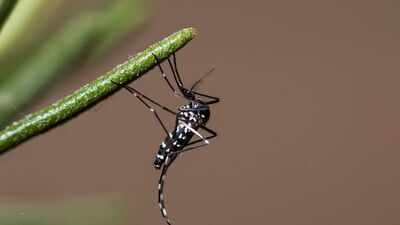
When conservationists cleared tens of thousands of invasive rats from Palmyra Atoll, they expected native birds, crabs and plants to recover. What they did not expect was that one of the island’s disease-linked mosquitoes would disappear as well.That unexpected outcome has turned a small Pacific atoll into a big ecological lesson. A 2018 study titled ‘Local extinction of the Asian tiger mosquito (Aedes albopictus) following rat eradication on Palmyra Atoll’ shows how deeply one invasive species can depend on another, and how removing a key food source can trigger a chain reaction no one planned for.
A tiny island with a big problem
Palmyra Atoll is a remote speck in the Pacific, roughly 1,000 miles south of Hawai‘i and less than 3 square miles in area. For scientists stationed there, the island has long been both a field laboratory and a place where fieldwork came with a price: mosquitoes.Researchers on the atoll knew two main mosquito species well. The southern house mosquito bit mostly at night, while the Asian tiger mosquito, Aedes albopictus, was the more aggressive daytime biter. For years, scientists working outdoors had to cover themselves in repellent just to get through the day.Then something changed. The daytime bites stopped.
The rat removal that changed everything
The key turning point came in 2011, when the U.S. Fish and Wildlife Service, The Nature Conservancy and Island Conservation removed about 40,000 invasive rats from Palmyra Atoll, as per reports. The project was designed to protect native species and restore the island’s damaged ecosystem.The rats had arrived decades earlier, likely during World War II, and had become the dominant land predator and consumer on the atoll. They fed on seabird eggs, coconut crabs, fiddler crabs, native seeds and seedlings, and they helped push the island off balance.Once the rats were gone, the recovery started. Native plants began to rebound, crustaceans recovered, and seabirds had more room to thrive. But researchers also noticed a strange side effect: they were no longer being bitten by the Asian tiger mosquito during the day.
Where did the mosquitoes go?
At first, the answer was not obvious. Asian tiger mosquitoes are known for being tough, adaptable insects. In many places, they can feed on humans and birds, and they are capable of carrying serious diseases such as dengue, Zika and yellow fever. So why would they vanish just because rats were removed?To find out, researchers from the USGS, UC Santa Barbara, the University of Maryland and Stanford spent two years monitoring the island. They used traps that were marked with human scent and black-light traps designed to attract insects. They also kept track of whether scientists and visitors were still getting bitten.The result was clear: no daytime-biting Asian tiger mosquitoes turned up in the new surveys. The species had been present before the rat eradication, but after the rats disappeared, the mosquito population collapsed to the point that it met the World Health Organization’s standards for local eradication.
Why the mosquitoes failed
The researchers eventually concluded that the mosquitoes had become unusually specialized. Even though Asian tiger mosquitoes can feed on birds in theory, the Palmyra population appeared to depend heavily on rats as its preferred blood source.That dependency mattered because, after the rat removal, the atoll no longer offered enough of the right kind of blood meal to sustain the mosquito population. The island still had birds, and the night-feeding southern house mosquito continued to survive, but the day-biting Aedes albopictus could not adapt quickly enough. It effectively starved out.In ecological terms, that is a rare example of a secondary extinction, when one species disappears because another species it relies on has gone extinct or has been removed. Scientists say such events may be more common than people realize, especially among parasites and highly specialized species.
Why this finding matters
This was not just a curious island story. It may also offer a new angle on mosquito control. Most mosquito prevention strategies focus on climate, standing water and breeding habitat, but this study suggests another factor can matter too: access to blood meals.That does not mean removing rats from every place will wipe out mosquitoes. The researchers are careful about that point. On a city scale, for example, mosquitoes would still have plenty of alternative hosts, especially humans and other mammals. But on a small, isolated island with a limited set of hosts, changing the food web can have dramatic results.For public health and conservation scientists, that opens an interesting possibility: host control may be worth studying more seriously as part of mosquito management, especially where invasive animals are supporting disease vectors.
A conservation win with a surprise bonus
What makes the Palmyra case especially striking is that nobody set out to eliminate mosquitoes. The goal was to remove invasive rats and restore the island’s native ecosystem. The mosquito collapse was an accidental bonus; one that researchers only recognized after years of observation, trapping and comparison with earlier samples.Museum collections helped confirm the finding. Scientists compared their new samples with mosquitoes collected years earlier and stored at the Bishop Museum in Hawai‘i. That baseline gave them a picture of what the island’s insect community looked like before the rat eradication.The study also became a training ground for younger scientists. Students helped with fieldwork, trap checks and lab work in one of the most difficult research settings imaginable, where heavy rainfall, salt air and relentless wildlife made every piece of equipment a challenge to keep running.
The bigger ecological lesson
Palmyra Atoll now stands as a powerful reminder that conservation work can ripple through an ecosystem in unexpected ways. Removing one invasive species can strengthen native biodiversity, but it can also uncover hidden dependencies that were not obvious before.It is also a reminder that species that seem adaptable may be more specialized than they appear. The Asian tiger mosquito is one of the world’s most notorious invasive insects, yet on this tiny island, it apparently could not survive without rats as its preferred host.That is the kind of ecological surprise that changes how scientists think about invasions, food webs and even disease control. Sometimes, the fastest way to learn how an ecosystem really works is to remove one piece and see what falls apart.