Cricket Australia’s decision to open the Big Bash League and Women’s Big Bash League to private investment has exposed a significant divide within Australian cricket, with Cricket NSW warning that the move could ultimately leave the game both strategically and financially worse off. CA confirmed on Tuesday that it would proceed with a “self-determination” model under which states can decide whether and when to seek private investment in their Big Bash clubs. The Melbourne Renegades will be the first franchise taken to market, with CA inviting bids for a 100 per cent stake and targeting new ownership ahead of the 2027-28 season.
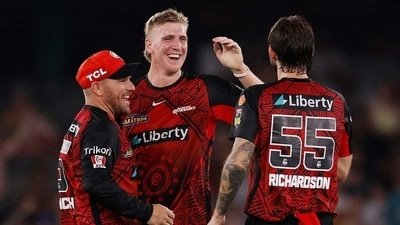
The model emerged after CA failed earlier this year to secure sufficient support for a broader privatisation proposal. Victoria, Western Australia and Tasmania have backed bringing external capital into the competition, while NSW has remained firmly opposed. Queensland had also joined NSW in rejecting the earlier model, forcing CA to consider an alternative approach that allowed individual states greater freedom. Cricket NSW, which controls the Sydney Sixers and Sydney Thunder, has now publicly criticised CA for proceeding despite the absence of agreement across the game.
‘Risks leaving cricket strategically and financially worse off’
“Cricket NSW is disappointed by Cricket Australia’s decision to proceed with introducing private investment into the Big Bash Leagues without alignment across Australian cricket,” a Cricket NSW spokesperson said on Wednesday. “This decision risks leaving cricket in NSW and Australia strategically and financially worse off, with direct consequences for our ability to invest in grassroots cricket. Cricket NSW strongly believes in the future growth of the WBBL and BBL. Both leagues and all clubs are powerful drivers of participation and fan interest in cricket.
“The BBL is Australia’s most-watched and second-highest attended sports league per game. Last summer’s record crowds and endless memorable moments, headlined by an unforgettable Sydney Smash at the SCG, showed the Big Bash has never been stronger. The WBBL continues to attract the world’s best players and inspire more girls and boys to play our game.”
At the heart of NSW’s objection is the way money generated by its Big Bash teams currently flows back into cricket. Cricket NSW says profits from the Sixers and Thunder are reinvested into participation and development programmes, and fears introducing external shareholders would mean a proportion of those returns leaving the cricket system. It has also said it raised concerns with CA, presented an alternative pathway and commissioned external advice highlighting potential risks in the proposal.
Also Read: 75 innings, 17 fifties, 0 centuries: How Sachin Tendulkar’s ODI numbers changed forever after 9th September, 1994
That puts NSW directly at odds with CA’s central argument. CA chairman Mike Baird has said private capital would strengthen the long-term financial position of Australian cricket, allow greater investment across grassroots, pathways and the elite game and help the Big Bash compete in an increasingly lucrative global T20 market. CA has also sought to ease concerns over how much power investors would acquire. The governing body will retain control over international scheduling, player availability, salary caps and media rights, while also retaining the ability to approve or veto prospective investors.
For Cricket NSW, however, the dispute goes beyond those safeguards. Its argument is that the Big Bash is already a healthy and valuable asset and that selling a share of its future returns to private investors could weaken, rather than strengthen, the system that funds Australian cricket from the grassroots upward.