EXCLUSIVE | Mick Jagger says it’s good to do social commentary in songs: ‘You don’t want every song to be about romance’

To write an introduction for Mick Jagger seems like an exercise in futility. As the frontman of The Rolling Stones, the British musician is one of the definitive voices in rock history. For six decades, Jagger and the Stones have defined and then redefined what it means to be a rockstar and what ‘rock must sound like’. With their new album – Foreign Tongues – their 25th, the band has gone back to a very vintage sound with a mix of blues and country influences. As the album makes waves worldwide, Mick Jagger sits down for an exclusive no-holds-barred chat with Hindustan Times, where we talk about the album, its sound, politics, and why he refuses to mellow down. Excerpts:
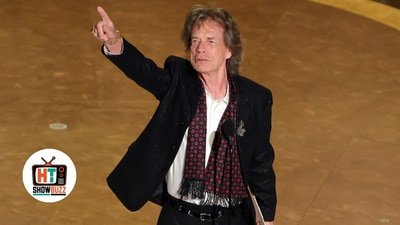
Mick Jagger, the lead singer of The Rolling Stones, talks about their new music.

HT: Every album that you have made over the last 60 years showed where the Rolling Stones are at that point in time. What does Foreign Tongues tell us about you and the band?

Mick Jagger: The album is obviously where you are more or less currently in your head, musically and lyrically. It was made with great enthusiasm. We’re still very enthusiastic about doing music. It was done in quite a short time. We went in with the idea of doing at least 12 more new songs, so we went into the studio in London and recorded 12-13 new songs, then picked the 10 we wanted to use. All of that shows a lot about your work ethic, enthusiasm, and love of music, particularly blues. But on top of that, we’re doing other kinds of styles of music— country, more pop, more dance music. We started off being like that.

The thing about this kind of popular music is you have to do it with a lot of enthusiasm and energy. You can’t do it halfheartedly. Some reviewers said it’s a little slick on some tracks. Some people like the Stones very full of muddy sounds and mistakes, and that is in there, too. But you don’t want everything to be like that. And I think there’s room to make some well-rounded music that’s played without mistakes.

HT: But I sort of disagree there because I feel it’s very old school Stones, and when I say old school, I mean the 70s, which is my favourite era of yours. And since many reviews have said it’s ‘vintage Rolling Stones’, I must ask you: How do you go old school without being dated? That your sound, like you said, has to sound modern.

Mick Jagger: It’s not a tool like nostalgia. One of the ways you do that is actually in the sound. So, if we put on a track from Exile on Main Street, we might love that song, but if we listen to it sonically, it would sound really muddy compared to how it sounds now. The sound we’re recording would be chalk and cheese, because what was the sound of that period has been completely changed and superseded. You can hear everything much clearer. Now, some people say, “I love that.” Well, we could reproduce that. But I don’t think that’s the goal. The goal is to be yourself.

HT: When your last album came out, a lot of people said, “Oh, why don’t they go back to their roots of doing country and blues?” And now you have here. Are you taking people’s opinions into consideration, or are you just doing what you want to do?

Mick Jagger: We’re really doing what we want to do, honestly. We did another blues for this album and the last one, which we didn’t actually put out. We will put them out, but I just like to have a good mixture (of sounds). This one (Foreign Tongues) features the Rough and Twisted song, which opens the album and sets the tone. It’s a blues, but it’s not a traditional 12-bar blues. It’s slightly odd and political. It’s blues but with a twist.

HT: I often come across the phrase: “This sounds like Rolling Stones”. And I wonder what that is? What sounds like the Rolling Stones? And do you always want to sound like that, or do you want to sound something different in a way that your fans say, “Oh, I didn’t know they could do that.”

Mick Jagger: If there is a typical Rolling Stones fan, then they might have a sound in their mind of what is definitive Rolling Stones to them. But you know what, the most-streamed song of the Rolling Stones is Paint It Black. Is that how you think the Rolling Stones are? With a sitar in it and more of a Turkish theme. Because that’s the most-streamed track. Sometimes I say that to the band if I come up with something a bit different, and they say, “Well, that doesn’t sound like us.” I say, “Well, does Paint It Black sound like you?”

The strength of the Rolling Stones is perhaps in the variety of styles that we’re able to do and feel at home in those styles of rock, blues, or country music. Our first song that Keith and I wrote, which was a hit, was As Tears Go By, which was like a wistful ballad. So not everything that I write is rock or classic rock. And also, these kinds of niche genres we chop our music into, like little slices, are just for people who want to market things. It’s not necessarily the way musicians really think.

HT: They say people mellow down with age, they become softer, they become less adventurous. Certainly not you guys. Certainly not you because you can still make Divine Intervention where you have the line: “the billionaires all scuttling, scrambling to their bolt holes in the sky.” What keeps you this edgy at 83, when you’ve been doing this for 60 years?

Mick Jagger: Well, that’s very kind of you (laughs). But lyrically speaking, when I was writing these songs, I would be thinking about—I don’t want to say current affairs—but just general feelings of how the world is. And I would throw them all in, in that song. But it’s obviously with a sense of humour. I think it’s good to do social commentary. It’s good to cover the bases, you know. You don’t want every song to be about romance or every song to be a political comment.

HT: You mentioned you can make the odd social commentary without it getting partisan.

Mick Jagger: Or preachy, you know.

HT: But do you think art can exist outside politics? Even today, in your 25th album, you are talking about what’s happening around in the world. But some artists like to believe that art and politics are very separate. Do you think that’s the case?

Mick Jagger: Of course, sometimes art is living in an isolated universe, and there’s nothing wrong with that at all. However, whether it’s painting, music, books, or any form of creative art, most of the time the artist lives in a world where they are affected by what’s going on around them, whether they like it or not. Sometimes these effects take a while to sink in. A lot of artists today cut themselves off and live a life apart from society, but a lot of them are very much affected by it and make political statements, or at least semi-political statements about how it’s affected them personally. I think all art is affected by what you see around you, as well as what affects your inner life emotionally.

HT: You’ve been doing this for six decades, and the core of the band has stayed together longer than most countries have existed. I am someone who believes art can’t be made without disagreement. Having known each other for so long, are you like an old married couple now or do you still bicker?

Mick Jagger: (Laughs) Well, there’s still some bickering, but there’s less than there was. Everyone knows their roles. And also, that’s where having a producer like Andy Watt is very helpful because he helps to smooth those things over. So you have a referee as well as an extra musician in him. When you don’t have someone strong like that, it’s more difficult to talk it out amongst yourselves. But there was none of that for this album.

Leave a Reply

Your email address will not be published. Required fields are marked *