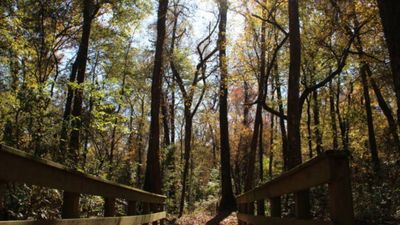
A 132-acre section of one of Henry County, Georgia’s largest remaining undeveloped properties is set for a 10-year forest restoration project, with a data-centre company funding the effort as part of a broader environmental partnership. The Southern Conservation Trust (SCT) is leading the restoration at Towaliga Preserve, a 403-acre protected property in Hampton, with support from QTS Data Centres.The initiative, announced by SCT and reported by The Citizen, will focus on restoring 77 acres of degraded, early-successional forest and improving another 52 acres of mature forest through targeted removal of invasive plants. QTS’s support comes through a 10-year commitment connected to Phase 2 of its Fayetteville data-centre campus and its Tree Replacement Program.
From farmland to protected forest
Towaliga Preserve, formerly known as Henderson Farms, covers about 403 acres and is owned and protected by the Southern Conservation Trust. The property includes oak-hickory-pine forests, mesic and bottomland hardwood forests, wetlands and streams, as well as approximately 1.5 miles of the upper Towaliga River. The landscape has not always been forested. Parts of the property were historically used for cattle grazing and forestry. About 72 acres of forest were harvested around 2015, before SCT acquired the property, according to the conservation trust.Since then, the cleared areas have naturally regenerated. But the resulting young forest is dominated not only by native species such as sweetgum and tulip poplar, but also by invasive non-native plants including privet, Chinaberry and Oriental bittersweet. The new restoration effort is intended to change that balance. Rather than simply adding trees to the property, the project will involve managing an existing forest ecosystem and encouraging a more diverse and healthier landscape.
What will happen over the next decade?
The restoration will begin with site preparation, including removing several thousand feet of old barbed-wire fencing. Starting in fall 2026, professional forestry contractors are scheduled to carry out staged thinning and mulching across about 77 acres. Targeted treatment of invasive vegetation will follow in 2027, with native tree planting planned for winter 2027-28. Another approximately 52 acres of mature forest will receive targeted invasive-species management beginning in fall 2026.SCT says the work will involve ongoing monitoring rather than a one-time planting campaign. The organisation will oversee contractors, direct restoration activities, and adjust management based on how the forest responds. The conservation trust also plans to continue caring for the property after the 10-year implementation period ends.“We’re not planting trees and walking away,” SCT President and CEO Chris Doane said in the announcement, emphasising that the organisation’s stewardship of Towaliga Preserve will continue beyond the formal project period.
Data centre company expands conservation partnership
The restoration is being funded through a partnership between SCT and QTS Data Centres, a company developing data-centre infrastructure in the region. QTS’s relationship with SCT began in 2023 and has already supported reforestation, land stewardship, environmental education and volunteer activities.The new project follows an earlier restoration effort at Towaliga Preserve. During Phase 1, SCT and QTS supported the planting of 12,140 native trees representing 21 species across a 23-acre former agricultural field. The original target was at least 7,000 trees, meaning the project exceeded its initial planting goal. That earlier project also became a research opportunity.SCT is working with the University of Georgia to study tree survival and growth across four research plots containing 576 trees from 21 species. Researchers are examining how different species and planting methods perform under the site’s conditions. The results are intended to help inform the larger restoration now getting underway.
Why the forest matters
The restoration comes as development continues to transform parts of Henry County. The Towaliga Preserve provides a connected landscape of forests, wetlands and waterways at a time when residential and other development is changing surrounding areas. SCT says the project is intended to improve wildlife habitat and native plant diversity while supporting the health of the Towaliga River watershed.Forest restoration can also have effects beyond the trees themselves. SCT says the work is expected to help reduce erosion and improve water infiltration, while healthier forest habitat can support a wider variety of native plants and wildlife. The preserved landscape also creates opportunities for environmental education, ecological research, wildlife observation and outdoor recreation. The approximately 1.5 miles of the upper Towaliga River running through the preserve is another reason the condition of the surrounding land matters.
A longer-term conservation experiment
The project is also being framed as an opportunity to learn what restoration methods work best in the region. The research from the first QTS-supported planting effort is expected to help SCT select species and approaches for the much larger Phase 2 project. That means the 10-year effort will involve both restoration and continued observation of how the forest develops.For QTS, the partnership provides a way to connect its regional development with conservation work. The company says its support is intended to strengthen forest ecosystems, biodiversity and long-term environmental benefits in communities where it operates. The project does not mean all 403 acres of Towaliga Preserve are being replanted. The 132-acre figure refers to the specific area targeted under the new restoration initiative, while the broader preserve remains a protected 403-acre property.As the first contractors begin work in fall 2026, the restoration will therefore unfold gradually rather than producing an immediate new forest. The first changes will involve removing fencing, thinning selected areas and controlling invasive vegetation. Native trees are scheduled to be planted later, while researchers and conservationists monitor how the landscape responds.Over the next decade, the aim is to turn portions of a young, heavily disturbed forest into a more diverse and resilient habitat, while keeping the larger Towaliga Preserve protected for the future.