Gujarat Titans’ early struggles in IPL 2026 have been less about ability and more about finishing. Two defeats in two games, including a six-run loss while chasing 211 against the Rajasthan Royals, have exposed a recurring gap in control in decisive moments. The absence of Shubman Gill in that game only made that clearer.
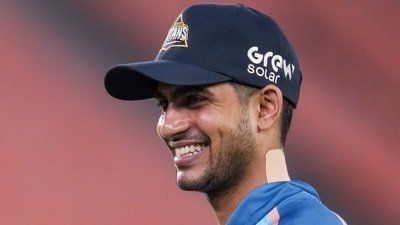
With Gill now set to return for the Delhi Capitals clash, the shift is not just internal. Even the opposition camp has acknowledged the impact his presence has on the contest.
Delhi Capitals bowling coach Munaf Patel, speaking ahead of the fixture, admitted that Gill’s role extends beyond just numbers, noting that “Shubman is a very big player. He is also the captain of his team. He is a good player. He is young. So obviously, it has an impact – bowlers have some relief if he does not play.”
“He will be playing tomorrow”: Sudharsan confirms return
That ‘relief’ was visible in Gujarat’s previous outing. Despite a composed 73 from Sai Sudharsan, the Titans could not close out the chase, losing grip in the final phase. Without Shubman Gill, the innings lacked a stabilising anchor through the middle overs, forcing acceleration at the back end and exposing the middle order to pressure situations earlier than ideal.
Sudharsan, who has been Gujarat’s most reliable batter so far this season, confirmed that the captain will return for the Delhi fixture, stating, “Shubman is super, he will be playing tomorrow,” in a pre-match interaction.
Gill had missed the previous game due to a neck spasm, with Rashid Khan stepping in as stand-in captain. While Gujarat remained competitive, the absence of a defined tempo-setter was evident in how the chase unfolded. Besides, Gill’s absence also exposed a leadership gap. The Titans will be happy that their regular leader is returning, and with that, a stabiliser at the top of the order.
Also Read: Vaibhav Sooryavanshi will be ‘fearless’ even against Jasprit Bumrah, approach ‘won’t change’: ‘Won’t knock it around’
His return now allows Gujarat to reset their batting structure. Sai Sudharsan can operate with greater freedom at the top, while the middle order avoids being pushed into recovery roles. More importantly, it restores a captain whose calm has often dictated Gujarat’s ability to manage tight finishes.
For Delhi, the takeaway is immediate. The phase where bowlers operated with a margin of comfort tightens again, and the one absence that could have offered “relief” is no longer part of the equation.