The match-fixing scandal remains the ugliest and darkest chapter in Indian cricket. Cricket was always viewed as the country’s most beloved sport, and even though India’s record until the 2000s was not particularly encouraging, the game still enjoyed the public’s trust. That trust, however, was shattered once news broke of players fixing matches for money. Hansie Cronje was the obvious villain, but Mohammad Azharuddin and Ajay Jadeja, too, tarnished the image of Indian cricket. The impact of that episode was so deep that even today, whenever something unusual happens, such as a bowler conceding four sixes in an over or a batter failing to score three runs off two balls, murmurs of foul play begin to surface.
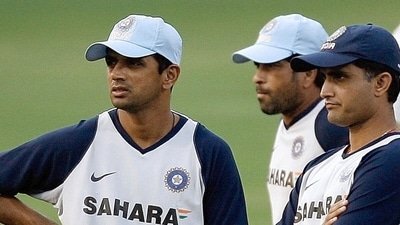
As Indian cricket stepped into a new millennium, it found itself at a crossroads. With a life ban imposed on Azharuddin and Jadeja handed a five-year suspension, the team desperately needed a fresh start. That ray of hope arrived in the form of Sourav Ganguly. The Prince of Kolkata embraced his new role and took on the world, but admits it was not easy helping the team recover from the damage. With trust broken and suspicion lingering in every corner, Ganguly rebuilt the side brick by brick, helping Indian cricket find its feet again.
“The issues that the Indian team faced just before I became captain – betting, match-fixing – I didn’t even know about these things. I kept asking Sachin [Tendulkar] and Rahul [Dravid] ‘Does it actually happen?’ Has anyone approached you? Because no one had approached me. So, I spoke to Sachin, ‘Tujhe kisi ne puucha?’ He said no. We all used to play both formats – Tests and one-dayers. Asked Anil [Kumble] too, He said ‘No. Nobody asked me’. So, I wasn’t too sure what it even was. That [captaincy] was a job in hand. So, I didn’t have these things in mind,” Ganguly opened up on the Raj Shamani podcast.
What becoming the captain meant to Ganguly
After becoming captain at 27, Ganguly took Indian cricket to great heights. He knew it was a once-in-a-lifetime opportunity, and by the time his five-year stint ended, Sourav had achieved plenty. India began winning far more consistently overseas, drew the Border-Gavaskar Trophy 1-1 in Australia, won a maiden Test series in Pakistan, lifted the NatWest Trophy, and even ended as joint winners of the 2002 Champions Trophy. Still, that first series against South Africa, which India won 3-1, was a challenging one for Ganguly. Not because he was new to the role, but because he had to address a dressing room full of senior players under whom he had once played.
“I still remember our first match was in Kochi. On the eve of the game, I had to address the team meeting. I told Dona that many of these guys – Azhar, Sachin – had been my captains. How was I supposed to tell them what to do and what not to do? I still remember telling her I would keep the meeting short because the longer it went on, the more I’d have to speak. So we wrapped it up in about 15 minutes and I quickly got a few things across. The next day, we won. In the following match in Jamshedpur, I scored a hundred. Slowly, everything started falling into place,” he added.