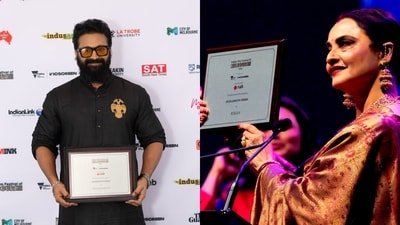
The 17th Indian Film Festival of Melbourne (IFFM) announced its winners for 2026, bringing together a wide range of films, performances and storytellers from India and across the subcontinent. This year’s awards recognised established stars as well as independent filmmakers, emerging voices and stories that explore different sides of Indian cinema. Among the biggest names to receive honours were Rishab Shetty, Dulquer Salmaan, Kirti Kulhari, Vijay Varma and Rasika Dugal. The festival also recognised veteran actor Rekha with the Excellence in Cinema award, while Rani Mukerji was honoured for completing 30 years in the industry.
[Also read: Rani Mukerji honoured for 3 decades in cinema: ‘My films, my characters and my voice have travelled so far from home’]
IFFM 2026 full winner list
Best Film: Lokah Chapter 1: Chandra
Best Film – Special Mention: The Great Shamshuddin Family
Best Indie Film – Not a Hero – Rima Das
Special Mention – Indie Film: Kikkran De Phull (Flowers of Acacia)
Best Director: Rishab Shetty – Kantara: A Legend – Chapter 1
Best Actor: Dulquer Salmaan – Kaantha
Best Actress: Kirti Kulhari – Full Plate
Best Film from the Subcontinent: No Good Men – Shahrbanoo Sadat
Best Documentary Film: Flying Tigers – Madhushree Dutta
People’s Choice Award: Saiyaara
Equality in Cinema Award, presented by La Trobe: Sitaare Zameen Par
Special Mention – Equality in Cinema: Simran Mangeshkar – Sitaare Zameen Par
Rainbow Storyteller Award: Lala and Poppy
Short Film Competition (Australia): The Weight of Soil
Short Film Competition (India): Jo’s Turn
Best Actor (Series): Vijay Varma – Matka King
Best Actress (Series): Rasika Dugal – Delhi Crime 3
Best Series: Freedom At Midnight, Season 2
Artist of Distinction: Pankaj Tripathi
Special Recognition: 30 Years of Rani Mukerji
Leadership in Cinema: Rishab Shetty
Excellence in Cinema: Rekha
About Indian Film Festival of Melbourne
One of the prominent film festivals that showcase Indian movies outside of India is the Indian Film Festival of Melbourne (IFFM). This film festival brings together films from all over India and even from other parts of the sub-continent. It also places a strong focus on diversity, inclusion and equality in storytelling, recognising voices and stories that represent different communities and experiences.
This year, the festival also highlighted how far Indian storytelling was making its way to foreign audiences. The diversity of this year’s award-winning work spanned from theatrical films to mainstream streaming television series, as well as independent films and documentaries.