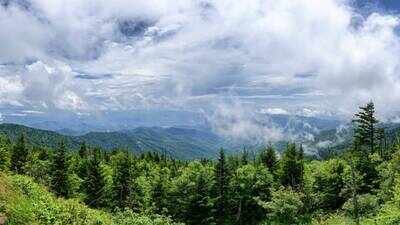
In 1929, Tennessee farmer John W. Oliver refused an offer of $20 an acre for his 375-acre farm in Cades Cove, land that officials wanted to acquire for the proposed Great Smoky Mountains National Park. Oliver took the fight to court, but after years of legal battles, he was ultimately forced to give up his property and received $17,000 in compensation.The case became one of the best-known examples of the conflict between the creation of the national park and the mountain families who had lived on the land for generations.
Why John W. Oliver refused to sell his Cades Cove farm
According to the U.S. Department of Agriculture Forest Service’s historical account of federal land acquisition in the Southern Appalachians, Oliver was among the residents who strongly resisted the creation of the Great Smoky Mountains National Park.Oliver owned 375 acres in Cades Cove, a fertile mountain valley in Tennessee where families had established farms and communities generations earlier. When state officials began acquiring land for the proposed national park, Oliver refused to accept the $20-per-acre offer for his property.Condemnation proceedings against him began in 1929. The dispute eventually reached the courts, where Oliver initially managed to challenge the state’s authority to condemn his land on behalf of the federal government.The Blount County, Tennessee, Circuit Court ruled in his favor, finding that the state did not have the authority to condemn his property for the federal park project. However, the Tennessee Supreme Court later overturned that decision, effectively clearing the way for the government to acquire Oliver’s farm.
Farmer eventually received $17,000 for his 375 acres
Oliver’s legal battle continued for several years. The case was not settled until 1935, by which time the government’s efforts to consolidate land for the Great Smoky Mountains National Park had progressed considerably.The Forest Service account states that Oliver ultimately received $17,000 for his 375-acre farm, which amounted to more than $45 an acre.While the final payment was considerably higher than the initial $20-per-acre offer, Oliver still lost the farm that had been part of the Cades Cove community.His case illustrated one of the central challenges facing officials trying to establish the national park: acquiring virtually all the land within the proposed park boundaries meant that some residents who did not want to leave could ultimately lose their property through eminent domain.
Great Smoky Mountains National Park changed life in Cades Cove
Cades Cove had long been a settled agricultural community before the national park was created. Families cultivated crops, raised livestock and built homes, barns, churches, schools and other community structures throughout the valley.The area had been inhabited by Cherokee people before European settlers arrived. European settlement expanded in the early 19th century, and by 1850, the Cades Cove population had reached 685.As the national park movement gained momentum in the 1920s, Tennessee and North Carolina began acquiring thousands of acres. Unlike National Forest land, which was generally acquired through willing-buyer, willing-seller transactions, eastern national parks could rely on eminent domain to acquire land from unwilling owners.That difference became particularly significant in the Great Smoky Mountains.
More than 4,000 people were affected by the park’s creation
The acquisition of land for Great Smoky Mountains National Park took roughly a decade, although some legal disputes continued into the 1940s.According to the Forest Service historical account, the park eventually included more than 6,600 separate tracts. These included small mountain farms, summer-home lots and large properties belonging to timber companies.The creation of the park affected approximately 4,250 people, or around 700 families.Some residents willingly sold their land and moved elsewhere. Others resisted the government’s efforts, while some landowners were allowed to remain through lifetime occupancy arrangements.The last school in Cades Cove closed in 1944, while the community’s post office shut down in 1947.
Why the government wanted the Smokies
The push to establish Great Smoky Mountains National Park was driven largely by the desire to preserve the region’s forests and scenic landscape from extensive logging.By the mid-1920s, timber companies owned a substantial portion of the Smokies, and conservationists feared that continued logging would destroy some of the last large areas of original forest remaining in the eastern United States.The campaign eventually gained financial support from Tennessee, North Carolina and philanthropist John D. Rockefeller Jr., who offered $5 million in matching funds in 1928.The first major tract for the park was purchased in 1925, when 76,507 acres were acquired from the Little River Lumber Co.President Calvin Coolidge signed legislation in 1926 authorizing federal parks in the Blue Ridge and Great Smoky Mountains, paving the way for the eventual creation of the park.
Great Smoky Mountains National Park was dedicated in 1940
By 1936, more than 400,000 acres had been acquired and transferred to the federal government, allowing the National Park Service to take greater responsibility for the area.The Great Smoky Mountains National Park was formally dedicated by President Franklin D. Roosevelt in 1940.Today, the park is one of the most visited national parks in the United States, with Cades Cove among its most popular destinations. Visitors can still see historic cabins, churches, barns and other structures that preserve glimpses of the mountain community that existed before the park was created.