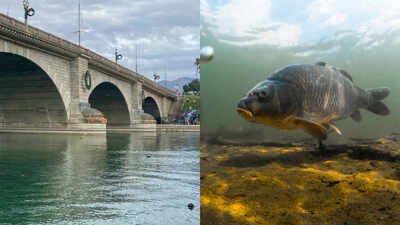
Lake Havasu is famous for striped bass, redear sunfish, world-class fishing tournaments and unforgettable days on the water. But beneath that success is a decades-long conservation effort that many visitors never see. For more than three decades, the Lake Havasu Fisheries Improvement Program has worked to strengthen aquatic habitat, improve recreational fishing and support the lake’s fishery and surrounding economy. The partnership formed in 1992 with a goal of enhancing the natural character of the reservoir while increasing fish species richness and strengthening predator-prey interactions to improve angling opportunities.
A partnership built around conservation
Led by Bureau of Land Management Lake Havasu Field Office fisheries biologist Rachel Wirick, the program brings together federal, state and local organizations, along with dedicated volunteers. Partners include the Bureau of Land Management, Bureau of Reclamation, U.S. Geological Survey, U.S. Fish and Wildlife Service, Arizona Game and Fish, Arizona State Parks and Trails, California Department of Fish and Wildlife, Anglers United, the Lake Havasu Divers Association and the Lake Havasu Marine Association.During its first decade, the partnership installed approximately 90 acres of artificial habitat, improving about 875 acres of cove complexes.“The BLM Colorado River District is overjoyed to have a fisheries biologist as knowledgeable and committed to the preservation and conservation of this very unique aquatic habitat as Rachel,” said Lake Havasu Field Office Manager Amanda Dodson. “She is a true example of the passion, dedication, and integrity required to develop and foster community level partnerships.”
Science behind the habitat
Lake Havasu is an artificial reservoir that lacks much of the natural woody structure fish depend on. The program addresses that challenge by creating habitat using PVC pipes, snow fencing and concrete reef balls across 124 coves managed by the BLM along the Arizona and California shorelines.The habitat serves several important ecological functions. Decomposing vegetation provides a surface for algae and zooplankton, helping support the lower levels of the food web and species such as shad and young fish. As vegetation breaks down, it leaves spaces where smaller fish can shelter from predators. Those concentrations of prey, in turn, attract sportfish such as bass and catfish, creating productive areas for anglers.
From local brush to underwater habitat
Natural brush is an important part of the program, too. Donated palm fronds and tree branches from local landscapers are bundled with steel strapping at Partners Point. Sandbags are then attached so the bundles can be transported by boat and placed in 15 to 18 feet of water — deep enough to remain accessible to fish while staying out of the way of boat traffic.The program can install as many as 800 brush bundles annually. The effort not only creates habitat but also diverts landscaping material from local landfills.
Volunteers make the difference
The program’s success depends heavily on its volunteer team, many of whom are retired anglers. They provide the hands-on labor needed to build bundles, load boats, install habitat and maintain existing structures.Since its management plan evolved in 2005, the partnership has expanded its focus to include monitoring, maintenance and long-term habitat productivity. Projects have included additional public fishing facilities, endangered fish monitoring and continued assessment of artificial reefs and supplemental brush.Images Courtesy: Bureau of Land Management and istock