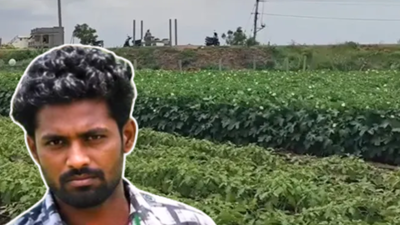
When Ravuri Sekhar joined Andhra Bank in 2017, his family was happy to see him begin a career in banking. While he worked at the bank, his parents continued managing their five-acre family farm in Chennam Raju Palli village in Kadapa district, Andhra Pradesh. That changed in 2025 after the death of his father, Nageswara Rao. “However, when my father (Nageswara Rao) passed away in 2025, I decided to quit my job and return home to take care of my family and farm,” Sekhar told 30Stades in an interview.Returning to the farm also meant changing the way it was cultivated. Sekhar decided not to depend on chemical fertilisers and pesticides and moved away from the family’s earlier cultivation of pulses and paddy. Instead, he adopted a multi-cropping model. The farm now combines long-term crops such as avocado, coconut and mahogany with shorter-duration vegetable crops.
Growing vegetables between long-term crops
Sekhar has planted avocado across two acres, while another one-and-a-half acres is being used for coconut and mahogany, as reported by 30Stades. The trees are meant to provide income over different time periods. Avocado and coconut are expected to start fruiting in another two to three years, while the mahogany trees are expected to provide timber returns in around 12 to 15 years. Rather than leave the space between the young trees unused, Sekhar uses it for vegetable cultivation. His vegetable crops include tomato, okra, brinjal, cluster beans, cucumber, chilli, carrot, turmeric, beetroot and cauliflower.
Farm produces over 100 kg of vegetables daily
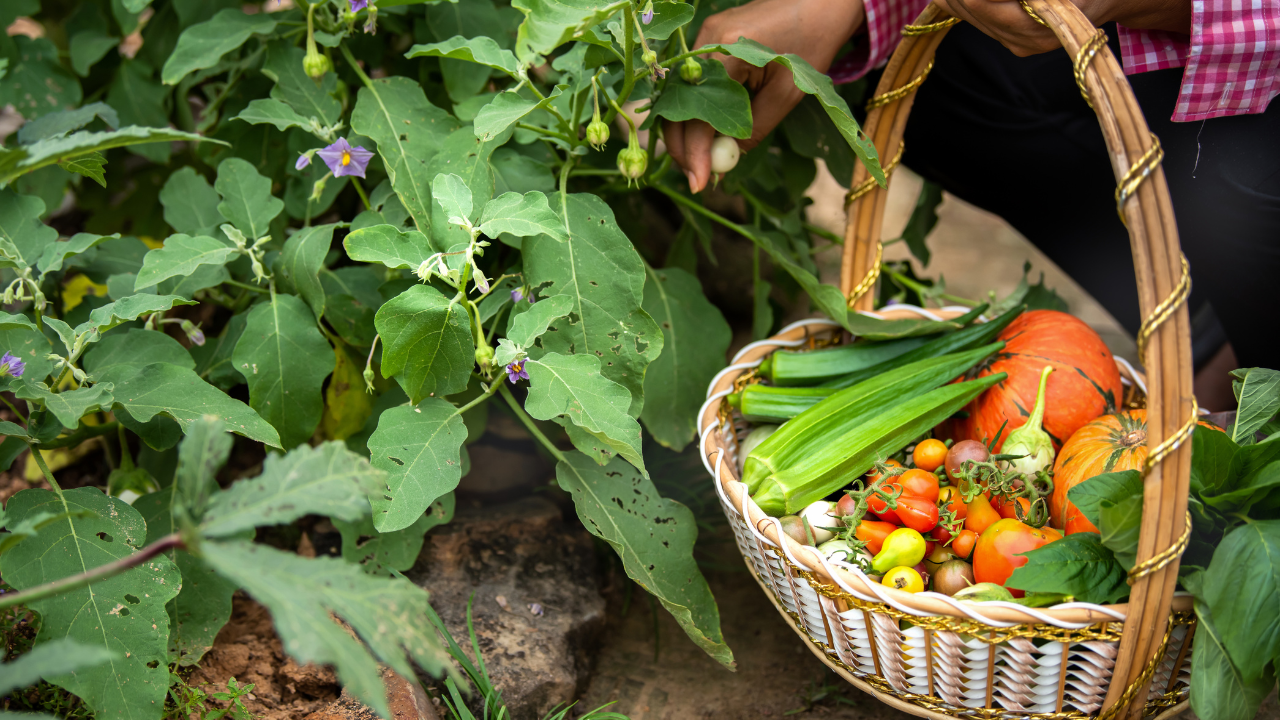
Photo: Canva
According to 30Stades, the farm currently produces more than 100 kg of vegetables a day. Because the farm is located alongside a highway, some customers buy the vegetables directly from the farm. Sekhar also sells the produce at the local mandi. He said the response from customers has encouraged him to continue with the model. “Consumers who purchase the vegetables once return to buy them again due to their quality and taste,” Sekhar told 30Stades. The selling price varies by crop. Tomatoes are sold for around Rs 40 per kg, while okra sells for about Rs 60 per kg and brinjal for around Rs 50 per kg. “The average is around Rs 50 per kg, which leads to a daily income of around Rs 5,000,” Sekhar said, according to 30Stades.
Why he moved away from chemical inputs
Sekhar’s father had earlier used conventional chemical fertilisers and pesticides on the farm. For Sekhar, the rising cost of agricultural inputs became one reason to look for another approach. The farm now uses natural inputs prepared on the property. One of them is ‘Jeevamrutha,’ made using cow dung, cow urine, pulse flour and jaggery. These inputs are applied to the soil and crops, including through irrigation and spraying. “I also use Ghana Jeevamrutha and other inputs made on the farm,” Sekhar said.
Natural methods for pest management
Photo: Canva
Sekhar has also adopted methods to manage pests without depending entirely on chemical pesticides. “We use several pest-management techniques, including bird perches and yellow sticky traps,” he told 30Stades. Bird perches encourage insect-eating birds to visit the field, while yellow sticky traps are used to monitor and control certain insect pests. “These techniques are part of an integrated approach to crop protection,” Sekhar said, according to 30Stades.Sekhar also focuses on soil health. He points to the relationship between the soil’s carbon-to-nitrogen ratio and microbial activity. When biological activity in soil declines, nutrient deficiencies and pest and disease problems can increase, potentially raising cultivation costs. His farm is also being used in the local agricultural context.