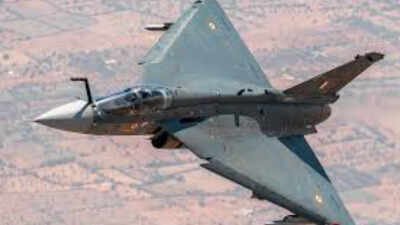
NEW DELHI: Rajnath Singh-led defence ministry has notified sixth positive indigenisation list (PIL) comprising 405 strategically important items with an estimated business potential of Rs 3,070 crore, a move that seeks to reduce dependence on imports and give a further push to ‘atmanirbharta’ in defence production.The list contains line replaceable units, sub-systems, sub-assemblies, spares, components and raw materials linked to key military platforms such as advanced and light utility helicopters, Su-30MKI and LCA (Tejas), armoured platforms like T-72, T-90 tanks and BMP-II, warships and missile systems.Notified by the department of defence production (DDP), the list includes 16 items of Indian Coast Guard (ICG) and 389 items of defence public sector undertakings (DPSU). PIL is Modi govt’s policy tool that bans the import of specific military equipment, platforms and spare parts after set deadlines. It forces the military to buy these designated items only from local Indian manufacturers to boost self-reliance.The list also covers items for missile systems such as Konkurs-M, Invar and MRSAM; electronics, including radars, sonars, fire control systems and satellite communication systems; high-explosive anti-tank ammunition and other critical defence equipment.Upon successful indigenous development, these items will be procured from the Indian industry. DPSUs and ICG will undertake indigenisation through various routes, including their ‘make’ procedure and in-house development, with participation from the industry, particularly MSMEs.DDP launched Sarijan defence portal in Aug 2020 as a dedicated platform through which DPSUs and Service Headquarters (SHQs) offer defence items to the industry, including MSMEs and start-ups, for indigenous development and production.Since its launch, the portal has facilitated the offer of more than 33,000 defence items for indigenisation by DPSUs and SHQs up to June 2026. These include 5,012 items notified under the first five PILs. More than 15,700 defence items have been successfully indigenised, resulting in an estimated import substitution value of about Rs 9,000 crore over the last five years. In addition, DPSUs have placed procurement orders, including in-house production, worth Rs 10,000 crore on domestic vendors up to March 2026.