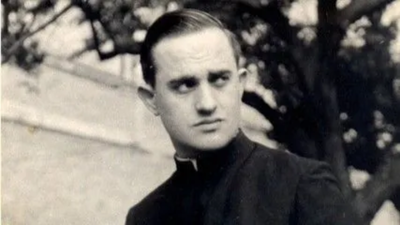
An Italian Jesuit priest once turned one of the Amazon’s most feared fish into an unlikely source of income for an isolated community. Giovanni Gallo organised the preservation and export of about 12,000 piranhas from Brazil’s Marajó Island, with the proceeds helping fund bridges, a community dock, a cemetery and an airstrip, according to Brazilian academic research and recent reports by CNN Brasil. His wider work eventually led to the creation of the Museu do Marajó, a museum dedicated to the region’s history and culture.The story dates to the 1970s, when Gallo arrived in Marajó, a large island in the Brazilian state of Pará. Brazil’s National Institute of Historic and Artistic Heritage, or IPHAN, records that he came to Brazil in 1970 and reached Marajó in 1972. Gallo spent his first years in Brazil in other locations before settling in Marajó.Gallo eventually lived in Vila de Jenipapo, in the municipality of Santa Cruz do Arari. The community was isolated and lacked basic infrastructure. Houses were adapted to seasonal flooding, with residents relying on wooden walkways and elevated structures to move around during periods of high water. A historical account published by Ciência Hoje das Crianças describes the local bridges and walkways as precarious, while academic research records Gallo’s efforts to address the community’s infrastructure and economic difficulties.The solution he developed was unusual. Piranhas were abundant in the region, but Gallo saw a potential commercial use for the fish. According to a 2016 academic study on the social networks surrounding the Museu do Marajó, he established a laboratory where local women were taught to preserve piranhas. According to CNN Brasil, 12,000 specimens were exported to Europe. The proceeds were used both to pay the women involved and to finance community works.Those works were substantial for a small, flood-prone settlement. The academic research records 350 metres of wooden bridges, a community dock, a cemetery designed for the flood season and an 800-metre runway for aircraft.The piranhas, however, were only one part of Gallo’s larger project. As residents began bringing him archaeological fragments found around Marajó, Gallo started collecting them. IPHAN records that the first objects came to him through local residents and that he gradually built a collection in Santa Cruz do Arari in 1972. Brazil’s National Museums Registry said the Museu do Marajó began informally in Santa Cruz do Arari in 1972.The museum was formally associated with an organisation called O Nosso Museu de Santa Cruz do Arari, founded on December 16, 1981. In 1983, after conflicts surrounding the museum in Santa Cruz do Arari, the collection was moved to Cachoeira do Arari, where the institution became known as the Museu do Marajó and opened to the public in December 1984.The museum’s approach was also unusual for its time. Rather than simply displaying archaeological objects behind glass, Gallo developed interactive exhibits known as “computadores de marca caipira,” or “hillbilly computers.” These handmade wooden structures used panels, strings, handles and mechanical elements to encourage visitors to interact with the exhibits. A 2024 doctoral thesis from the Federal University of Northern Tocantins described the system as a distinctive form of exhibition language built around local knowledge and community participation.Gallo died in Belém on March 7, 2003, aged 75, after spending roughly three decades working in Marajó. Academic and cultural sources describe his activities as extending beyond his religious role into community development, photography, archaeology and museology.