For a generation routinely labelled distracted, frivolous or disengaged, 2026 has offered something of a counter-narrative. The recent youth-led protest at Jantar Mantar put Gen Z’s ability to mobilise firmly in the spotlight, but what stood out just as much was how it chose to be heard — through memes, humour, slang, social media and a language distinctly its own. On International Youth Day today, has the way we perceive the young begun to change? Filmmaker Prahlad Kakkar believes Gen Z has, quite literally, “come of age”. “I am so proud of them. The fact that they have shown they have a sense of humour and never lose it is the most beautiful part of the youth.”
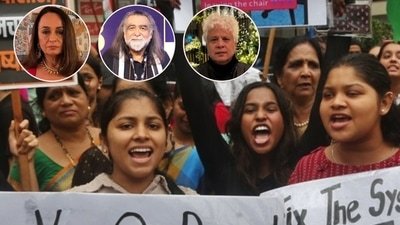
For him, what distinguished the recent protest was the generation’s refusal to conform to conventional forms of expression. “What was remarkable was that Gen Z raised its voice in its own language, as we saw during the protest. Their creativity, humour and networking ability are top-notch. They were talking in slang and yet putting a point across. The use of memes, humour and creativity was so clever and really left me impressed.”
Kakkar adds, “They were singing, dancing, having a great time and coming up with these funny memes and slogans, while still putting their point across and protesting. A whole book can be written about how these memes brought about change and became a voice. The Gen has proved they are not cockroaches.”
Filmmaker Onir, who attended the protests in Mumbai twice, says he was “wowed” by the youth’s “irreverence and courage”. “For a long time, I feel our generation has done a grave injustice to the younger generation because we are the ones who stopped asking for accountability. The youth is now teaching us what we lost,” he says, adding, “Empowering them is empowering ourselves too.”
Onir adds, “A lot of people are trying to discredit and defame what they have done with things like ‘oh, what about respect for elders’. Whereas their motivation for the movement was simple, just asking for what is their constitutional right. I am really hopeful and thankful to the youth for showing the older generation that we failed and we should at least stand with them, and not against them.” The filmmaker believes that the youth should decide what their country should be like: “We should not be holding on to power and let them at least guide us, as at the end of the day, it’s their future.”
Actor Soni Razdan, however, sees the moment as part of a much longer tradition of young people being agents of change: “We should be incredibly proud of our youth. Historically, it has often been young people who have been at the forefront of change. Students, in particular, have always had the courage and the idealism to question systems and challenge authority. And I think that’s how it should be. That is how societies and civilisations evolve.”
What may be changing, she feels, is the perception of this particular generation. “Perhaps what we are seeing now will also change the way this generation is perceived. They are sometimes dismissed as being frivolous or disengaged, but when something truly matters to them, they can come together, take a stand and make themselves heard. That in itself is powerful.”
Actor-columnist Suhel Seth, meanwhile, rejects the ‘lazy Gen Z’ stereotype altogether: “They have repeatedly proven that they are more than adept at leading change and young people have led many a movements in the history of India.” For Seth, the real shift is not that the young have suddenly discovered protest, but the tools they now have to amplify it: “It is not new for the young to have come out, raise their voice and play their part in bringing about change. What was new this time around is the way social media was used to amplify that voice.”