IPL 2026 was a tournament defined not just by individual brilliance but by how that brilliance was deployed. The Impact Player rule has made team-building a more layered exercise than ever, and any credible Team of the Tournament must reflect that reality. A list of the season’s highest scorers and leading wicket-takers is not a cricket team. A functional IPL XI requires a coherent batting order, a legal overseas configuration, a designated wicketkeeper, bowling across all phases, and a workable Impact Substitute plan.
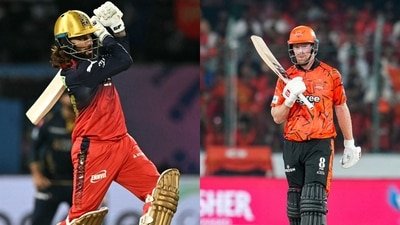
This selection has been built on those terms. Every player earns their place on season impact, and every player occupies a role their tournament performance justifies.
The IPL 2026 Team of the Tournament
Batting order: destruction, stability and depth
Vaibhav Sooryavanshi and Shubman Gill form the opening partnership. They are the most compelling pairing of the season and the natural first choice.
Vaibhav’s campaign was simply the most aggressive batting the tournament has seen in years. He finished with 776 runs at a strike rate of nearly 238, and his value was not just statistical. He attacked from the first delivery of an innings, routinely disrupted opposition bowling plans inside the Powerplay, and gave Rajasthan Royals a platform that made the rest of their batting order’s job substantially easier.
Gill is his ideal counterpart at the top. He combined volume, precision and tempo management across the season with a consistency that few batters matched. His role is not simply to steady the innings while Vaibhav attacks. Gill scores at a rate that keeps pressure on the opposition throughout, which makes him a genuine match-winner in his own right rather than a passenger alongside a more destructive partner.
Virat Kohli comes in at No. 3. His season contributed runs, control and a standard of fielding and intensity that few players at any level maintain. In a format that increasingly rewards specialists, Kohli remained a complete cricketer across all phases of a match. Although he opened throughout the season, the fact that neither Gill nor Sooryavanshi could be ignored made us adjust Kohli to three, as he has batted there before. Virat Kohli himself was also unignorable, as he had a brilliant season and played a vital knock in the Final.
Ishan Kishan slots in at No. 4, providing the left-hand angle that disrupts bowling set-ups in the middle overs. He also offers wicketkeeping cover, though the gloves in this XI belong to Heinrich Klaasen.
Rajat Patidar takes the captaincy at No. 5. The case for him as leader rests on the impact model data rather than sentiment: his captaincy contribution across the season was the strongest of any candidate in this XI. Patidar anchors the middle order, leads the side and gives the batting its most natural axis around which the later innings can build.
Heinrich Klaasen bats at No. 6 and keeps wicket. He is the XI’s overseas finisher, the player who ensures the innings retains genuine destructive potential regardless of what the Powerplay or middle overs have produced. His ability to score against quality spin and at the death adds a layer of batting insurance that the top order alone cannot provide.
Nitish Kumar Reddy completes the batting unit at No. 7. The No. 7 slot in an IPL side carries specific demands: it must contribute lower-order runs, offer bowling overs and hold its own in the field. Nitish meets all three requirements, and that functional versatility is precisely why he is selected ahead of another specialist batter.
The all-round and bowling core
Krunal Pandya at No. 8 provides left-arm spin in the middle overs, meaningful lower-order batting and the kind of accumulated pressure that containment bowlers rarely get sufficient credit for. His presence allows the XI to carry four genuine bowling options without compromising the depth of the batting order.
Sunil Narine needs little elaboration. His economy, wicket-taking ability and phase flexibility have made him one of the defining T20 cricketers of his generation, and his 2026 season did nothing to diminish that standing. He can open the bowling, operate through the middle or be deployed as a targeted match-up option. He also extends the batting tail more than his position suggests.
Bhuvneshwar Kumar leads the Indian pace attack. With 28 wickets and an economy under eight across the tournament, he delivered with the new ball, applied pressure in the middle overs and held his nerve at the death. That combination of skill across phases is exactly what an IPL bowling unit requires from its lead seamer.
Jofra Archer completes the starting XI. His raw pace and capacity to take wickets in high-leverage moments, early in an innings, in the death overs, on a pitch offering nothing, make him the XI’s overseas strike bowler of choice.
The Impact Substitute plan
Kagiso Rabada completes the squad as the Impact Substitute, giving this XI two distinct configurations.
When batting first, the side fields three overseas players in the starting XI, Klaasen, Narine and Archer, keeping the fourth overseas slot available. After the batting innings, Rabada comes in as the Impact Substitute and strengthens an attack that already has Bhuvneshwar, Narine and Archer.
When bowling first, all four overseas players, Klaasen, Narine, Archer and Rabada, feature in the starting XI. Vaibhav Sooryavanshi then enters as the Indian Impact Player to open the chase alongside Gill.
The two configurations are:
Batting-first XI: Vaibhav Sooryavanshi, Shubman Gill, Virat Kohli, Ishan Kishan, Rajat Patidar (c), Heinrich Klaasen (wk), Nitish Kumar Reddy, Krunal Pandya, Sunil Narine, Bhuvneshwar Kumar, Jofra Archer. Impact Player: Kagiso Rabada.
Bowling-first XI: Shubman Gill, Virat Kohli, Ishan Kishan, Rajat Patidar (c), Heinrich Klaasen (wk), Nitish Kumar Reddy, Krunal Pandya, Sunil Narine, Bhuvneshwar Kumar, Jofra Archer, Kagiso Rabada. Impact Player: Vaibhav Sooryavanshi.
Why this XI
IPL 2026 placed a premium on adaptability, on teams that could reconfigure themselves across two innings, adjust to pitch conditions and manage personnel across all twenty overs. This XI carries the tournament’s most destructive opening batter, its most compelling batting captain, a middle order with finishing power and experience, and an attack with the range to defend totals and restrict chases alike.
Method note
This XI was constructed using an impact-points model designed by the author that assesses IPL 2026 performances across batting, bowling, fielding and captaincy. Batting impact accounts for runs, scoring rate, innings value, phase influence and match context. Bowling impact accounts for wickets, economy, phase value and pressure contribution. Captaincy has been applied exclusively to the designated captain of this XI. All selections also satisfy IPL match-day regulations, including the overseas-player limit and Impact Substitute rules. The model is an analytical framework and does not represent any official IPL valuation.