The league’s most violent boundary-hitter is walking into a bowling attack that has bled boundaries all season, especially with the new ball. KKR are still winless after six matches and sit at the bottom of the table with one point. RR arrive third with eight points from five games. That gives the contest an obvious surface story, but the sharper one sits in the first six overs.
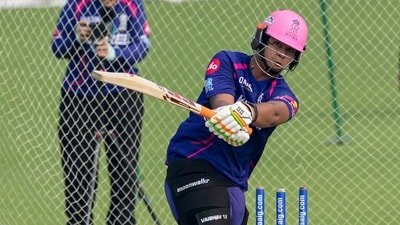
The cleanest conflict in this game is Vaibhav vs KKR’s new-ball weakness
In five matches of IPL 2026, Vaibhav Sooryavanshi has scored 200 runs off just 76 balls. He has hit 18 fours and 18 sixes. That gives him 36 boundaries overall, which means he is finding one every 2.11 balls. Among batters with at least 50 balls faced this season, nobody has been more boundary-heavy.
The real punch comes from the phase split. Of those 76 balls, 66 have come in the Powerplay. He has made 179 runs there and struck 33 boundaries in that phase alone. That is one boundary every two balls in the first six overs. This is not a batter who builds slowly and cashes in later. He arrives already swinging at the bowlers.
That is exactly where KKR have looked most exposed. They have conceded a boundary every 4.19 legal balls overall this season, the second-worst rate in the league. In the Powerplay, the numbers are harsher. KKR have given away 60 boundaries in 180 legal balls, which means one every three balls, the worst mark in the tournament so far. Even at Eden, the pattern has not changed much. KKR have still been loose with the new ball before tightening up later.
So, this stands as a direct structural collision. The most aggressive boundary-hitter in the league is targeting the exact phase where KKR have leaked the most damage.
KKR do have one possible route back into the game. Their middle-overs bowling has been more stable than their Powerplay work. Across overs 7 to 15, their boundary-concession rate improves sharply. At home, that squeeze has been clearer. Once Sunil Narine and Varun Chakaravarthy get into the innings, KKR can still slow teams down and drag them into a different tempo.
But that also explains the danger. Sooryavanshi’s method is built to hit before that grip arrives. He has already shown he can brutalise pace, scoring at a boundary every 2.06 balls against seam this season. KKR’s pace group, meanwhile, has been the softer arm of their attack, conceding a boundary every 3.48 legal balls. If they miss length early, he has the game set up for RR before the spinners can even start applying pressure.
Where Pathirana changes the conversation
This is where Matheesha Pathirana becomes a real talking point, but only if treated carefully. He has now joined the KKR camp after a delayed return due to injury, clearance, and travel issues. That is a boost in itself for a side that has looked thin in the pace department. KKR’s fast-bowling resources had already been stretched by Harshit Rana’s absence and Akash Deep being ruled out for the season.
The more immediate issue, though, is whether Pathirana actually plays on Sunday. Reports say he is unlikely to be available, even though he is listed in the squad. So KKR may have their marquee quick back in camp without him, yet back in the XI. That uncertainty matters because Pathirana is not just another seamer. He is the bowler KKR bought to change the shape of innings, especially at the back end, with yorkers, awkward angles and wicket-taking threat.
If he does not play, KKR are left leaning again on the same attack that has struggled to hold shape through the opening stretch of the season. If he does play, the attack immediately looks less ordinary, but even then, the first problem does not disappear. Pathirana is a death-overs specialist. Sooryavanshi’s violence usually arrives much earlier.
It is not just about a young hitter in form. It is about a batter who scores in a very specific way, against a bowling unit that has been vulnerable in that exact zone, at a moment when KKR are already under pressure to rescue their season.
If KKR survive Sooryavanshi’s first burst, the contest opens up. If they do not, Eden could end up watching the league’s No. 1 boundary-hitter turn the first six overs into the whole afternoon.