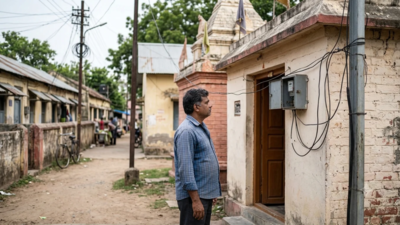
NEW DELHI: The Allahabad high court has held that access to electricity is part of the right to life under Article 21 and directed the North Eastern Railway to provide an electricity connection to a man living in a temple premises in a railway colony. The court said electricity is an indispensable need in modern times. The judgment was delivered on September 28, 2026.Why did the petitioner approach the high court?According to the court order, Fanindra Das sought restoration of an electricity connection to a temple in the railway colony at Ballia. His deceased father, Aniruddha Das, was the Mahant of the temple and had been provided an electricity connection by the railway authorities.Das wanted the existing connection, which had been operating since 1978 in his father’s and elder brother’s name, to be transferred and the electricity supply restored to him through a sub-meter.The railway authorities had rejected his request and relied on a Railway Board letter stating that electricity connections could not be provided on private land. The Railway also referred to another order under which connections could be given to private parties only if they were connected with railway work and were authorised occupants of the railway land.What did the high court say about electricity as a basic right?The bench of Justice Vivek Saran and Justice Prakash Padia noted that the place where the petitioner sought the connection was surrounded by railway property and said the railway authority was therefore in a position to provide the connection.The court said the right to life under Article 21 cannot be limited to basic physical needs. It includes facilities necessary for a person to live with dignity, including electricity and other civic amenitiesThe bench relied on a 1996 Supreme Court judgment which held that the right to shelter includes electricity and other infrastructure needed for a person to live and develop as a human being.“Right to shelter, therefore, includes adequate living space, safe and decent structure, clean and decent surroundings, sufficient light, pure air and water, electricity, sanitation and other civic amenities like roads etc,” Supreme Court held, as cited in the court order.The high court also referred to a 2022 Supreme Court judgment concerning an electricity connection to a tenant. It noted that the Supreme Court had held that electricity was a basic amenity that could not be denied merely because the landlord had not given a no-objection certificate.The bench then relied on an earlier 2026 Allahabad high court verdict which had held that access to an electricity connection was a fundamental right under Article 21.The court noted that the authorities did not dispute that the petitioner was living at the premises. Despite this, he had been denied an electricity connection and had been forced to live without electricity for more than a decade.“Thus it is the abundant duty of the respondents to ensure that the petitioner have accessibility to basic human need and in modern times, electricity is an indispensable need to live,” the high court noted.The court said the electricity connection ought to have been provided by the Railway authorities unless there was a legal bar preventing it. It accordingly quashed the orders rejecting the petitioner’s request.What did the high court order?
- Quashed the orders dated July 26, 2011 and May 9, 2012 rejecting the electricity connection.
- Directed the General Manager, North Eastern Railway, Gorakhpur, to provide an electricity connection to Fanindra Das.
- Ordered that the connection be provided within 30 days from the presentation of a certified copy of the judgment.
- Made the direction subject to there being no statutory impediment.