Ishan Kishan was meant to be Sunrisers Hyderabad’s temporary answer to the leadership puzzle. Pat Cummins’ absence pushed him into the role, and the expectation was simple: hold the team together until the regular captain returned.
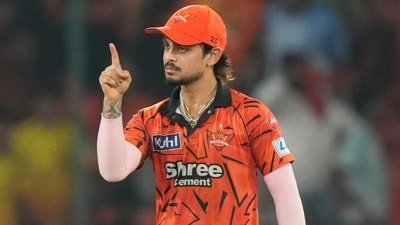
Nearly a month into IPL 2026, that arrangement no longer looks temporary. Kishan has given SRH something more valuable than short-term cover. He has given them shape, rhythm and a captaincy structure that is starting to work.
A stand-in captain who has grown into the role
The strongest case for Kishan is not built on sentiment. It is built on progression.
SRH have played seven matches under him so far, winning four. That record alone does not settle the debate. What does matter is the direction of his captaincy through that stretch. The early phase was uneven. SRH looked aggressive, but not always controlled. Kishan himself looked like a player adjusting to the burden of leading a high-voltage T20 side.
Then the curve changed.
Across the last three games, the reading on his captaincy has been much stronger. SRH beat Rajasthan Royals by 57 runs, edged Chennai Super Kings by 10 runs in a pressure defence, and then overpowered Delhi Capitals by 47 runs. Those wins were attained through tactical flexibility, maturity and strategic shrewdness. One came through early dominance, one through control under late pressure, and one through a complete all-round performance. That variety suggests Kishan is not just riding a hot streak. He is beginning to manage different match situations with more authority.
That is exactly why the conversation around him has shifted. He is no longer being discussed as a deputy doing a respectable job. He is being discussed as a captain who may have earned the right to continue.
The big shift has been clarity
Kishan’s best captaincy move may not have been a field placement or a surprise bowling change. It may have been his decision to step away from wicketkeeping for a phase so he could communicate better with his bowlers.
That call revealed a lot about how he is thinking. He recognised that the captaincy demanded cleaner access to the attack, quicker conversations and sharper on-field adjustments. Instead of trying to do everything at once, he simplified the job. That is not a glamorous move, but it is a serious one. It showed self-awareness and a captain trying to improve the team rather than preserve his own image.
SRH’s win over Rajasthan Royals gave that decision immediate weight. Kishan made a major contribution with the bat, but the more important point was structural. The side looked more connected. Plans were getting across. The bowling unit looked less reactive and more aligned.
That is often what separates surface-level captaincy from real captaincy. The best calls are not always dramatic. Sometimes they are about removing noise.
He has trusted the young bowlers instead of hiding them
This is where Kishan’s captaincy begins to look genuinely useful for SRH beyond this temporary stretch.
The win over Chennai was the clearest evidence. Defending 194 against a batting side like CSK required calm sequencing and trust. SRH were not defending 240 with the game already broken open. They had to hold shape while the opposition remained alive. Kishan backed a young attack to do that job, and they responded.
Young bowlers in the IPL are often managed conservatively. Captains protect them, delay them, or hide them once pressure rises. Kishan appears to have gone the other way. He has trusted them with responsibility and allowed them to execute plans in meaningful phases.
That kind of trust can change a side quickly. It sharpens accountability. It also widens SRH’s tactical options. If the captain believes he has more than two dependable bowlers in a tight match, the side becomes harder to line up against. That is what SRH have started to look like under Kishan.
The same theme ran through the Delhi Capitals’ win. Expert insights after that match focused not just on calmness, but also on how he used his bowlers against specific batters and phases. This moves the discussion away from vague leadership clichés. It points to actual tactical judgment.
Kishan is not yet being praised as a revolutionary captain. He is being praised for understanding matchups, bowling roles, and game flow better with each passing match. In T20 cricket, that is not a small thing. That is the centre of the job.
Also Read: INR 57 lakh generated in two balls, INR 1.48 crore overall: Eshan Malinga’s destructive spell rings in the riches
SRH’s identity has held under him
A captain’s first real test is whether the team still looks like itself under pressure. SRH have.
Under Kishan, their innings totals have ranged from shaky to explosive, but the team has largely stayed committed to its aggressive batting identity. The side has not retreated into caution after setbacks. It has kept trying to play on the front foot.
A temporary captain often ends up doing the opposite. He tends to shrink the game, simplify the batting, and try to survive the role. Kishan has not captained like that. He has allowed SRH to remain bold.
The last three wins underline that point. SRH posted 215 against Rajasthan, defended 194 against Chennai, and then blasted 242 against Delhi. Those are not numbers from a team playing scared cricket. Those are numbers from a side that still believes in its own method.
That does not mean everything has been perfect. The early losses showed SRH could still become loose when matches turned awkward. Kishan is not yet a finished tactical captain. There are still situations where he has to prove he can drag the side through messy games when the first plan fails. But the direction is obvious. He has become more settled, and SRH have started to reflect that.
Why Cummins’ return does not have to mean a captaincy change
This is the central question.
Pat Cummins remains one of SRH’s most important cricketers. His class, experience and authority are beyond debate. But captaincy is not only about stature. It is also about continuity, availability and what is already working.
SRH now have a structure under Kishan that is beginning to settle. The batting unit still plays with freedom. The bowlers appear to trust the captain. The side has put together different types of wins. Changing the captain immediately on Cummins’ return would risk interrupting a pattern that is just beginning to harden into something meaningful.
There is also the practical side. Cummins is coming back from injury concerns. Even if he is fit enough to play, SRH do not have to load every layer of responsibility back onto him at once. They can still use his tactical input, bowling quality, and experience without making him the central operator on day one.
In fact, that may be the smartest version of SRH. Cummins the senior cricketer. Kishan the active captain. One gives the side stature. The other gives it continuity.
The verdict
Ishan Kishan has not merely filled in for SRH. He has started to justify the role on merit.
He has grown across the season. He has made practical adjustments. He has trusted young bowlers in real moments. He has kept SRH’s attacking identity intact. Most importantly, he has begun to look like a captain the team can follow rather than just accommodate.
That is why SRH do not need to rush the armband back the moment Pat Cummins returns.
For now, the evidence points in one direction. Kishan is no longer keeping the seat warm. He has given SRH a strong enough captaincy case to let him keep it.