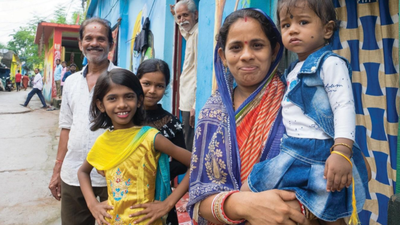
For many families living in urban slums, the biggest insecurity is not just the lack of a proper house, it is the fear of losing the place they call home.A small room, a rented space or a temporary structure may provide shelter, but without legal ownership of the land beneath it, families often live under the constant threat of eviction.Odisha’s JAGA Mission, launched in 2017, attempts to address this problem by giving slum dwellers something beyond housing: legal rights over the land they live on.The mission focuses on transforming existing slums into better living spaces instead of simply removing them. Through land rights, improved infrastructure and community participation, the initiative aims to integrate slum settlements into the wider urban landscape.
What is JAGA Mission?
JAGA (meaning “land” in Odia) Mission was introduced by the Odisha government in 2017 to provide land rights to slum residents and improve basic services in urban slums.Under the Odisha Land Rights to Slum Dwellers Act, 2017, eligible slum dwellers can receive land rights for plots of up to 30 square metres.The land title provides families with security of tenure and reduces the fear of displacement. The rights are heritable, meaning they can pass on to legal heirs, but they are non-transferable, preventing the land from being sold.The initiative is considered significant because it recognises the contribution of slum residents to urban development and provides them legal recognition in the cities where they live.Since 2018, the mission has been implemented across 114 Urban Local Bodies (ULBs) in Odisha, benefiting around 1.7 million people.
Why land rights matter more than just houses
A house without ownership of land often provides limited security. Many urban poor families invest their savings in improving their homes, but uncertainty over ownership discourages long-term investment.By granting land rights, JAGA Mission gives residents confidence to improve their homes and participate in the development of their neighbourhoods.The land rights certificate issued under the scheme can also be used as proof of address, helping beneficiaries access government services and formal systems.The government has used technology in the process by conducting drone-based surveys to map slum areas and identify eligible beneficiaries.For married couples, land titles are issued jointly in the names of both spouses, while single beneficiaries can receive ownership in their own name.
From slums to liveable neighbourhoods
Land ownership is only one part of the mission. The second major component focuses on transforming slums into better-equipped settlements through the Biju Adarsh Colony programme.Instead of eliminating slums, the approach is to upgrade them with basic facilities and integrate them with the city.The programme provides nine key infrastructure facilities, including:
- Paver block roads
- Storm water drainage systems
- Street lighting
- Community centres
- Open spaces
- Children’s play areas
- Individual electricity connections
- Individual piped water connections
- Household toilets
According to the government, 725 slums have been transformed into Biju Adarsh Colonies, helping address basic inequalities faced by urban poor communities.
Giving communities a role in development
A key feature of JAGA Mission is community participation.The government created Slum Development Associations (SDAs), allowing residents to participate in decisions related to infrastructure improvements and local development.The initiative treats these associations as a decentralised system where communities can help shape the future of their neighbourhoods.According to the mission’s progress report, 2,919 SDAs have signed agreements with Urban Local Bodies, while more than 43,785 community leaders have been trained.
Improving everyday life
Along with housing security, the mission has focused on improving daily living conditions.The Mo Toilet initiative was introduced after a survey found that thousands of slum households lacked individual toilet facilities. Under the programme, thousands of toilets have been constructed to improve sanitation.The government said:
- 2,919 slums now have 100 per cent electricity connections
- 2,724 slums have access to 100 per cent water connections
- 666 slums have 100 per cent individual household toilets
Preventing the growth of new slums
JAGA Mission also focuses on preventing the creation of new slums by improving existing settlements and providing better living conditions.The government aims to declare cities as slum-free by upgrading settlements and ensuring affordable, liveable spaces for migrant workers and low-income communities.For families living in environmentally unsafe locations or areas facing eviction risks, Odisha has developed New Liveable Habitats.Under this approach, residents are relocated to safer areas with improved facilities while ensuring that they are not excluded from urban development.
What has JAGA Mission achieved?
The mission has provided land security to thousands of families.According to the government’s data:
- 173,000 slum families have received land rights or land entitlement certificates
- 725 slums have been converted into Biju Adarsh Colonies
- 4,137 Mo Toilets have been completed, with thousands more under construction
The initiative has also achieved recognition internationally, receiving the Asia Pacific Housing Forum Award and the World Habitat Bronze Award in 2019 and 2023.
The road ahead
Odisha’s future plans under JAGA Mission include providing:
- 1 lakh land rights in five Municipal Corporations
- 20,000 additional
land rights certificates in municipalities and notified areas - Transformation of 1,901 slums into Biju Adarsh Colonies
- Completion of 12 new liveable habitats
The central idea behind JAGA Mission is simple: urban development should not mean pushing out those who built and sustained cities through their labour.By giving slum residents legal rights, better infrastructure and a voice in decision-making, the mission attempts to change the way cities view their poorest neighbourhoods, not as problems to be removed, but as communities to be strengthened.