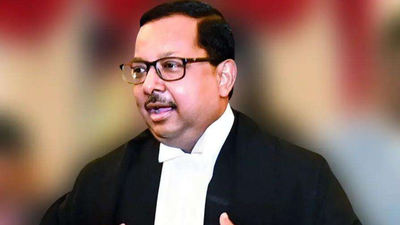
NEW DELHI: SC judge Ujjal Bhuyan has questioned opacity in the collegium’s decisions on judicial appointments.“I have noticed that the last three collegium resolutions contain no reasons whatsoever. Is this a step back from the principle of transparency?” said Justice Bhuyan at a panel discussion on Saturday. “By withholding reasons, we also create space for individuals to enter the judiciary who may later describe groups of people as ‘ants’ and make other remarks that are wholly unconstitutional,” he said.Citizens have right to know deliberations on elevation, transfer of judges: BhuyanTo prevent the entry of such people, “there should be some discussion, there should be some reasons given”, said Justice Ujjal Bhuyan. Though the judge didn’t name anyone, the comment was an apparent reference to a remark by an Allahabad high court judge at a social event in 2024.He was speaking at the launch of the Judicial Transparency Index: Assessing Disclosure of Information by the Supreme Court and the High Courts, prepared by the Justice, Access and Lowering Delays in India (JALDI) Initiative at the Vidhi Centre for Legal Policy.The judge stressed that deliberations on the elevation and transfer of judges by the SC collegium largely remain confidential, contrary to the principle of judicial transparency.“While carrying out the next assessment on the scale of Judicial Transparency Index, I may request the JALDI team to also look into the aspect of opacity of the collegium system. Deliberations on elevation and transfer of judges remain confidential. Reasons for rejecting or deferring a recommendation are rarely disclosed in full. And the criteria applied are not codified in any publicly disclosed instrument. It is a very important issue. Citizens have a right to know what is happening in the courts. They have a right to know who would be their judges.They have a right to know judgments. These should be in the public domain”, Justice Bhuyan underlined.The report is the first systematic study assessing transparency practices across India’s higher judiciary and evaluates disclosure of information by the Supreme Court and high courts across judicial processes, institutional governance and administration, and judicial and administrative personnel.Referring to a previous collegium resolution reiterating the recommendation of senior advocate Saurabh Kirpal for appointment as a judge, Justice Bhuyan said he found the reasons recorded by the Supreme Court convincing but noted that despite more than three and a half years having passed, no appointment materialised.
Share your thoughts in the comments
Be respectful · TOI community guidelines
Key findings of the JALDI report reveal that only five high courts have published a budget on their websites for FY 2025-26 while none has published the criteria governing case allocation.Of the 813 judges in the higher judiciary, only 87 have publicly disclosed their assets even as only two high courts publish disciplinary sanction orders pertaining to district judicial officers.“The findings highlight that the level of judicial transparency varies across courts and demonstrate that while individual disclosure measures have emerged…they have not yet translated into a holistic approach…” a release from Vidhi said.