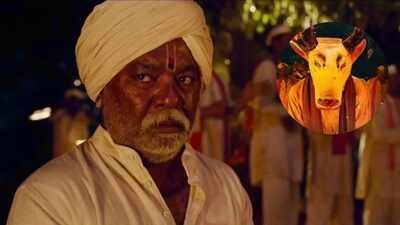
Actor Kishor Kadam, known for his acclaimed performances in films such as ‘Natrang,’ ‘Fandry,’ ‘Jogwa,’ and ‘Dithee,’ is celebrating a special milestone with ‘Gondhal,’ which has been selected as India’s official entry for the Best International Feature Film category at the 99th Academy Awards. In an exclusive conversation with ETimes, the actor opened up about his reaction to the announcement, what made Santosh Davakhar’s film stand apart, the director’s clarity of vision, and why he considers himself fortunate to have worked with filmmakers who have consistently trusted him with diverse roles.Kishor revealed that he was at the BMC office in Mumbai for his society work when he first received the news that ‘Gondhal’ had been selected as India’s official Oscar entry.“I was at the BMC office when I got a WhatsApp call. I got a call from some channel, and I got to know from the channel that our film has been selected for the Oscar. All the people in BMC heard that. Then there were calls from two or three channels,” he recalled. He added that the news soon reached all the workers at the office and senior officials at the BMC.“After taking the call, the BMC commissioner also came to the cabin. They felicitated me over there in the office. This is how the news was celebrated,” he shared.
Kishor Kadam considers himself a very lucky actor
For Kishor, ‘Gondhal’ is another addition to a career that has allowed him to work with several acclaimed filmmakers and portray vastly different characters. He believes the variety in his filmography is largely because directors have trusted him with unconventional roles.“I consider myself a very lucky actor. Because the directors who have trusted me, including Ravi Jadhav in ‘Natrang,’ Nagraj Manjule in ‘Fandry,’ Neeraj Pandey in ‘Special 26,’ Shyam Benegal, Atul Pethe, Sumitra Bhave, Amol Palekar, Sudhir Mishra, and so many others, have trusted me and given me good roles,” he said.“Otherwise, no one would have given me the role in ‘Fandry.’ Ravi Jadhav’s role as the contractor in ‘Natrang,’ if he hadn’t given it to me, who else would have? ‘Jogwa,’ the role I did; all these roles were different. There was a film called ‘Dithee,’ with Mohan Agashe, who was the producer, and Sumitra Bhave, who was the director. I did four or five films with them; all of them were different,” he shared.
The screenplay for ‘Gondhal’ was meticulously woven feels Kishor Kadam
Kishor said that what immediately impressed him about ‘Gondhal’ was the screenplay and director Santosh Davakhar’s understanding of cinema.“Santosh Davakhar had followed my work for years, even though we didn’t know each other. When he called me to meet him and told me about ‘Gondhal,’ I was very impressed because that screenplay was very meticulously woven,” he said.“Reading that screenplay, I realized that this person has a strong sense of world cinema. He has read world cinema, he has studied screenplays, and he has done workshops and understood all this. I was very fortunate to get that role.”One of the biggest challenges for the actor was the film’s opening sequence.“Particularly, the first shot, which is 25-27 minutes, is one shot. As an actor, the confidence he showed was very challenging and joyful for me. I tried to do well, but how did I do it? The audience will decide.”With ‘Gondhal’ now reaching audiences beyond Maharashtra in Marathi, Hindi, Tamil, and Telugu, Kishor believes the film’s journey demonstrates the universal nature of cinema.“I feel that, in the language of cinema, there is no such thing as language. South Indian languages, Tamil, Telugu, Kannada, Tulu, and now Marathi, are reaching people in Maharashtra, people in Kolkata, and Bengali audiences too. When good cinema travels in so many languages, it is a very joyful thing because more people will watch it.”Drawing a parallel with the success of ‘Kantara,’ he added, “In ‘Kantara,’ the way the people and the folk traditions reached the national level, I feel ‘Gondhal’ will also reach the national level.”Kishor also spoke about Santosh Davakhar’s uncompromising approach while making the film. According to him, the director’s clarity ensured that everyone involved in the project shared the same commitment.“I feel that passion is very important. Otherwise, making a film and setting up a play are very different. A film requires a lot of money, a lot of people, and a lot of effort. The director, who controls everyone, is the captain of the ship,” he explained.“Unless and until he knows what to do, he loses his control over everything, which was not happening here. The director was so clear in his mind about what he wanted. He must have prepared for this film for many years.”Kishor recalled an anecdote about filmmaker Richard Attenborough while explaining the importance of a director’s preparation. “I had read somewhere about Richard Attenborough while shooting ‘Gandhi.’ A journalist asked him, ‘You are not directing a film. You are just sitting here and sleeping.’ He said, ‘No, I have already directed the film on paper. I have already done my job. Now it is the technician’s job to execute it.’ ““Just like that, our director Santosh Davakhar was very clear. He knew what he wanted,” Kishor concluded.