Kolkata: There was a time when captaincy in the IPL felt preordained. The mantle belonged to the biggest name in the room—to MS Dhoni, Rohit Sharma, Virat Kohli, Gautam Gambhir, and occasionally an overseas import like David Warner. Leadership, like stardom, was something you arrived with. Now, increasingly, it’s something you grow into.
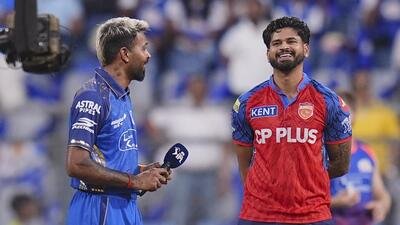
Across the IPL’s recent seasons, franchises have begun to tilt away from celebrity leadership. In its place is a more deliberate experiment: appointing captains who are not regular fixtures of India’s international setup. Take the current lot: barring Axar Patel or Hardik Pandya, the rest—Shreyas Iyer, Ajinkya Rahane, Ruturaj Gaikwad, Rajat Patidar, Shubman Gill, Riyan Parag and Rishabh Pant—don’t play T20Is for India regularly. Iyer, Gill and Pant have at least been there and done that. With the others however, the IPL is testing new waters.
It’s a shift that says as much about the IPL’s evolution as it does about the cricket itself. Less of a rejection of star power and more of a careful recalibration, this allows Dhoni to stay back as de facto sounding board, Kohli as batting anchor and Rohit as Powerplay enforcer. Of course, they are embracing bigger roles once they get off the ground.
On Sunday, for example, RCB mentor Dinesh Karthik shared how big an influence Kohli has been for this year’s U-19 World Cup winners Vihaan Malhotra and Kanishk Chouhan.
“It’s quite amazing and a learning experience for any young boy watching,” said Karthik. “I’m sure the likes of Vihaan and Kanishk have looked at him and been like look at how Virat bhai is practising and what he is doing differently. They’ve asked me as well what I think Virat bhai is doing differently from last year.”
RCB’s transition from Kohli to Rajat Patidar (he has been with them since 2021) has been striking. Here is a player who, until recently, hovered at the edges of national reckoning—admired, certainly, but not an automatic pick. Yet the results have been difficult to dismiss.
“Calmness and simplicity,” head coach Andy Flower had pointed out, helps Patidar stay grounded. Also because he “cares about the people that he plays with, that he shares a dressing room with.”
Unlike Patidar, Parag’s journey at Rajasthan Royals since 2019 has been less linear. Once dismissed as a precocious talent, Parag has, over successive seasons, reshaped his narrative. A prolific run in 2024 boosted expectations, and so by 2026, the franchise’s decision to entrust him with leadership felt less speculative. Here too, his familiarity helped.
“He’s been at RR for a long time and understands our approach and philosophy,” Royals previous owner Manoj Badale had said.
Then there is Gaikwad at Chennai Super Kings—a succession story that would have been implausible in any other context. To follow Dhoni is to inherit not just a team, but an ideology.
And Gaikwad’s game—precise, measured, quietly prolific—mirrors the ethos CSK has long championed. He is not the most imposing figure, but that perhaps is precisely why he fits so well in CSK. In Gaikwad—who has been with them since 2019—CSK haven’t sought a replacement for Dhoni so much as an extension of a system that has always privileged composure over spectacle.
The pattern does not end there. Someone like Rahane, who complicates the captaincy narrative in interesting ways, has already endured a brief and tumultuous leadership arc at KKR. But somewhat validating his current status is Rahane’s constant stabilising influence—a reminder that experience, when stripped of ego, can still be quietly effective.
What unites these appointments is the logic underpinning them. The IPL has been slowly moving towards becoming a deeply professional and structural league. Franchises aren’t just assembling squads, but actively investing in building ecosystems. A player embedded within that setup—who understands the mood of the dressing room, the preferences of the coaching staff and the subtleties of role allocation—offers a different kind of coherence to the franchise’s long-term ambition.
There are practical considerations as well. The international calendar is increasingly unforgiving, its demands are often at odds with the IPL’s requirements. Banking on international superstars to anchor the leadership can be as precarious as it is appealing. In contrast, a domestically rooted captain offers a continued presence not threatened by international commitments.
This shift isn’t without its share of tension. Leadership, when not backed by performance, can be burdensome. But the franchises are persisting. Perhaps because when the rewards arrive, they feel more durable. A captain who grows with the team can anchor it not just tactically but also emotionally. He becomes a reference point not just for the players, stakeholders or the supporters, but also for the franchises’ own sense of identity. It’s a quieter kind of leadership, but no less compelling for it.