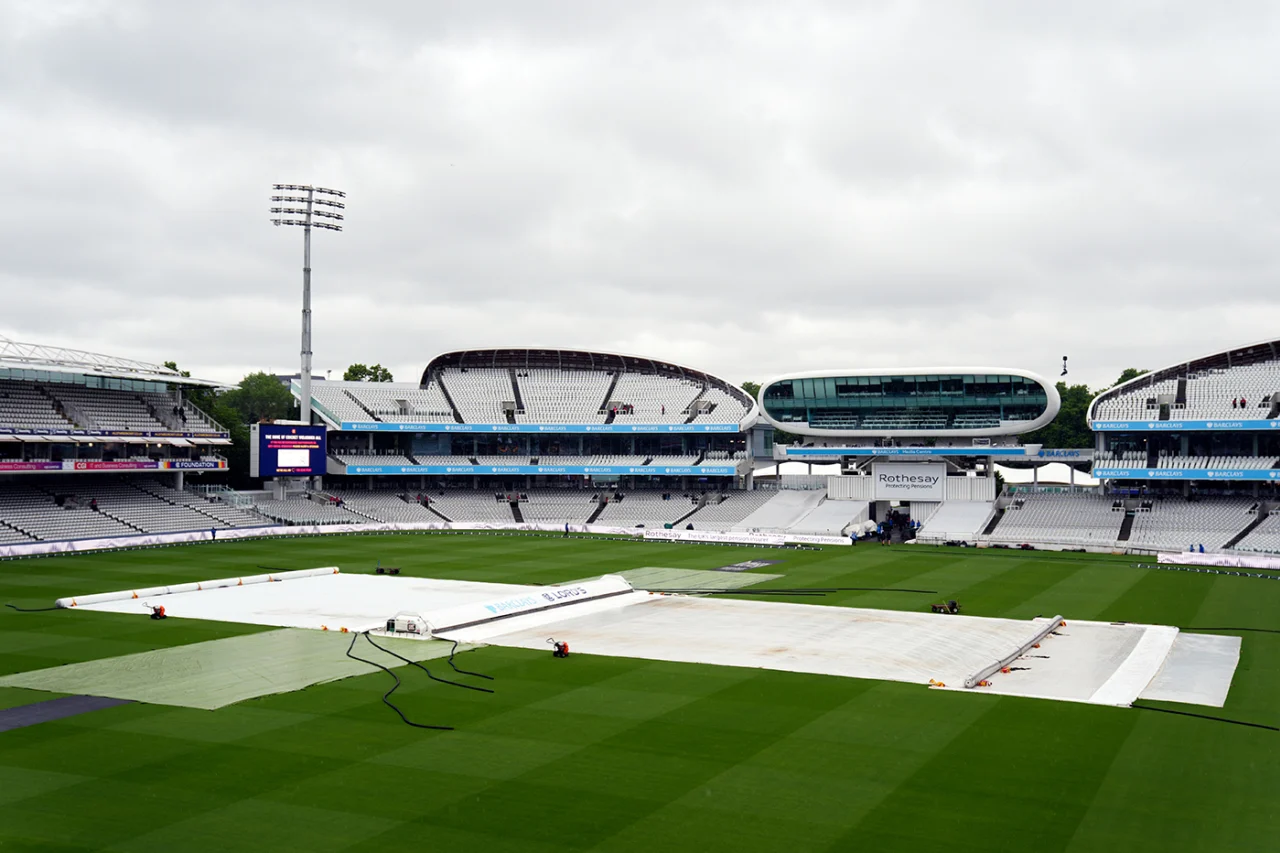
The Marylebone Cricket Club (MCC) is considering using 200-degree steam to improve the pitch at Lord’s after concerns over its poor condition. The issue came after the England vs New Zealand Test at Lord’s ended in just 166 overs, making it the third-shortest Test match in history. England won the match by 115 runs, but the pitch caused major problems for batters because of its uneven bounce. England captain Ben Stokes criticised the surface, calling it “not ideal” for Test cricket.
Following his comments, the MCC admitted changes are needed and is now looking at ways to improve the pitch and ensure better matches in the future. The MCC holds Test cricket at the highest level. But in its own backyard, the body miserably failed to hold that standard. In the ENG vs NZ Lord’s Test, a wicket fell every 24.9 balls, the quickest since 1907. Rain saved the MCC, the owners of the Lord’s, from further embarrassment. Without rain, the match would have concluded in just two days. Former England captain Nasser Hussain termed the Lord’s pitch “sub-standard”. The current captain, Ben Stokes, minced no words.
“From someone who loves Test cricket, is that something that will benefit Test cricket? I don’t think so. I get asked questions all the time about the longevity of this format. People even talk about saving Test cricket, which, for me, is a bit far. The game is played over five days, and without a little bit of weather, this wouldn’t have finished on day four. For someone who believes Test cricket should be the best format and should never disappear, that’s not ideal from that point of view,” England captain Ben Stokes told BBC Test Match Special.
MCC Admits Lord’s Pitch Fell Below Test Standards
The match was played in cloudy and damp conditions, and the pitch gave very little help to batters. The ball kept moving sideways throughout the game, making batting difficult. The pitch also had uneven bounce right from the first ball. As a result, wickets fell regularly. Of the 40 wickets taken in the 166-over match, 13 batters were bowled and 11 were dismissed LBW, showing how tough the conditions were for batting. England wrapped it up before lunch on the fourth day.
Following criticism from England’s former captains, including Nasser Hussain, Michael Atherton and Michael Vaughan, the MCC, which owns Lord’s, conceded the pitch wasn’t up to standard.
“We recognise that the pitch for this Test has shown more variable bounce than we would have wanted. We hold ourselves to the highest standards and are naturally frustrated when a surface falls short of those expectations,” said Rob Lawson, MCC chief executive and secretary.
He also said that the unusual weather played a big role in the condition of the Lord’s pitch. A very hot and dry May was followed by wet weather in the days leading up to the England vs New Zealand Test, which affected how the surface behaved during the match. Now, imagine that happening in parts of Asia. If spinners dominated proceedings in Ahmedabad, the same group at the MCC would have been lambasting, questioning the BCCI’s intent on supporting Test cricket. However, the MCC is just sorry, despite having eight months to prepare the pitch for the summer.