The most surprising and shocking thing about life is that you only get to know its trajectory as you live it. No one born in one situation remains in it for life long, and by the end, as you look back everything feels like the script of a movie written on a combination of your whim and god’s fancies. When one looks at the story of Reginald Lal Singh, the belief sits right. Much of his life remains preserved through his memoirs present in the New York Public Library and through accounts written by his wife, Gwen, whose papers are held in the archives of the University of California, Los Angeles.
The early life
Reginald Augustus Babulal Singh was born in British Guiana on August 8, 1905.
Reginald Augustus Babulal Singh was born in British Guiana on August 8, 1905. Known as Lal, his father Baboolal was from Kanpur and his mother Lakshmi was from Saharanpur. The couple had emigrated as indentured labourers to Demerara in the 1890s to work on its sugar plantations.His father abandoned the family when he was still an infant, travelling to the US and serving with the American Expeditionary Forces in Europe during World War I. Lal and his mother lived on the plantations for a while but later fled to Morawhanna, a port settlement in western British Guiana. There, Singh was left with members of the indigenous Makushi community. According to his wife’s account, the group “spirited” him deep into the interior, up to the Kaituma River and into the Amazonian rainforest.In 1914, Lakshmi sought the help of a Jesuit priest to find her son. Accompanied by Arawak boatmen, the priest travelled into the jungle in search of the settlement where Singh was living. Singh later described the encounter in vivid dreams: “The priest entered the camp carrying a crucifix, a sign of peace. The Indian blowguns were pointed at the priest’s throat.” Curious about the religious symbol, young Singh hurried forward, preventing the Makushis from “taking the priest’s life.“At last reunited with his mother, Lal began his education at a mission school. He remained fascinated with the wider world, with ships arriving from Georgetown, stories of gold prospectors and his mother’s memories of India all piqued his interest.
Reunited with father
In 1920, Baboolal wrote from Syracuse, New York, inviting Lakshmi and Singh to join him. Their arrival attracted considerable local attention from the local press. One newspaper greeted the teenager with the sensational headline “A Savage Comes to Syracuse”.An acquaintance of his father, Dr Thomas Halstead offered him room and board in exchange for odd jobs. Adjusting to life in NYC was difficult since Lal was unaccustomed to snow and ice and frequently arrived late to school. Still, he passed his exam with flying colours.Soon, his parents separated once again and this time, Lakshmi returned to Guyana. When Baboolal died a few years later in the early 1920s, a young Lal found himself isolated in a foreign land. Eventually, he enrolled in a medical programme at Syracuse University where he met students from across the world with a wide range of political viewpoints. “The socialists were good bridge players; the pacifists smoked the best tobacco, and were good partners at tennis and dancing, the imperialists dressed in the best suits and were shrewd poker players. The propagandists always borrowed money, while the communists knew all the speakeasies,” he wrote.Among the many groups, he joined the communists who he believed were genuinely committed to “fighting for freedom and justice.” As he broadened his horizons, he began reading about India’s independence struggle and the rising influence of Mahatma Gandhi. The pull towards his ancestral homeland was big enough to make Lal want to leave everything and travel there.During the time of the Great Depression, Singh was in Philadelphia, working for a tannery firm trading in Indian goatskins. For a year, Singh “learnt the art of selecting skins, including a study of methods employed by Indian dealers in making bad skin look prime good skin”. It was a practical preparation for his “spiritual voyage” to India.
A journey back home
In India, Lal first stopped in Madras. In the southern city, he encountered numerous stories about Gandhi and the independence movement. One man who carried a photo of Gandhi in his shirt pocket, close to his heart, described how India was changing. For Lal, there was “something moving, something powerful” to hear everyone speak of a “great man in my people’s country”. In a later account published in a Los Angeles newspaper, Singh added a more dramatic detail, claiming he had travelled to India carrying arms and ammunition, whose discovery might have resulted in his arrest and possible execution.He joined the Indian National Congress and worked in Bengal, hoping to organise workers and rally the citizenry. But British authorities monitored his movements and followed his participation in anti-colonial protests, he was arrested and imprisoned in Madras jail for two years. There he was confined in a cramped cell with other prisoners and made to survive on meagre rations.After his release, Lal travelled back home via London, where he sought out VK Krishna Menon. For the next four and a half years, he worked closely with Menon’s India League, helping prepare publications and propaganda materials designed to build British support for Indian independence.During this time, he also authored a children’s book, Gift of the Forest. Drawing on Indian family life and his experiences among the Makushi tribe in the Amazonian forest, the book described cultures that shaped his early life. Published in New York in 1942 by Longmans, Green and Co., it was co-authored with Eloise Lownsbery and illustrated by Ann Vaughan.At the same time, Lal began corresponding with Georgia Lloyd, a feminist activist associated with the Campaign for World Government. Lloyd belonged to the family that owned and published the Chicago Tribune.
Activism in the US
While residing in London in 1939, Singh received a visit from Joseph P Kennedy Jr, the eldest son of Joseph P Kennedy, the American ambassador to Britain. Interested in India’s freedom struggle, the junior Kennedy invited Singh to the embassy, where the father-son duo encouraged him to continue his political activism in the US, according to a report by Scroll. in.Soon afterwards, he embarked for America. As the ship carrying him set sail, it passed the British warship HMS Courageous that, shortly after, was struck by a Nazi U-boat, erupting in a tremendous explosion before sinking. His ship, the Collingsworth, immediately turned around to rescue survivors. Hundreds of wounded and burned passengers were pulled from the sea. Eyewitnesses noted that Lal, using his medical training, worked tirelessly to resuscitate the rescued.In US, he established the monthly newsletter India News in 1941 with financial backing from Lloyd. Operating from offices in Los Angeles and Washington, DC, the publication advocated for Indian independence.Throughout the 1940s, Singh travelled extensively, lecturing on Gandhi, non-violence, India’s role in the Second World War and the challenges facing an independent nation. He later recalled delivering as many as 11 speeches in a day. However, political organising among Indians in California proves immensely hard for him as most Indian-origin farmers in the Central Valley were Punjabi speakers, creating a linguistic barrier in his outreach. He also found it difficult to work with Mubarek Ali Khan’s India Welfare League and the former Ghadar movement, which he felt was no longer radical. Eventually, he relocated to San Francisco to continue his work.
An actor with the act
His final roles were single-episode television appearances in The Family Man (1966) and Star Trek.
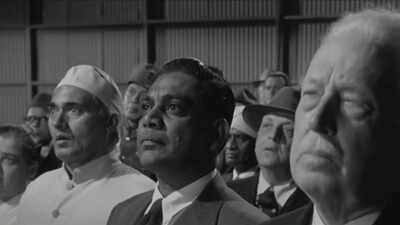
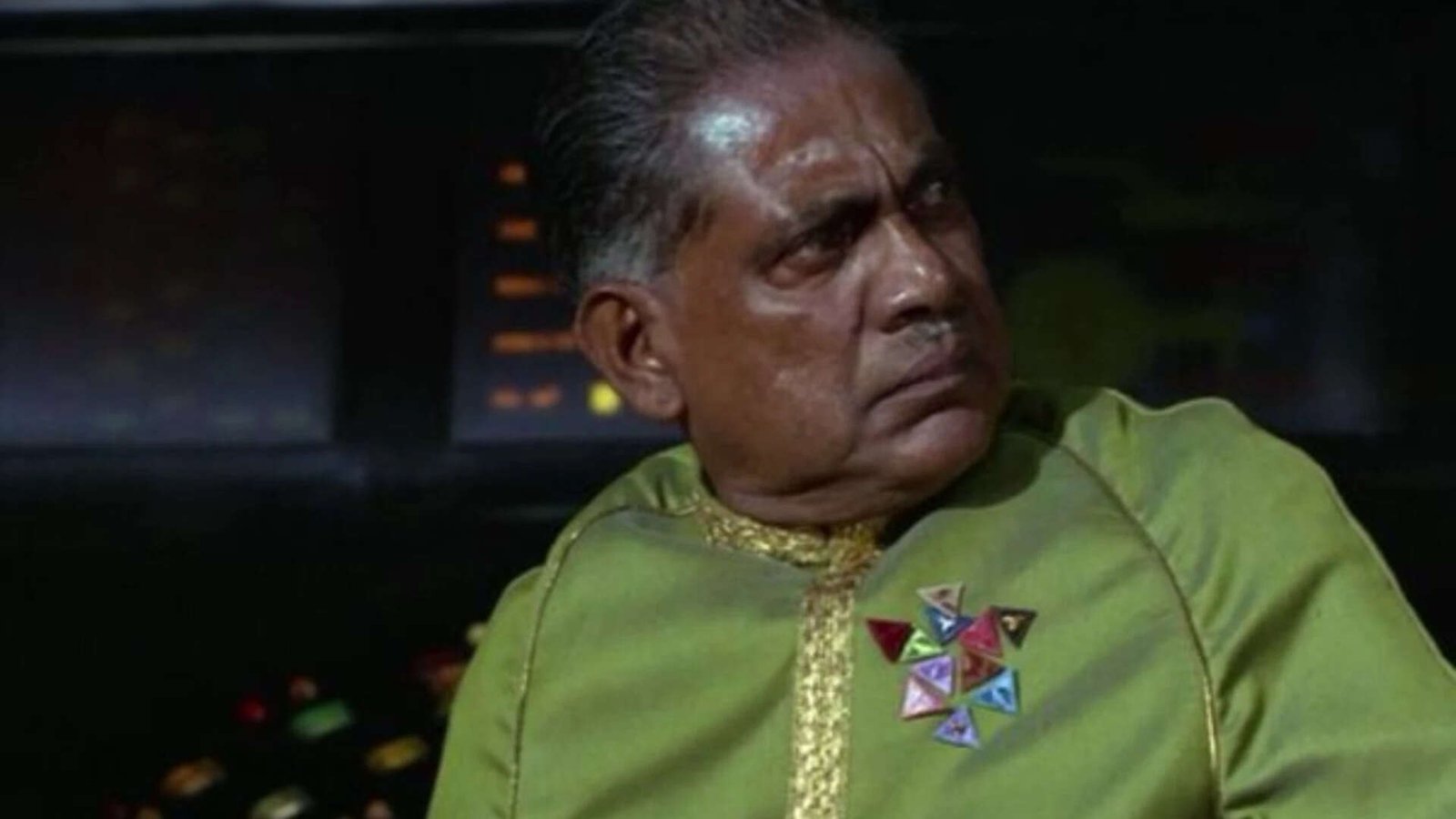
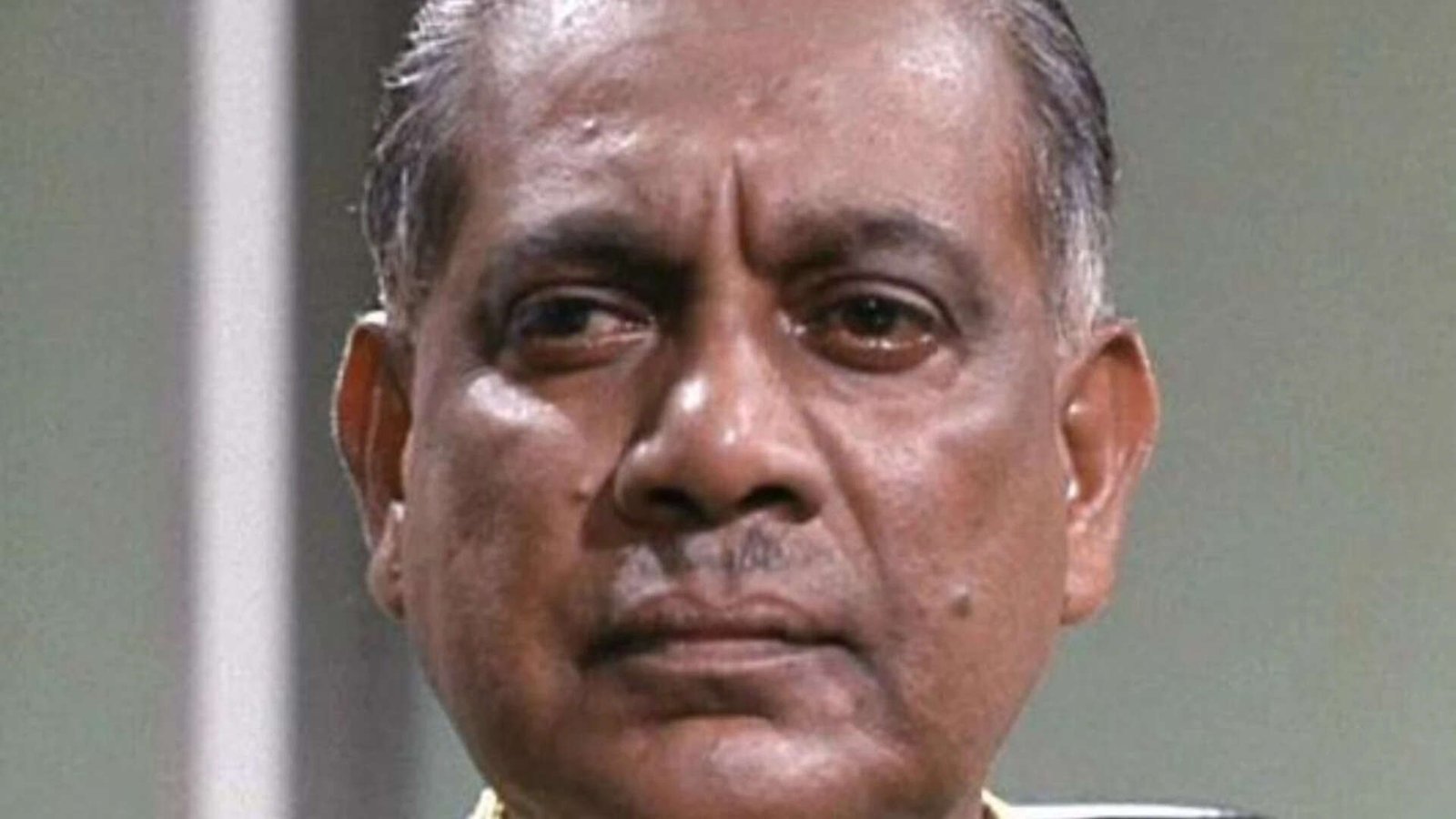
As the editor of India News, Lal generally used the name R Lal Singh. In Hollywood, he was often credited as Reginald Lal Singh. The pivot into Hollywood began with The Day the Earth Stood Still (1951) and continued with Thunder in the East and Storm Over Tibet (1952). In Alfred Hitchcock’s To Catch a Thief (1955), Singh appeared briefly as a turbaned maharaja adorned with jewellery.He worked as a technical consultant and appeared as an uncredited bearer in Around the World in Eighty Days (1956) and played a bartender in Khyber Patrol (1954), a UN clerk in The Bamboo Prison (1954). His final roles were single-episode television appearances in The Family Man (1966) and Star Trek.
Marriage and life
In October 1956, Lal married Gwen Mae Hobson and the couple established the India-America Society in Los Angeles. The organisation sponsored annual India Week celebrations, drawing students, scholars and visitors interested in Indian culture. It also provided assistance to Indian students studying in California universities.In 1964, the couple completed a journey through 29 countries, including temples of Cambodia, jungles of Indonesia, a houseboat in Kashmir and Taj Mahal in Agra. One newspaper described their lives as “an extended adventure that flows like the path of a long novel”.The couple hoped to return to India one day, but Lal died in 1970 at the age of 65. Throughout his life, he took upon every role he could to be able to further the message of Indian independence while also truly living it through travel, love, writing and loving.