
The Middle East conflict presents an opportunity to step up domestic investments in some targeted sectors, says Morgan Stanley in its latest report titled: India Economics & Strategy – Opportunities and Risks amid Conflict.“Amid the Middle East conflict, we expect a strong policy response and greater capex activity to address India’s supply-side challenges in energy, fertilizers and defence. India also could become a more favourable destination globally for data centres,” says Morgan Stanley.The aim, the brokerage said, is expected to be about strengthening domestic buffers and improving resilience to repeated global shocks that in turn hit supplies in crucial sectors.According to Morgan Stanley, energy, fertilizers, and defence will be the top focus areas that the government would look to shield from global uncertainties. These are likely to see higher investments.
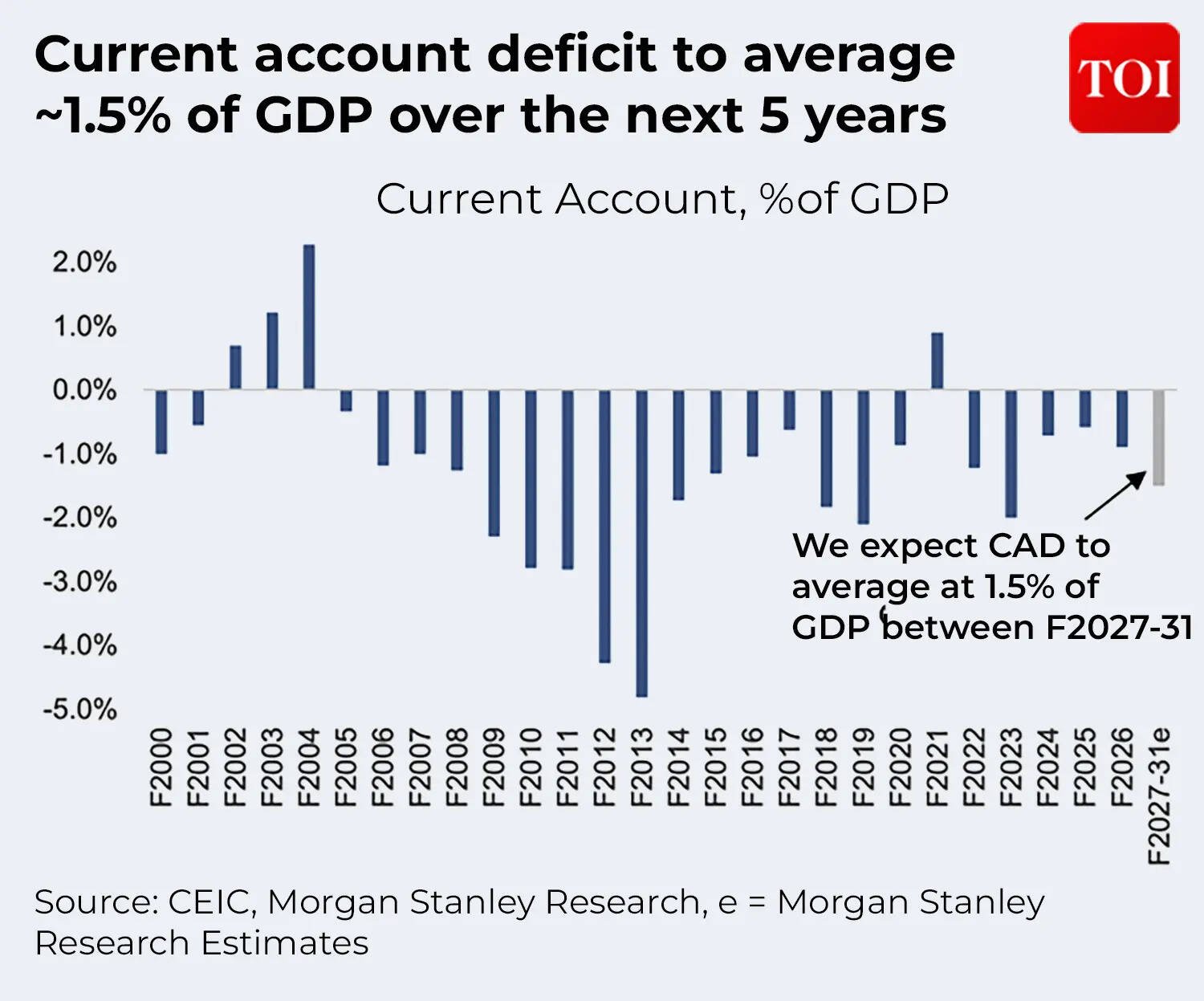
As it explains: India’s macro exposure to the Middle East continues to be transmitted primarily through energy and critical input prices, reflecting structurally high dependence on imported crude and natural gas. Policy has consequently shifted from a narrow transition narrative to a broader framing of energy security alongside transition, with an emphasis on strengthening domestic buffers, accelerating renewable integration, and de-risking supply chains in sectors where import dependence has macro and fiscal consequences.
Energy: Cornerstone of Reducing Vulnerability
The report highlights the role of coal and the rising renewable energy expansion as a key factor that will help India reduce its import dependence to meet its energy needs over the medium term. It also advocates for greater focus on building strategic petroleum reserves, and rollout of nuclear energy programmes.“As of early 2026, India imported about 85% of its crude oil and roughly 50% of its natural gas requirements. Such reliance on foreign energy makes India’s economy vulnerable to commodity price spikes and supply disruptions arising from geopolitical conflict,” it says.
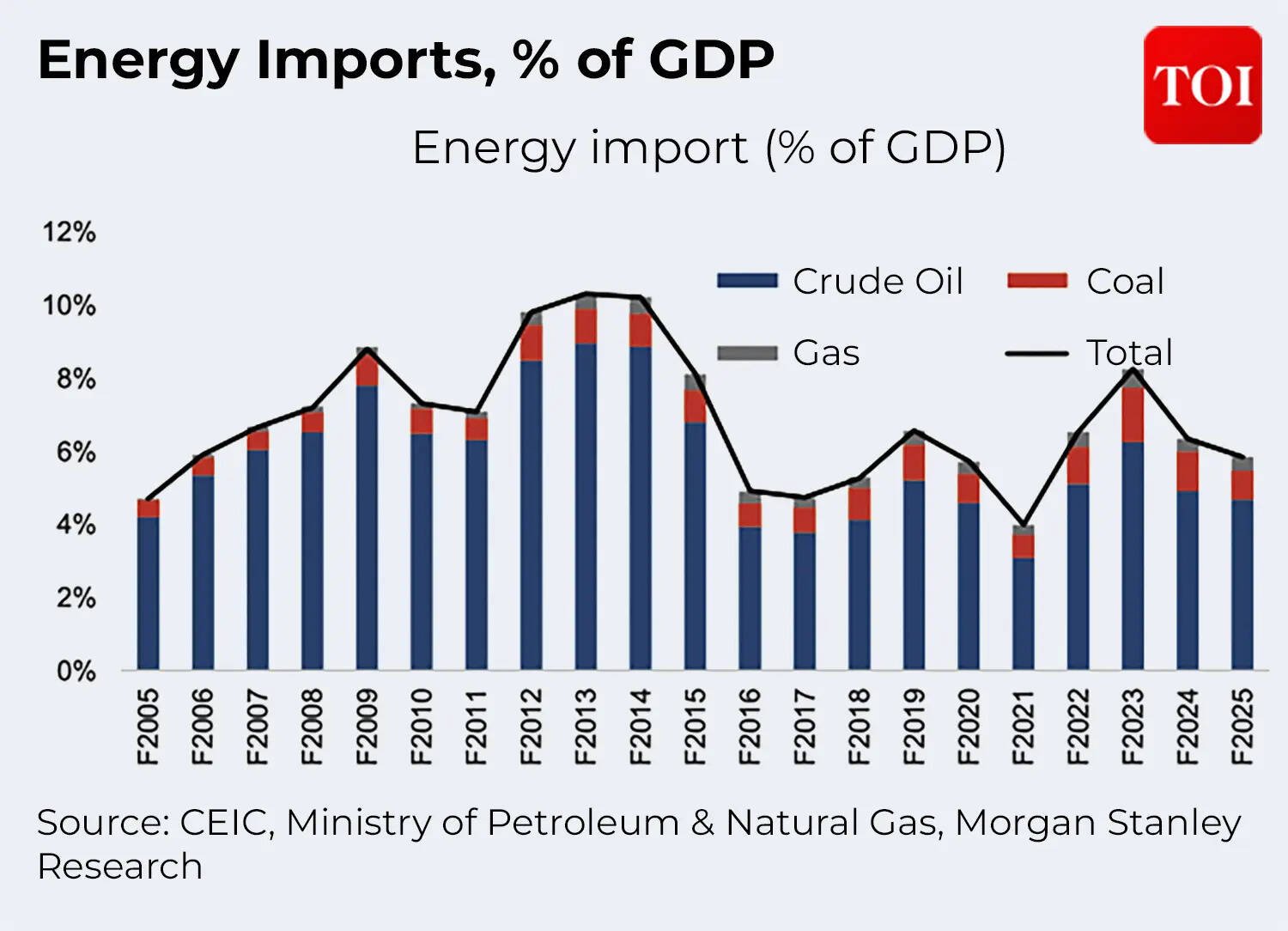
For Morgan Stanley the points that stand out are:
- India’s strategic petroleum reserve (SPR) framework remains a relatively underdeveloped component of its energy security architecture, the brokerage says.
- India has built up record coal stocks as a buffer against external supply shocks. As of March 2026, coal inventories reached ~210 MT – enough for 88 days of consumption. This cushion, together with India’s Strategic Petroleum Reserves for oil (which provide about 9-10 days of crude cover), helps insulate the economy from short-term disruptions and price spikes, the brokerage says.
- India’s import dependence on hydrocarbons remains a key external vulnerability. Domestic oil and gas production continues to lag demand.
- The government is advancing coal gasification as a strategic component of its broader energy and industrial policy under the National Coal Gasification Mission. Morgan Stanley is of the view that China’s vast deployment of coal to create oil, gas and other products makes it self-sufficient and insulated from global price shocks and serves as a guide for India to follow.
- The brokerage notes that renewable energy is the central pillar of India’s medium-term strategy to structurally reduce external energy dependence. But, a meaningful portion of the solar ecosystem remains exposed to external supply chains, especially from China.
- India remains under-penetrated in nuclear energy, suggesting significant headroom for expansion. The success of this strategy will depend on execution, particularly in financing, regulatory reform and supply chain development, it says.
Ultimately, the brokerage recommends a multi-pronged strategy to balance energy security, economic needs, and sustainability through:
- Expansion and use of the Strategic Petroleum Reserves
- More emphasis on coal gasification and coal mining
- Greater electrification
- Continued focus on renewable energy; and
- Fast-tracking nuclear power projects.
Fertilizers: Crucial for food security
Fertilizers as a sector is important for ensuring food security for the economy. As the brokerage notes in its report: this sector is the mainstay of India’s economy and food security. India is heavily reliant on fertilizer imports, particularly from the Middle East, and the ongoing conflict has disrupted supply and raised prices.According to Morgan Stanley, India’s medium-term response should be based on a three-part strategy: the country should diversify its supply sources, it should expand domestic capacity for production, and it should reduce nutrient intensity via better agronomy and input efficiency.
- India’s total fertilizer consumption has risen from ~53 million tonnes (Mt) in 2018-19 to about 60 Mt in 2023-24. However, relative to the 2021-23 global commodity shock triggered by the Russia-Ukraine conflict, the structure of risk to fertilizer supplies has improved only partially.
- The government’s strategy has been focused on a calibrated mix of capacity expansion, pricing support and supply diversification to reduce vulnerability.
- India has strengthened its urea position, with domestic production, but the fact is that import dependence persists. Structural dependence in phosphatic and potassic segments also remains largely unchanged.
- Yet another factor that the brokerage points out is: this dependence is further compounded by geographic concentration. Urea production and its gas feedstock remain closely tied to the Gulf, with GCC countries playing a central role in LNG and ammonia supply.
“India’s fertilizer sector has a structural imbalance between high agricultural dependence and uneven domestic capacity, with vulnerabilities extending beyond finished products into upstream inputs,” it says.The report says that reducing fertilizer import dependence is important to protect fiscal stability and food prices. “The Middle East conflict has added urgency to ongoing efforts to achieve fertilizer self-sufficiency where feasible, ensure a buffer for stocks, and pursue long-term agreements with reliable exporting nations. We think these steps are necessary to maintain agricultural output growth and keep inflation in check in the medium term,” it advocates.
Defence: The Need for Indigenisation
Morgan Stanley sees the Middle East conflict as a reinforcer of need to step up defence spending with an aim to bring about supply-chain depth and also enhance domestic production to reduce external vulnerabilities.“In the medium term, continued high defence spending will support modernisation and growth of India’s domestic defence industry, which should capture a larger share of the procurement budget and even tap export markets. This would not only enhance security of supply but also could have positive spillovers for technology and manufacturing sectors of the economy,” the brokerage report says.India is at present among the top 5 military spenders in the world. According to Morgan Stanley, global and regional conflicts are prompting India to significantly scale up its defence spending and accelerate the drive for indigenization. The government aims to raise overall defence spending to 2.5% of GDP over the next five years.
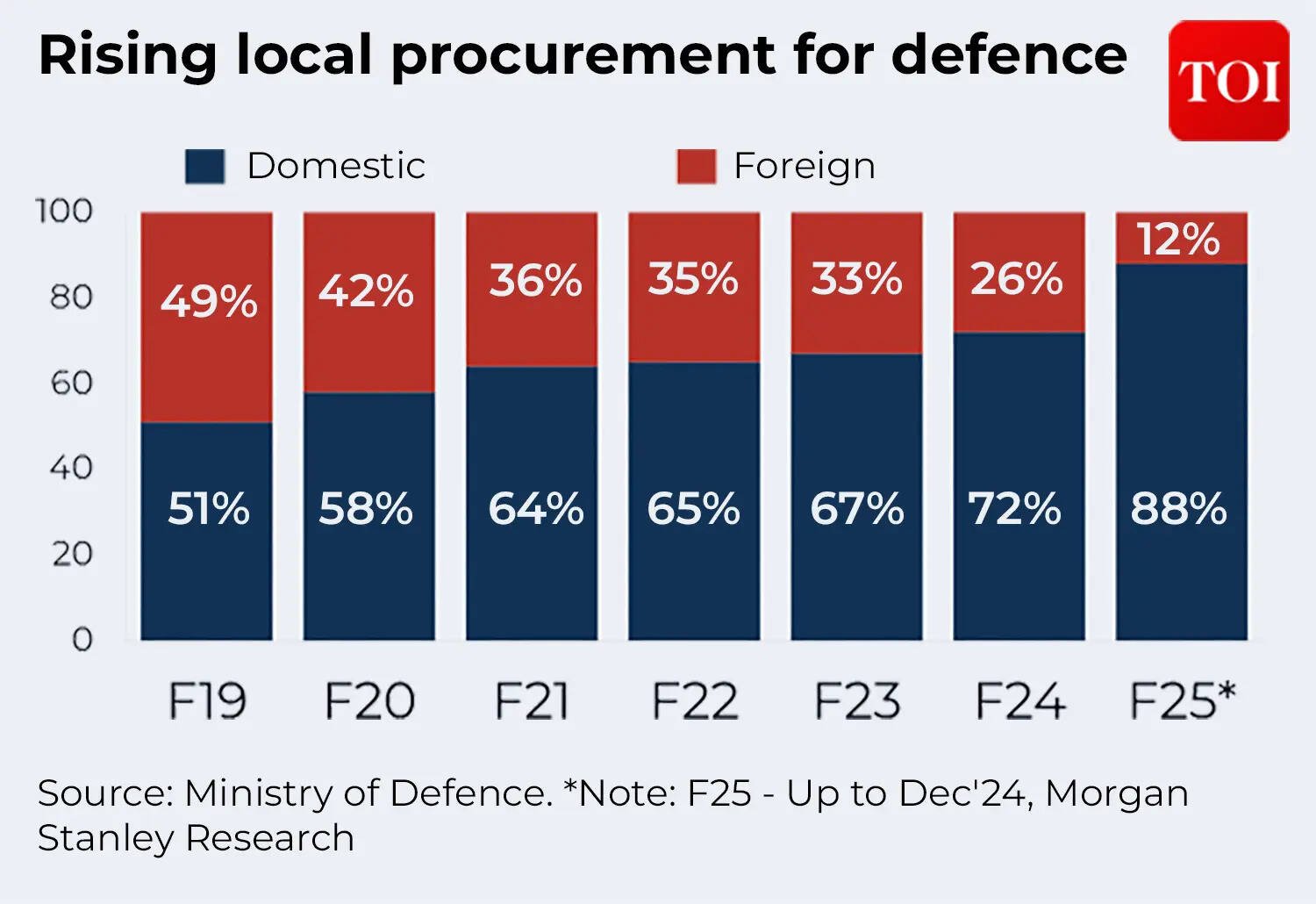
“In recent years, the government has launched major initiatives under “Make in India” and “Aatmanirbhar Bharat” to build an indigenous defence industrial base. A central pillar of India’s response is a push for selfreliance (Atmanirbhar Bharat) in defence manufacturing,” Morgan Stanley notes.The brokerage adds that reforms such as DAP 2020, indigenisation lists, higher FDI limits, industrial corridors, and innovation schemes, are helping build a self-reliant defence ecosystem and reducing reliance on foreign suppliers.The government’s efforts are yielding results as indigenous defence production reached Rs 1.54 trillion in FY 2025 as the domestic industry scales up.However, despite these efforts, the global surge in defence orders is straining supply chains, which could pose challenges for India’s military modernization timeline, it cautions.From a macro perspective, sustained higher defence spending could support GDP growth, manufacturing expansion, and job creation, but it also raises fiscal concerns given its large share in government expenditure. Increased localisation could ease pressure on external balances over time, even as short-term import needs persist.
Remittances Add to External Sector Resilience
Gulf-linked remittances remain a key support for India’s external account, making up 38% of overall remittances, says the report. It even believes that while prolonged regional instability raises risk profile, India is less vulnerable than before as remittance sources are diversifying, and a later reconstruction phase in the region could offset near-term weakness.The near-term downside risks may be concentrated in a sustained slowdown in Gulf labour markets and services activity. This could affect remittance-dependent states.
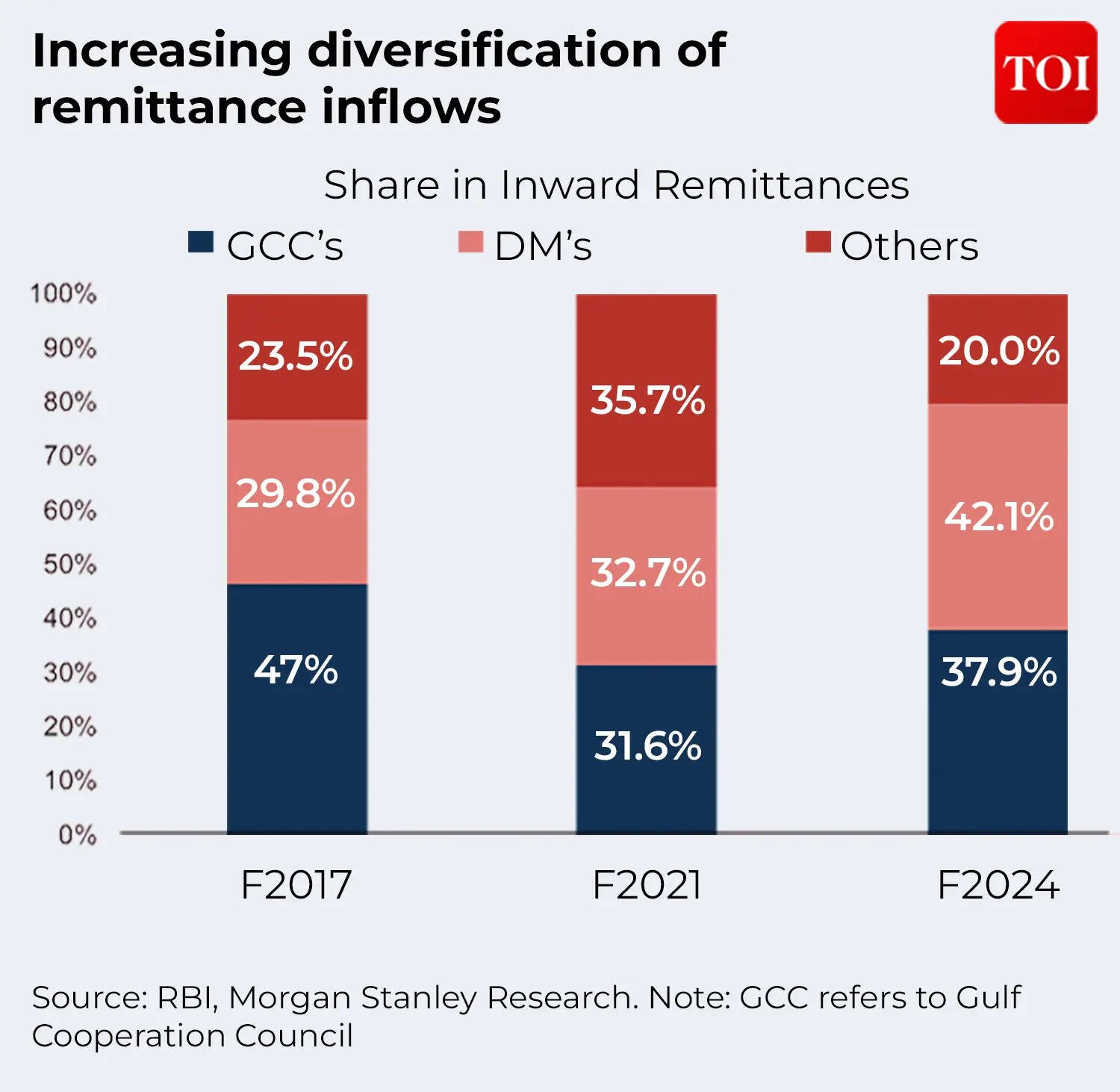
However, the offsets include the growing share of higher-skilled migration corridors and the potential for reconstruction-led labour demand once regional conditions normalise.So, what is the outlook on remittance inflows? Morgan Stanley is of the view that in the immediate term, policymakers may opt for some measures to support returning workers. There may also be intensified diplomatic engagement to safeguard the welfare and employment of Indian citizens abroad. “Over the longer run, the evolving profile of India’s diaspora – with a rising share of skilled migrants in developed markets – should continue to reduce reliance on any single region for remittances, strengthening resilience to geopolitical shocks,” it says.
Policy Direction, Boost to Capex
Morgan Stanley believes that India will continue to place greater emphasis on self-reliance and the ongoing global shocks will encourage higher capital expenditure in areas where vulnerabilities constrain growth.Efforts to reduce import reliance across energy, fertilizers, defence, and critical supply chains are inherently capex‑intensive and require sustained investment in domestic production capacity, infrastructure, and logistics, says the report.
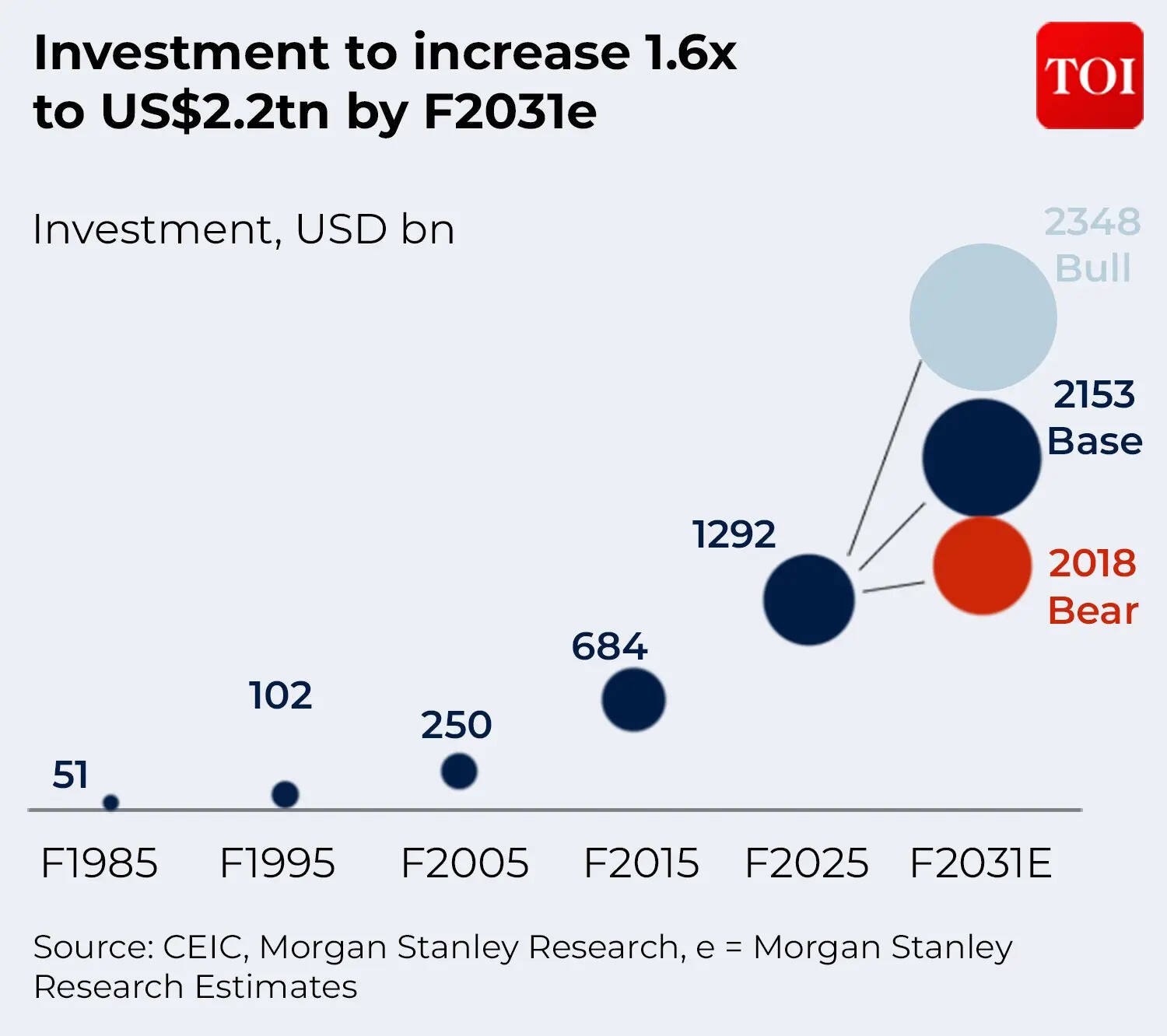
Morgan Stanley expects the headline capex for India to rise 1.6x to $2.2 trillion by FY2031, with incremental cumulative capex of $800 billion over the next five years, growing at a robust 11.9%. Around 60% of incremental cumulative capex is likely to flow into new‑age industries, i.e., energy transition, data centres, and strategically important defence, it says.
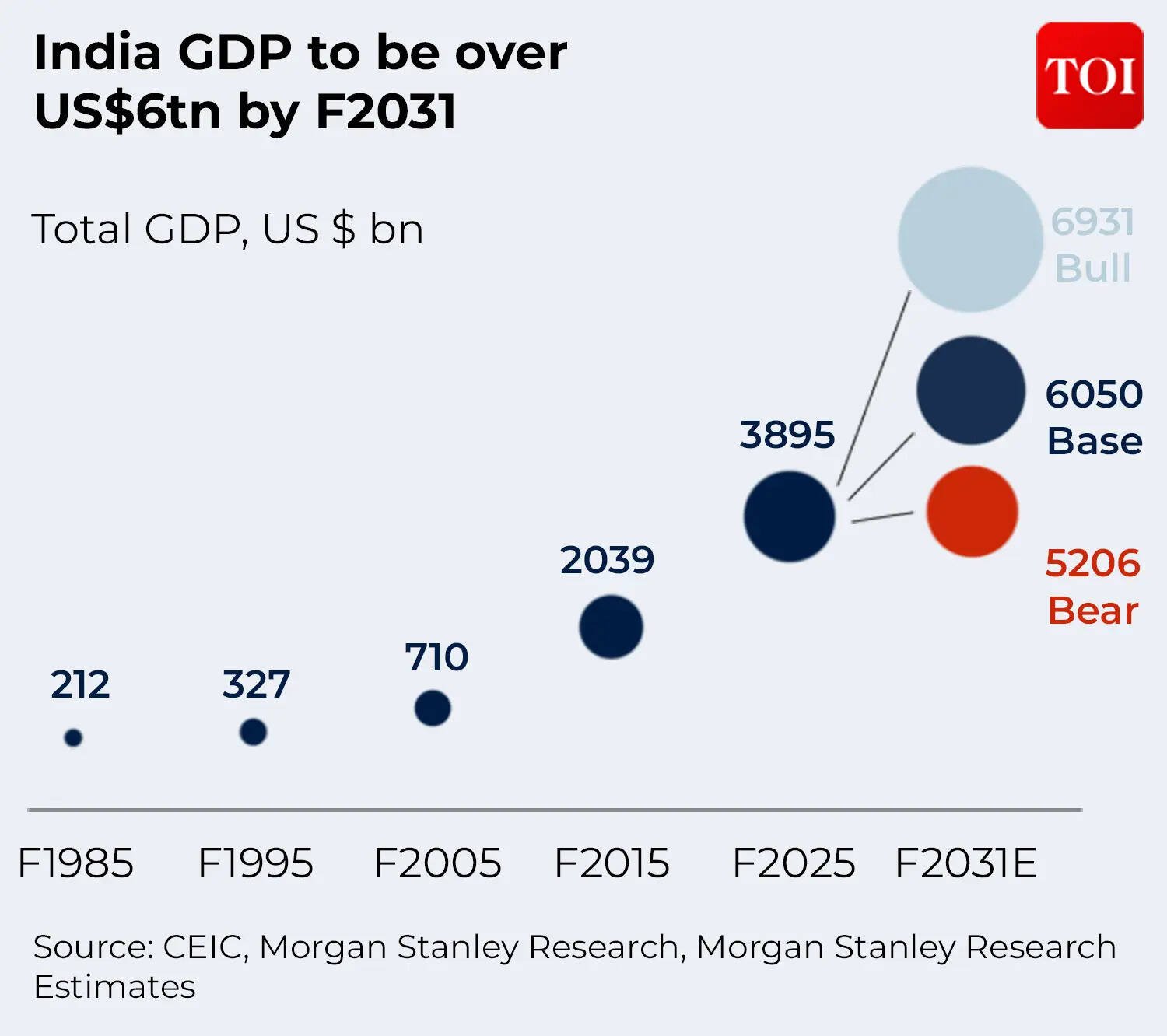
“India’s strategy to reduce concentration risk across energy, fertilizers, and defence procurement is unequivocally growth‑positive over the medium term. The policy push toward domestic manufacturing –anchored in supply‑side structural reforms, defence import substitution, and new‑energy investment – supports a stronger and more durable capex cycle. Overall, we expect India’s medium‑term growth trajectory to remain well supported, with real GDP growth of around 6.5-7%,” it concludes.