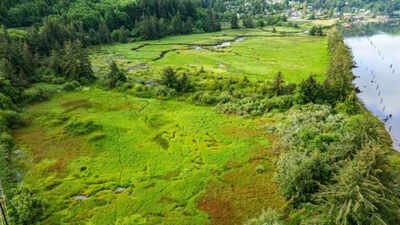
Nearly a century after roads and dikes cut off the natural flow of tides into an Oregon marsh, restoration crews are trying to bring the tides back. North of Wheeler, the McCoy Marsh project will re-link nine acres of wetland to the Nehalem River and nearby Botts Marsh, restoring habitat conservationists say is vital to young salmon and more than 125 species of birds. The work is a major step toward reestablishing natural estuary processes in the Nehalem watershed, where the loss of tidal wetlands has added pressure on salmon populations, states an online report by Tillamook Countu Pioneer. The report highlights that the McCoy Marsh was part of a larger wetland complex. As time passed, construction and land-use changes isolated the property from the tides. Now, crews will cut into perimeter dikes in three places, digging 1,465 feet of new tidal channels across the nine-acre marsh. The new channels will also be lined with large chunks of natural wood and across the marsh surface. The structures will increase habitat complexity and promote a diversity of scrub-shrub and Sitka spruce swamp plant communities. The restored marsh will add a connection to Botts Marsh, a 35-acre tidal wetland just south of the site. Both properties are owned by the Lower Nehalem Community Trust and are stewarded by community volunteers.
Nursery of the young salmon
The restoration could be a big deal for Chinook and Coho salmon, adds the report. Estuaries are critical transition areas for young salmon moving from freshwater to the ocean. And the marshes, wetlands and channels provide food, shelter and rest areas for juvenile fish to grow and continue their migration. McCoy Marsh is especially well placed to fulfill these needs as it lies on the route of juvenile salmon migrating downstream from the Nehalem River. When restored, the marsh will provide the first safe haven for young fish as they make their way into the open bay. That refuge could be especially useful in storms and other times of difficult conditions. “Healthy estuary habitat is a limiting factor for salmon,” said Emily Akdedian, executive director of the Lower Nehalem Community Trust. Restoring the tidal influence will create more places for young salmon to eat, grow and find refuge, she said.
Reversing almost a century of change
The first time the northeastern border of the property was severed from tidal influence was during the construction of the Oregon Coast Highway. In the early to mid 1900’s another perimeter dike was built to drain the land for grazing. The restoration project, nearly a century on, is intended to reverse some of those changes and allow natural tidal processes to return. Tidal wetland loss has been identified as a major stressor for the Nehalem Coho salmon population, making the restoration significant even beyond the boundaries of the nine-acre site.
Restoration is not only about building
The construction work will continue until the end of September, but the restoration will not be finished when the digging ends. Revegetation planting and monitoring will continue throughout the year and beyond, so project partners can monitor how the marsh responds as tidal processes are restored. The project is part of a broader effort for the Lower Nehalem Community Trust to conserve and rehabilitate the Nehalem Bay area. “Restoration is more than simply getting back what we lost—it’s about investing in the future,” said LNCT stewardship lead Shane Sjogren.