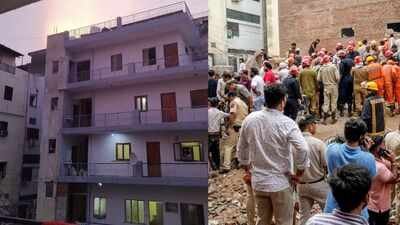
NEW DELHI: A waterlogged basement, repair work on an ageing structure and possible structural weaknesses are emerging as key factors behind the deadly collapse of a student PG building in Delhi’s Satya Niketan.As cops piece together what caused the decades-old structure to come down, eyewitness accounts and preliminary official findings have pointed to a potentially dangerous combination of accumulated water, ongoing construction activity and floors added over the years.Chief minister Rekha Gupta said the building was a very old structure. The ongoing repair work, combined with the accumulated water, led to the collapse, she said after inspecting the site.Police, meanwhile, said renovation work was allegedly being carried out on the ground floor and in the basement before the building collapsed. An FIR has been registered against the alleged owner and others, while investigators examine who was responsible and whether the repair work compromised the structure.
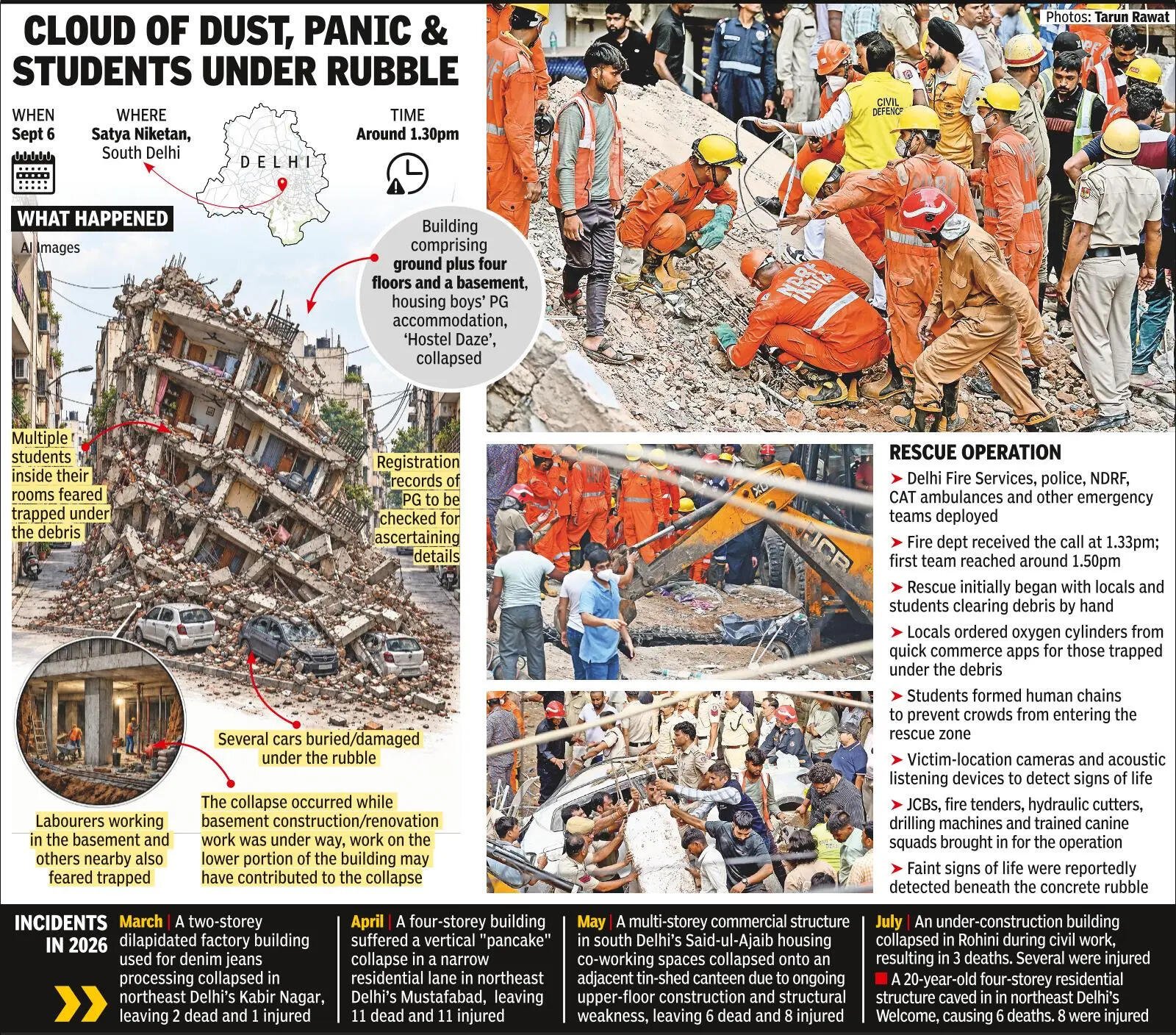
Amid Screams Of Help, Locals & Students Form Human Chain In Early Rescue At Satya Niketan
The building, which was more than four decades old, was being used as a paying guest accommodation for students. MCD officials are also examining whether recent heavy rain and seepage weakened the structure.The civic body has said it is still too early to establish the exact cause, with investigators looking into the possible role of water seepage, basement or ground-floor work, and the building’s structural condition.Eyewitness accounts from the site have added another layer to the questions surrounding the collapse. A local resident said the building was part of an old cluster in Satya Niketan where structures were originally constructed decades ago and additional floors were later added.“The building had no pillars. In the Satya Niketan area, many houses do not have pillars. These are old buildings, constructed when Satya Niketan was first developed, and floors have since been added to these structures. In the building that collapsed, some work was on in the basement. Water had accumulated there,” the resident said.Former Delhi Fire Services director Atul Garg also pointed to two major factors that can commonly trigger the collapse of an old building — heavy rain and construction activity. According to him, both factors were present in the Satya Niketan case, making the structure particularly vulnerable.The collapse itself was so sudden and violent that many residents initially believed an earthquake had struck.“We felt the ground shake. When we ran outside, we saw that a house had completely collapsed,” said Roshan Pal, a student from Lucknow.Another resident, Rahul Gaur, said a massive cloud of dust engulfed the area moments after the structure came down. “When I came out, a cloud of dust was spreading in all directions. That’s when we realised that the building had collapsed,” he said.As screams for help came from beneath the rubble, students and local residents began the first rescue efforts even before heavy machinery could be deployed. Witnesses said those trapped inside shouted “bachao, bachao humein” as residents formed human chains to clear debris.Some locals arranged oxygen cylinders and tried to pump oxygen through gaps in the rubble to help those trapped breathe. Students and residents manually removed smaller pieces of concrete and created pathways through the debris to prevent rescue operations from slowing down.Delhi University was also trying to determine how many of its students were living in the building. South Campus director Professor Rajni Abbi said colleges had been asked to assess the number of students residing in Satya Niketan and ensure their safety.Student organisations, including volunteers from ABVP, NSUI and AISA, also joined the early rescue efforts. DUSU president Aryan Maan said he reached the site within minutes and mobilised student volunteers from South Campus to help dig through the rubble and evacuate survivors.Questions have also been raised over the building’s construction history and its conversion for commercial use. Garg said the structure was originally built for residential purposes and was later expanded with additional floors, raising concerns about whether its structural strength was adequate.The tragedy has now put the spotlight on Delhi’s ageing buildings, particularly residential structures being used as PGs and other commercial establishments. The Delhi government has announced plans for mandatory periodic structural audits and safety certification for old buildings being used by the public.The exact cause of the collapse, however, will be established only after the magisterial inquiry and the ongoing police and civic investigations are completed.