Nukkad Naatak is the most unusual Hindi film you will see this year. I refrain from using the term ‘Bollywood film’ here because the film does not fit into the traditional Bollywood mould. It is made by two beginners who scream ‘outsiders’ and has no industry support. Yet, this tiny indie film with a production budget under ₹1 crore not only made it to the theatres, but also released on Netflix last week. And since then, it has trended in the top 10 on the streaming giant, reaching audiences who had no idea the film even existed.
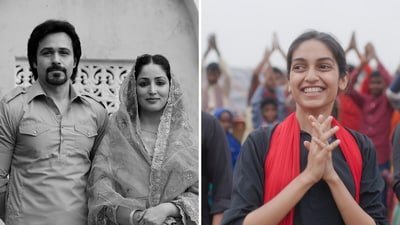
Nukkad Naatak is the most extreme example of a recent phenomenon in which streaming has turned films that have not received their due in theatres into ‘successes’ on OTT. Whether it is films like Haq or Dhadak 2 that failed at the box office and were dubbed ‘flops’ or something like a Kennedy that never even got its intended theatrical release, OTT has emerged as the life raft for these films, allowing them to become ‘cult hits’ within months of release.
OTT as a second innings for films
Until a few years ago, box-office success was the benchmark for a film’s audience reception. Very rarely did films break the tag of ‘flop’ and become successes later, but that happened belatedly. It took Andaz Apna Apna years of TV reruns to become a cult classic. Black Friday achieved that via home media (and torrent) a decade later. But their transformations took years, sometimes decades. Today, OTT has ensured that it takes just weeks.
Shazia Iqbal’s Dhadak 2 was hailed by critics, but it failed to earn big bucks at the box office. Many termed it a flop until it released on Netflix six weeks later. Pretty soon, it became one of the most-watched films on the platform. Speaking to us at the time of its streaming release, Shazia had said, “I don’t have a lot of followers (on Instagram); still, I have about 20 DMs per hour. And Siddhant called me, and he said that this feels bigger than the theatrical release. And yes, it does feel like the reach is wider.” In its first two weeks, the film garnered 3.3 million views on the platform.
Streaming success changes the film’s legacy
Independent films find it harder to catch the audience’s eye in theatres. Vadh 2 starred Sanjay Mishra and Neena Gupta. The film had a brief, unmemorable run at the theatres, lasting just two weeks. And it would have been forgotten had it not been for its run on OTT. On Netflix, it reached 1.5 million views in its first two weeks and trended at number 1 in India. The success of Yami Gautam and Emraan Hashmi’s Haq was even bigger. The film, which earned only ₹30 crore at the box office, had a jaw-dropping 11 million views on Netflix and trended in the top 10 in 14 countries outside India. Both films managed to change the narrative around themselves before they went out of public consciousness. The streaming success allowed them to be remembered as successes.
Talking about the film’s success, Yami says, “As an actor, it’s truly special to see a story continue to find love over time. Haq has been that journey for me—one rooted in resilience, identity, and quiet courage. Seeing it now reach new audiences on Netflix makes it even more meaningful. What touches me most is how differently it connects with each person.”
When OTT becomes a refuge
Over the last few years, OTT platforms have also emerged as saviours for award-winning indie films that do not find space theatrically or do so only in limited release. After its triumphant show at Cannes, Payal Kapadia’s All We Imagine As Light streamed on JioHotstar, topping the viewership charts. Anurag Kashyap’s Kennedy won big at festivals across the world, but did not find a place in Indian theatres for over two years, before Zee5 streamed it earlier this year. As the director says, “All I can say is that I am grateful for having been able to make this film, for my team, my producers, my studio, and at the end of the day—jab jab jo jo hona hai, tab tab so so hota hai (everything happens in its own time).”
Platforms admit that they are looking for diverse films, betting on smaller films to break out in time, and sometimes just going by their gut. Monika Shergill, Vice President, Content, Netflix India, admits that buying these independent films is not always a business decision’. She explains, “These are films that celebrate storytelling and may not find that large audience in theatres that certain commercial blockbusters do. The diversity of the slate is important because it mirrors the society and the audiences who actually come to watch. Yes, it is important for us to have the big stuff sorted because the audience expects that of us. That is a no-brainer. But the entire spectrum is important because it represents the country’s cinema. In these indie films, you get to see themes you won’t get to see in the bigger mainstream films. Anyone thinking ‘let’s just go and buy blockbusters’ will not give a wholesome experience to the audience.”
The democratisation of cinema
Perhaps the biggest achievement of this trend is its democratisation of exhibition. An independent film like Nukkad Naatak is on the same platform as Dhurandhar. There is no 10 shows versus 10000 screen disparity here. This allows those films to reach newer audiences. Molshri, the producer and lead actor of Nukkad Naatak, sums it up, “We had faced rejections from most places in Bollywood when we were looking for financiers. And after the film released on OTT, Karan Johar shared about it on Instagram Stories, saying he wanted to watch it. That was a big win for us.”