Mumbai: Every loss demands a face and currently India head coach Gautam Gambhir is in the firing line. With so shock losses for the Indian team across formats recently, that’s not entirely surprising.
However, the latest ODI series loss (1-2) in England has to be seen in the context of India’s poor record in SENA (South Africa, England, New Zealand, Australia) countries. The away difficulty quotient is not weighted the same way in ODIs as Tests. Although it is a big factor, as their 15 losses in the last 24 matches this decade show.
The next 50-over World Cup is in South Africa in late 2027 and India have their task cut to get a conditions-appropriate squad ready. At no stage in England were India able to field a balanced eleven, which was down to Hardik Pandya’s unavailability.
Pandya is the only all-phase pace bowling all-rounder with power-hitting ability that India have got. Yet the conversation in India’s planning room has been to put him in the dock for breaking down frequently. This team management is not the first to be frustrated with Pandya’s repeated fitness troubles. But bowling fast as well as batting in the top six has become a more demanding task with increased workloads across formats. This is something Nitish Reddy – Pandya’s understudy – has discovered too.
India has virtually no one with the skill sets and quality of Pandya, or even Reddy. Shivam Dube, who filled in during the England series, did an honest holding job with the ball (2/72 in 12 overs) in the two matches he got, but was out of sorts with the bat. If the talk so far has been for Pandya to bowl 10 overs at a stretch to prove himself ODI-fit, it is perhaps time to be more appreciative of what he offers. Even six overs of pace in an ODI from Pandya potentially makes India a much stronger side outside the sub-continent.
The absence of a good balancing force meant India were never able to give wrist spinner Kuldeep Yadav a go. However, the current team set up could be blamed for underestimating Kuldeep’s bowling prowess. In Sunday’s decisive Lord’s ODI for example, as the pitch got slower, England ended up bowling 19 overs of spin. India only had Axar Patel and he was their most economical bowler.
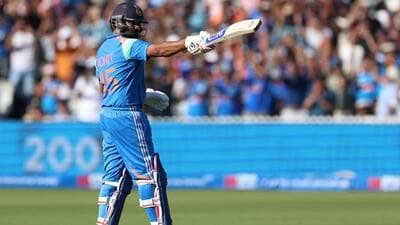
Matches are won and lost not just by pre-match strategy but by a team’s in-game adaptability too. Indian batters were on the march in their brave run chase of 388 at Lord’s with Rohit Sharma and Virat Kohli in the middle. England were able to slow them down from the 35th over onwards when part-time left-arm spinner Jacob Bethell bowled an unchanged seven-over spell (7-0-49-1). This move, captain Harry Brook later said, was prompted by head coach Brendon McCullum – he felt a spinner who was quicker than leggie Adil Rashid would work on the day – and credited their constant communication for the strategy working.
India can’t boast of such moments of tactical flexibility. Three of India’s four pacers were bowling for the first time at Lord’s and their unfamiliarity with the slope was exposed.
There were more lessons for India from Lord’s. One reason why they opted for five specialist bowlers was the trust in their six specialist batters to chase down any total. However, after Rohit’s dismissal in the 39th over, when they needed someone to take the attack to England’s slow bowlers, neither Ishan Kishan, Shreyas Iyer or KL Rahul were able to do so. Ultimately, Kohli had to break away from his chasing template, go searching for power strokes, and lost his wicket trying to do that. Again, the absence of a batter in the Pandya mode was dearly felt.
If their two match-winners Pandya and Jasprit Bumrah are fit and firing, India will be a force to reckon with. But 15 months to the World Cup is enough time to identify back-ups. A like-for-like replacement would be asking for too much, but as England’s smart use of Bethell and Will Jacks with the ball showed, being unconventional can open up options. There’s been some talk of identifying smart spin allrounders for the future. The distress signals though are already being felt.