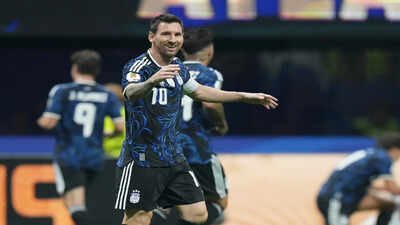
The British are responsible for many terrible things. Eating something called beans on toast, reminiscent of utilitarian culinary behaviour whose peculiarity is acceptable only when one is being bombed from above by the Luftwaffe and there is no scope to make a more palatable dish. Forcing children around the world to read Shakespeare at an early age because the Higgins-Macaulay Complex became a global vibe.But perhaps the worst thing the British did was Partition in South Asia. And it is fitting that the misery English fans are feeling right now, after another World Cup semi-final loss, can be summed up by a line from Aadat by Pakistani rock band Jal: “Durr jitna bhi tum mujhse. Paas tere main. Ab toh aadat si hai mujhko aise jeene main.” No matter how far you are from me, I remain close to you. By now, I have grown used to living this way.Because English fans are used to England doing England things the moment everything appears to be going their way. And they do it a lot against Argentina, though this time there is no Hand of God to blame.England had gone through this tournament by coming from behind and doing whatever the match demanded. Against Argentina, on the front foot, they suddenly decided to take the proverbial axe to said foot. And, as history will remember, it was a German who ensured England bombed, except this time it was a Champions League-winning coach rather than Hitler’s finest.The 12% that Atlanta will rememberOver the years, England versus Argentina has accumulated its fair share of baggage. Antonio Rattín’s great petulance in 1966 helped inspire the introduction of red and yellow cards in football. Diego Maradona gave us the Goal of the Century. Diego Simeone, whose son Giuliano Simeone’s presence in the starting XI must have given some older English fans PTSD, gave us Brand Beckham.But Atlanta will be remembered for a different statistic: 12%.
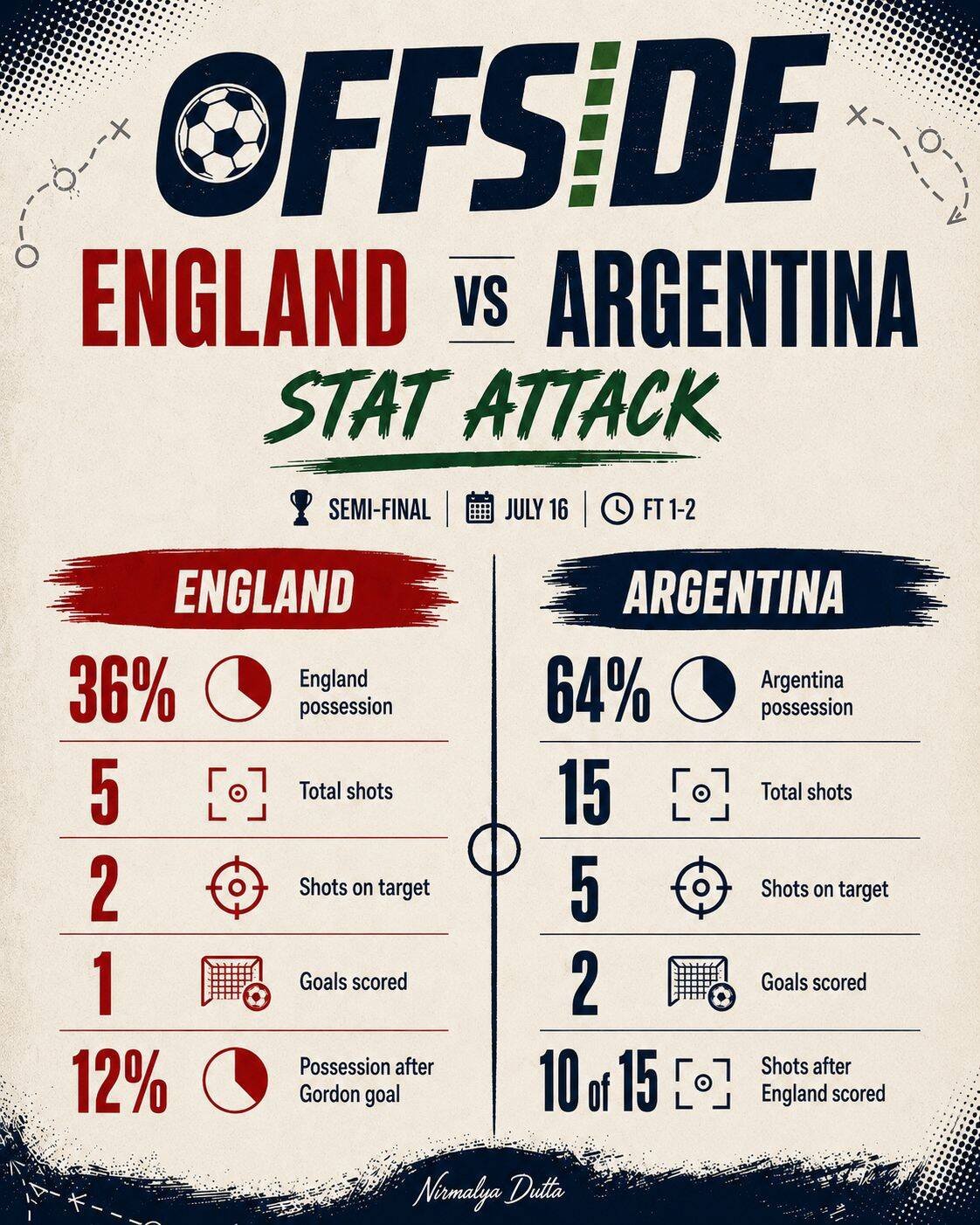
England only had 12% possession after securing the lead.
After England took the lead through Anthony Gordon, they had only 12% possession for the next 37 minutes. It remains one of the most inexplicable passages of this World Cup because England were in the ascendancy. They had kept Messi mute, disrupted Argentina’s midfield and scored by exposing the space behind Nahuel Molina.Then they decided to hang on to a one-goal lead against a team that had repeatedly scored late throughout the knockout rounds, as Offside had already chronicled against Cabo Verde and Egypt.Keep calm and carry on, Argentina editionNothing should be taken away from Argentina, who rolled up as though they were seeking revenge for the Falklands War and once again dug themselves out of trouble. The poster that became popular during World War II and became a meme urged the English to keep calm and carry on. Yet it has been the Argentinians who have displayed that stoic spirit. As Scaloni noted: “When we’re struggling, and the opponent hesitates just a little, we smell blood and we go for it with everything we’ve got.”

Tuchel got the difficult part rightThe received wisdom behind appointing Tuchel, a significant tactical upgrade over Gareth Southgate, was that he was a knockout expert who had the keys to every scenario. For the first hour, that hypothesis looked true. The opening half had 19 fouls, two yellow cards and no shots on target, yet remained visually riveting: two boxers unaware of the Marquess of Queensberry rules slugging it out behind the common room. It was also the first World Cup match on record to go 30 minutes without a shot.Elliot Anderson followed Messi with the obsession of Agent Smith following Thomas Anderson. Declan Rice protected the space behind him and Bellingham competed for every loose ball. Messi was allowed to receive the ball only with a guard of honour comprising several white shirts. Anderson disrupted rather than strictly man-marked. Whenever Messi ventured centrally, Rice, Bellingham and a centre-back closed around him. For roughly an hour, Messi existed like Schrödinger’s cat, simultaneously present and absent inside England’s tactical box.
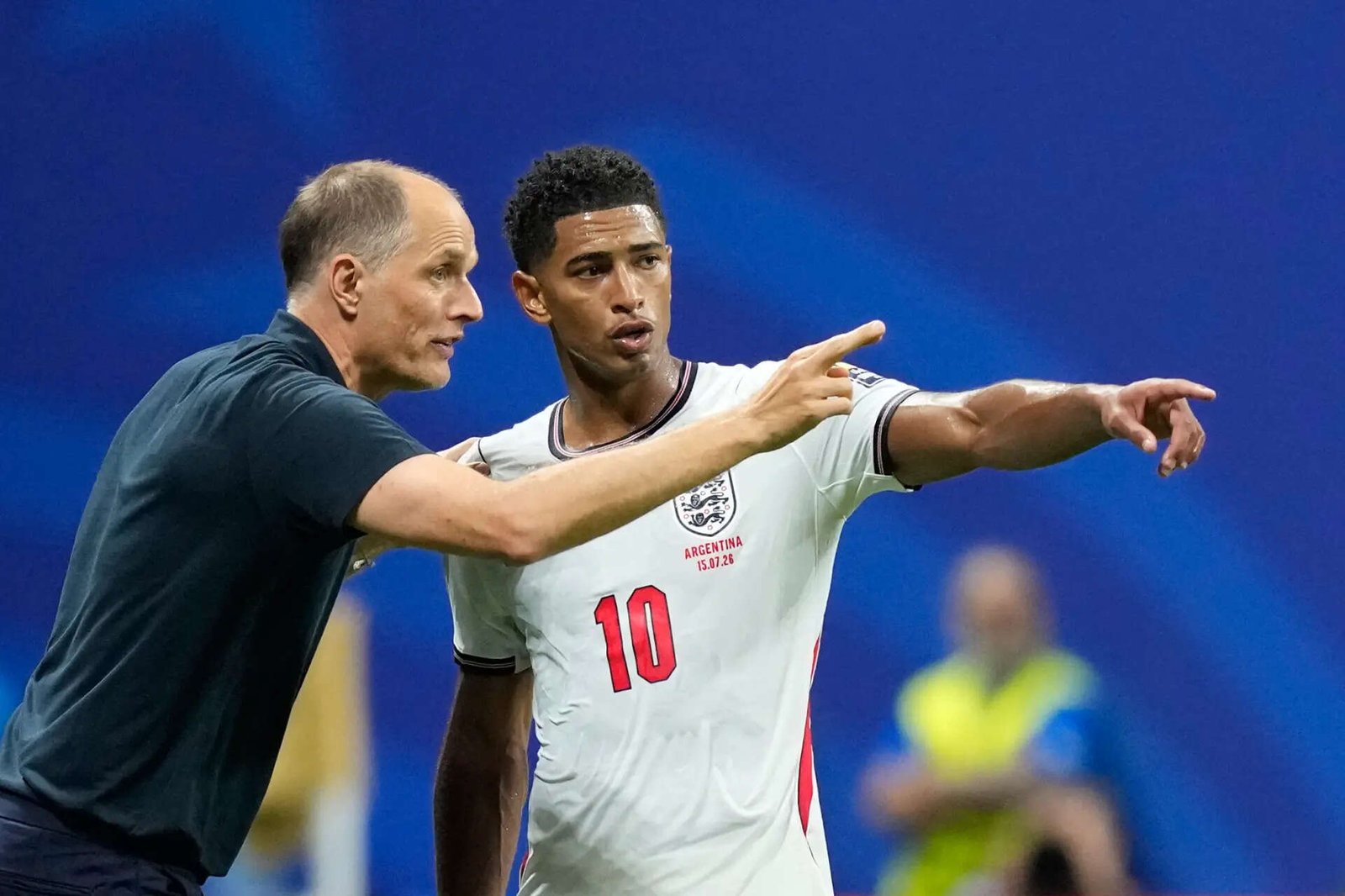
England head coach Thomas Tuchel talks to England’s Jude Bellingham during the World Cup semifinal soccer match between England and Argentina in Atlanta, Wednesday, July 15, 2026. (AP Photo/Rebecca Blackwell)
Starting Morgan Rogers on the right also looked inspired. Saka offered more natural width, but Rogers’s strength helped Reece James against Álvarez and Nicolás Tagliafico while giving England greater control inside.England’s goal demonstrated the logic. An attempted Argentina clearance fell to Rice, who moved the ball towards Rogers. His delivery travelled across the six-yard box and Gordon moved ahead of Molina to finish at the far post in the 55th minute. England had found the correct tactical plan, executed it and taken the lead. They abandoned the plan the moment they got a goal.Tuchel parked the bus and removed the wheelsThe retreat began before the substitutions. After scoring, England’s defensive line dropped deeper and Anderson stopped haranguing Messi. Rice moved closer to the centre-backs, Bellingham began screening passes instead of taking the ball forward and Kane became visible primarily inside his own penalty area.Tuchel claimed the instruction was to seek another goal. England’s behaviour contradicted him. Instead, they reverted to the Azteca plan used against Mexico, sensible when a man down against Mexico and rather less advisable against a multifaceted team such as Argentina. As England tired, Tuchel made the changes that sealed their fate. Ezri Konsa replaced Gordon, turning the back four into a five. Dan Burn replaced James and Nico O’Reilly came on for Rice. England ended with six defenders, having removed their fastest outlet, strongest midfielder and a full-back who could carry the ball away from pressure. They needed players who could retain possession and force Argentina backwards. Instead, the centre-backs moved towards Pickford and the midfielders became auxiliary defenders.
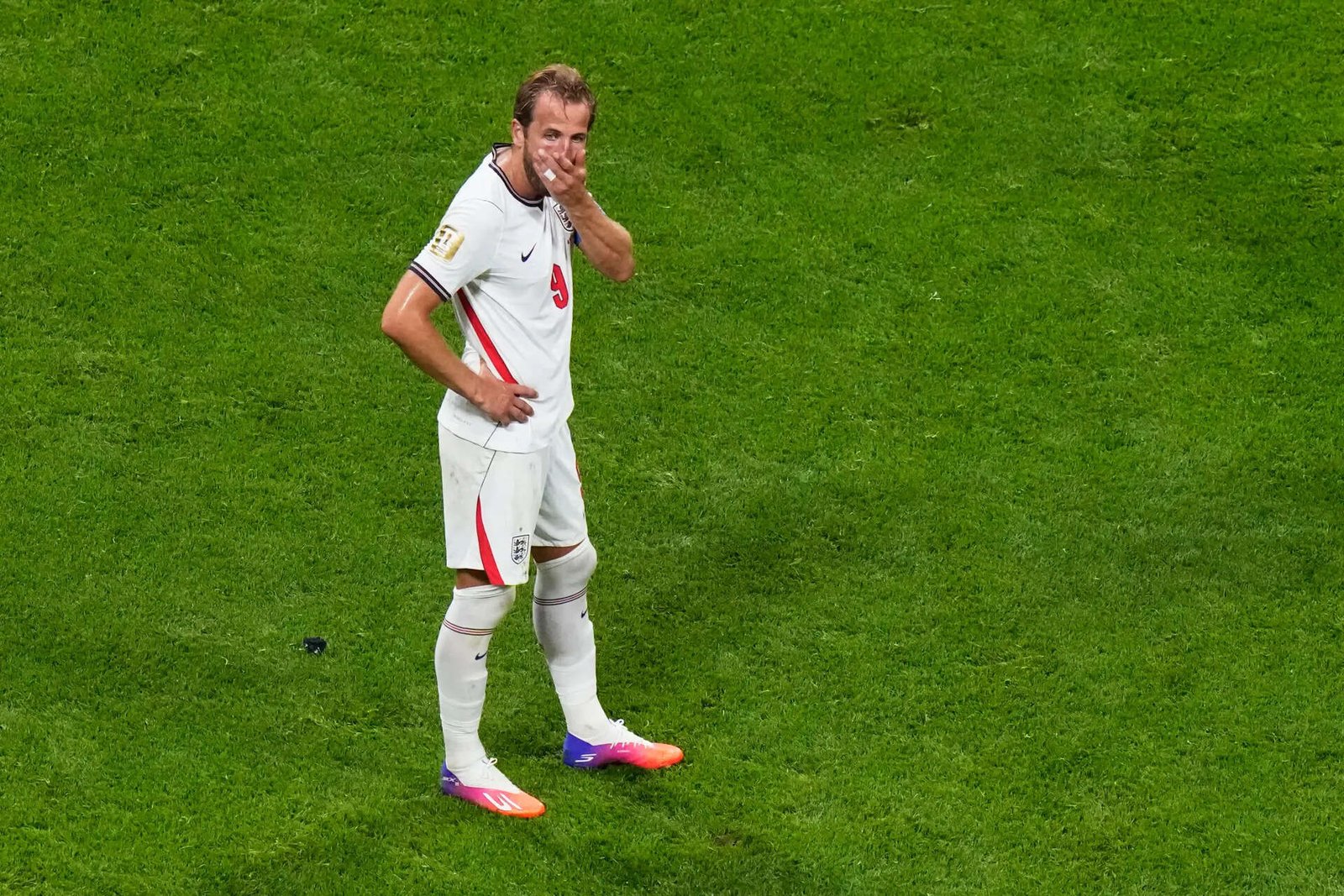
England’s Harry Kane (9) reacts after losing to Argentina in their World Cup semifinal soccer match in Atlanta, Wednesday, July 15, 2026. (AP Photo/Lynne Sladky)
It was also an extraordinary vote of no confidence in England’s best players. Bellingham had spent the tournament rescuing them, yet Tuchel responded to the biggest moment by asking him to defend an ever-expanding patch of midfield while removing the players who could help him control it. England had Kane, Bellingham and Saka, but behaved as though their only route to the final was Konsa, Burn and prayer. Even Kane became an emergency centre-back during Argentina’s attacks and an isolated striker whenever England cleared the ball. A clearance simply ensured another Argentina attack. The bus was parked without an engine, tyres or even an emergency exit.Kane later admitted that England had tried to hold on after going ahead, while Tuchel defended the defensive strategy.Scaloni removed the handbrakeScaloni smelled the proverbial blood in the water. He replaced Leandro Paredes with Nico González, brought on Gonzalo Montiel for Molina, Nicolás Otamendi for the booked Lisandro Martínez and Rodrigo De Paul for Simeone junior. Lautaro Martínez arrived in the 81st minute, making Argentina’s final shape frequently resemble an aggressive 3-2-5. In normal circumstances, throwing so many players forward would leave vast swathes of land to conquer behind them. Tuchel’s substitutions had removed that particular threat. Every Argentine change increased their threat. Every English change reduced Argentina’s need to defend. Scaloni gambled because England had announced they would not attack again.Messi escaped by moving away from goalThis allowed Messi to do his Messi things by moving towards the right touchline, giving Anderson a Hobson’s choice: follow him and leave a giant hole in midfield, or stay inside and allow Messi to cross. England chose the latter. The deeper England went, the more time Messi had. England spent an hour depriving him of freedom and then gave him unfettered access during the final half-hour. Messi might no longer be able to beat four players at will, but he does not need to. He could now receive the ball near the touchline and float it whenever he wanted into a penalty area full of blue-and-white sharks waiting to pounce.Pickford postponed the inevitableJordan Pickford’s saves led England down the delusional path that their strategy was working. He stopped Álvarez at the near post, denied González’s glancing header and saved another effort from Fernández. Mac Allister hit both posts as well, creating the illusion of control when England were merely delaying the inevitable. The equaliser arrived in the 85th minute after Argentina took a short corner on the right. Messi received the ball in the area England had surrendered and rolled it towards Fernández outside the penalty box. England had six defenders near their own goal, though nobody was adequately protecting the space immediately in front of them. Bellingham attempted to close Fernández down, but England’s retreat and his own exhaustion made the distance too great. Fernández had enough time to steady himself and curl the ball through the crowd beyond Pickford.
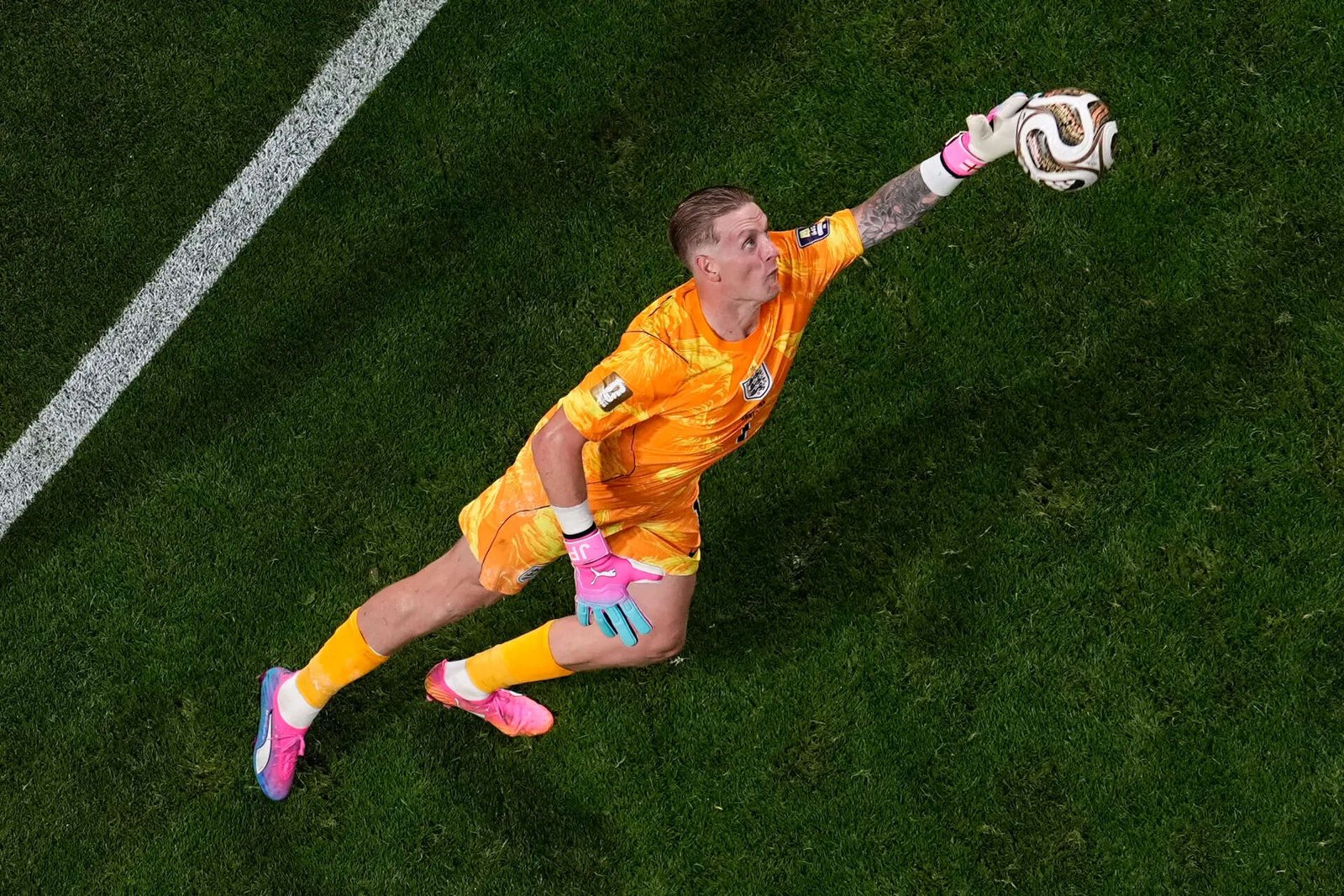
England’s Jordan Pickford blocks a shot during the World Cup semifinal soccer match between England and Argentina in Atlanta, Wednesday, July 15, 2026. (AP Photo/George Walker IV)
The goal also showed the flaw in Tuchel’s defensive arithmetic: another centre-back to attack the ball, but nobody to stop the deliveries from coming in. Seven minutes later, Mac Allister struck the woodwork again. England watched the rebound instead of reorganising. Messi recovered the loose ball and floated it perfectly onto Martínez’s giant forehead, which did the rest. Six defenders, all of them taller than Martínez, could do nothing once Messi had decided the ball’s trajectory. And he did it with his weaker right foot.Messi was magical without scoringHistorians in the future will wonder what the fuss was about. There was no Hand of God or Goal of the Century, but this match showed how Messi can change a game. Peripheral for the better part of it, his rightward move, in which some will inevitably find a political message, sealed England’s fate. England had stopped Messi the dribbler, but they were eliminated by Messi the cartographer, standing near the touchline and mapping the route towards their goal.The two assists also carried Messi into uncharted World Cup statistical territory.England did England things againAfter the match, Tuchel said he had no regrets. Kane offered the more honest description, admitting that England had tried to hold on after going ahead. He also pointed out that Tuchel would have been called a genius had the strategy worked. That is football’s most peculiar defence of a failed plan: it would have been successful if it had succeeded. Wayne Rooney called the approach “a panic”. Alan Shearer argued that Tuchel had played his cards too early. Joe Hart believed the changes told Argentina that England no longer possessed another punch.England have changed managers and systems, though their response to leading elite opponents remains familiar. They retreated against Croatia in 2018 and surrendered control against Italy in the Euro 2020 final. Against Argentina, they spent the final 37 minutes attempting to prevent football from happening. Tuchel was appointed partly because his tactical flexibility was supposed to cure this pathology. In the biggest moment, the supposed cure reproduced the oldest English curse.

Fans watch the World Cup semifinal soccer match between England and Argentina in Buenos Aires, Argentina, Wednesday, July 15, 2026. (AP Photo/Rodrigo Abd)
The difference appeared under pressure. Argentina repeatedly trailed late and responded by adding attackers and increasing the risk. England took the lead and removed every player who could carry them towards the final. Argentina saw the clock and understood there was still time. England saw the same clock and wanted it to stop. But, as anyone who has ever done a plank knows, time slows down when you want it to speed up.There was nothing mysterious about Atlanta. England took the lead, surrendered the ball, removed their attacking outlets and invited Lionel Messi to spend 37 minutes giving their defence a colonoscopy. Scaloni increased the risk every time England reduced theirs. Argentina kept calm and carried on. England panicked and parked the bus. Messi was magical, though England had engineered the conditions in which his magic could flourish. The World Cup remains far away. Disappointment, as ever, remains close.Ab toh aadat si hai.
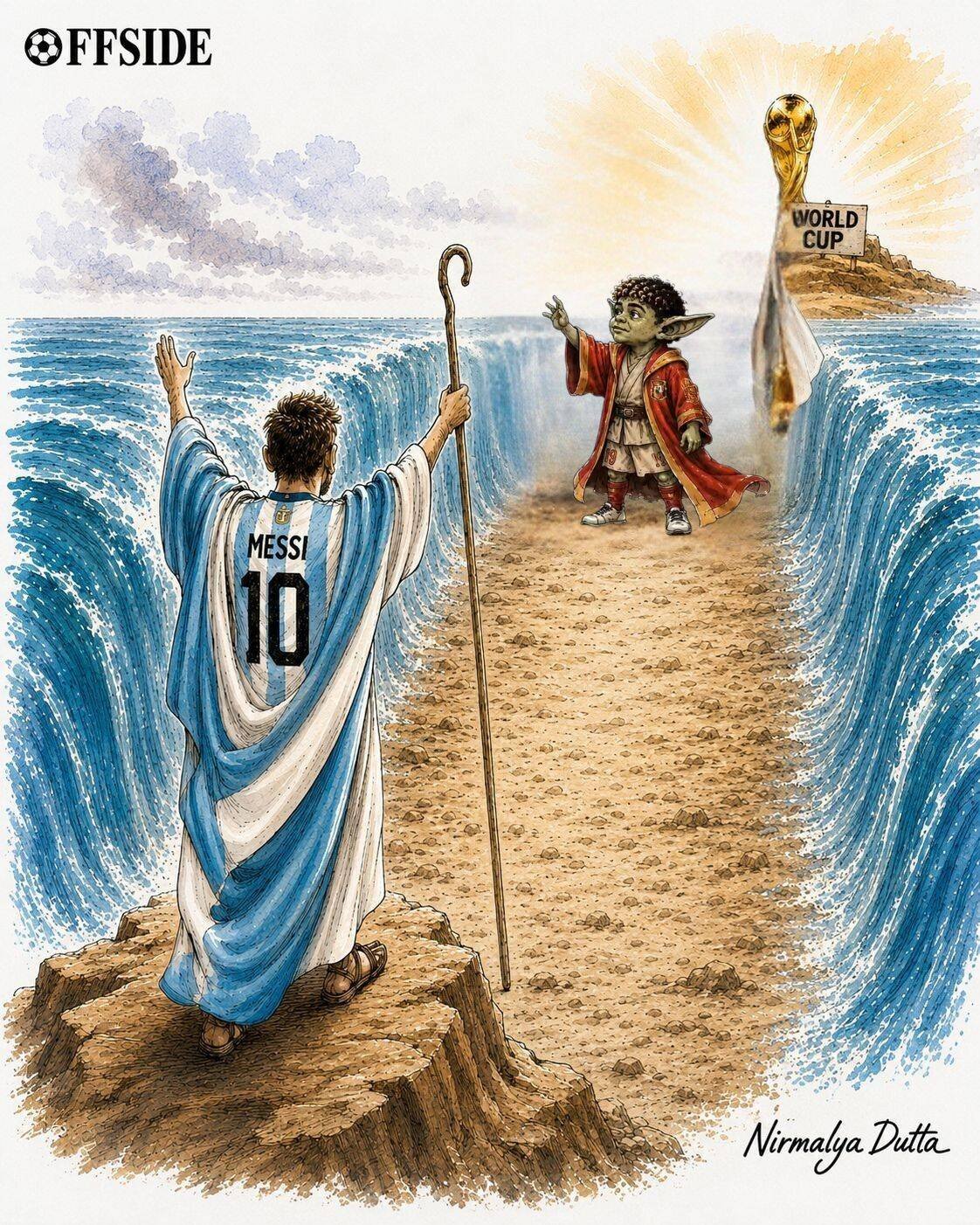
Many years ago, when asked about the Hand of God goal against England, Diego Maradona said: “It was a little with the head of Maradona and a little with the hand of God.”England’s defeat in Atlanta was similar: a little bit of Messi’s magic and mostly England’s own disastrous, axe-to-foot, park-the-bus tactics. And that is why football is not coming home. Any time soon. As for Messi, he now faces the kid he baptised in Barcelona years ago.