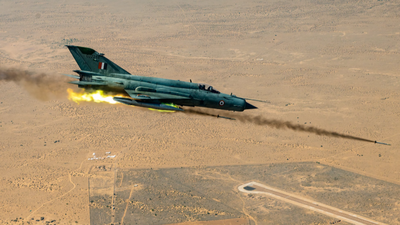
In the summer of 1999, the attention of the nation moved away from the cricket World Cup and on to the barren and desolate peaks overlooking Kargil, a till-then unheard-of town in a remote portion of the country.The early days of May had already signalled trouble. First, the locals reported unusual activity in the high peaks, thousands of feet above the valley floor. The first patrol, led by Captain Saurabh Kalia, was captured after a firefight.Members of this team were inhumanely tortured to death. Another patrol, sent up around May 17 and tasked with locating the first patrol, came under heavy attack and could only extricate itself due to the heroic and self-sacrificing actions of Captain Amit Bhardwaj and Havildar Rajvir Singh Sheoran.As the scope of the infiltration became clear, things moved swiftly and decisively. The Cabinet Committee on Security cleared the use of air power. The IAF faced a daunting challenge, as no air force had ever fought at altitudes of 14,000 to 18,000 feet.Pilots trained to drop on large armoured formations and well-defined targets now had to deliver precision strikes against fortified ground targets perched on jagged cliffs, undiscernible from the pile of rocks right next to them. The thin air robbed engines of thrust, weapon sights calibrated for much lower altitudes overshot targets, and bombs that missed by mere metres could tumble kilometres away in the valleys below. The government’s restrictions on not crossing the Line of Control limited options for the fighter pilots as they began to rewrite the book on waging an air-to-ground campaign at 18,000 feet.
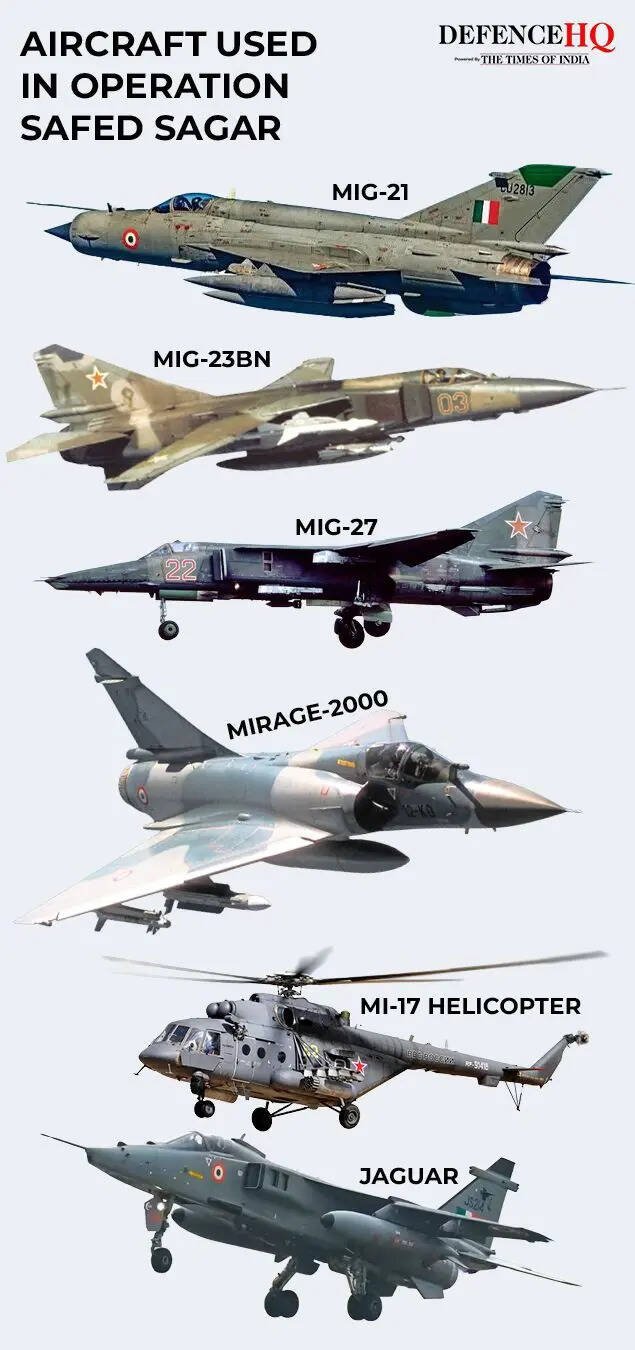
Aircraft used in Operation Safed Sagar
On May 26, after nearly three decades of relative calm since the 1971 war, orders came to take the fight to Pakistani intruders who had entrenched themselves across the ridgelines overlooking National Highway-1A. The intrusion stretched from Dras to Batalik, a crescent of hostile positions that threatened India’s lifeline to Ladakh and then on to Siachen, a sector wrestled away from Pakistan by India. What followed was Operation Safed Sagar, a very audacious air campaign that rewrote the manual of high-altitude warfare.Air Commodore Anil Kumar Sinha and Group Captain Arvindra Oak, tasked with leading helicopter and fighter operations respectively, had already begun planning the air operations in secrecy. Mi-17 transport helicopters were pressed into attack roles, while fighters were tasked to suppress enemy fire before the vulnerable rotary-wing aircraft moved in, blazing away with their rocket pods. On May 25, Air Chief Marshal AY Tipnis met his commanders at Srinagar, and the next morning, Indian aircraft roared into action over Tololing and Tiger Hill. Rocket salvos and bombing runs rattled Pakistani positions, with radio intercepts capturing enemy panic — “Ab hum capture hone wale hain.”But the campaign soon faced a setback. Flight Lieutenant Nachiketa, callsign Hyena-2, was captured after ejecting from his stricken MiG-27 after its engine ingested gun exhaust, starving it of the limited air at those altitudes. Squadron Leader Ajay Ahuja, searching for him, was shot down and killed in cold blood by the Pakistanis. A day later, a Mi-17 helicopter captained by Squadron Leader Rajiv Pundir, with an additional crew of three — Flight Lieutenant Muhilan, Sergeant Raj Kishore Sahu and Sergeant PVNR Prasad — was struck and downed by a Stinger missile. These losses in the initial days of the campaign forced a reassessment of tactics. The enemy’s shoulder-fired SAMs proved deadly, and the IAF realised that new tactics needed to evolve to overcome this threat.The IAF used off-the-shelf technology such as Global Positioning System (GPS) and hand-held cameras to aid in bombing and reconnaissance. Innovative attack geometry was also formulated by the pilots to get better results on target. A lot of the trials, especially for the bombing runs, were carried out at the Air Force’s Toshe Maidan air-to-ground range, which was much lower in altitude at around 10,000 to 12,000 feet, with inputs recalibrated for attacks on the much higher reaches of the Kargil sector.At the Aircraft and Systems Testing Establishment in Bengaluru, Mirage-2000 fighters were readied in a hurry with laser-guided bombs and Rafael’s newly inducted Litening pods. By June 4, these aircraft were operational, and their impact was immediate. On June 17, a Mirage strike devastated Muntho Dhalo, a major Pakistani logistics base in Batalik, killing over 100 Pakistanis and crippling supply lines. A week later, Mirage-2000s struck Pakistani positions on Tiger Hill with pinpoint accuracy. These air attacks paved the way for soldiers to capture the peak.