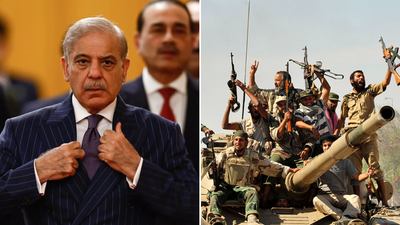
Pakistan spent the first half of 2026 basking in an unfamiliar role: peacemaker. Its PM and Field Marshall helped broker a ceasefire between the United States and Iran, and for a moment, Islamabad looked like the region’s most unlikely power broker. But that ceasefire has since come apart in less than 3 weeks, with fresh strikes, dead civilians, and a shut Strait of Hormuz reminding everyone how fragile the deal always was.As the war teethered and tensions began to reappear Pakistan quietly shifted its gaze. Now, Islamabad is trying to do in Libya what it could not fully finish in the Middle East: End a long, grinding civil war through backdoor diplomacy. Reuters has reported that Pakistani officials have been mediating between Libya’s rival eastern and western factions since late last year, with the blessing of Washington, Riyadh, Doha, and Ankara.There is just one awkward detail. Pakistan is trying to bring Libya’s rival factions together while selling more than $4 billion worth of weapons to one of them.And behind those fighter jets is another country with plenty to gain: China.
A ceasefire that keeps almost collapsing
Pakistan’s diplomatic reputation this year rests heavily on the Iran-US ceasefire. Structured negotiations were channeled through Pakistan initially, then finalized in Islamabad, and the country positioned itself as the trusted go-between for two governments that do not talk to each other directly. For a few weeks, it worked. Oil markets calmed down, and the wider region got a breather from war.Also read: Why Iran ceasefire was always destined to failThat breather did not last. Tensions have escalated again as the fragile ceasefire between the US and Iran has unravelled over the past week, with air raid sirens sounding over Gulf nations. Oil prices spiked and markets fell after Tehran shut the Strait of Hormuz, a vital energy corridor. Trump declared the April ceasefire “over,” while Iran’s new Supreme Leader spoke of revenge as the will of the nation. Iran had already been attacking commercial vessels, and Washington had responded with strikes on Iranian military sites, setting off a fresh round of tit-for-tat violence.
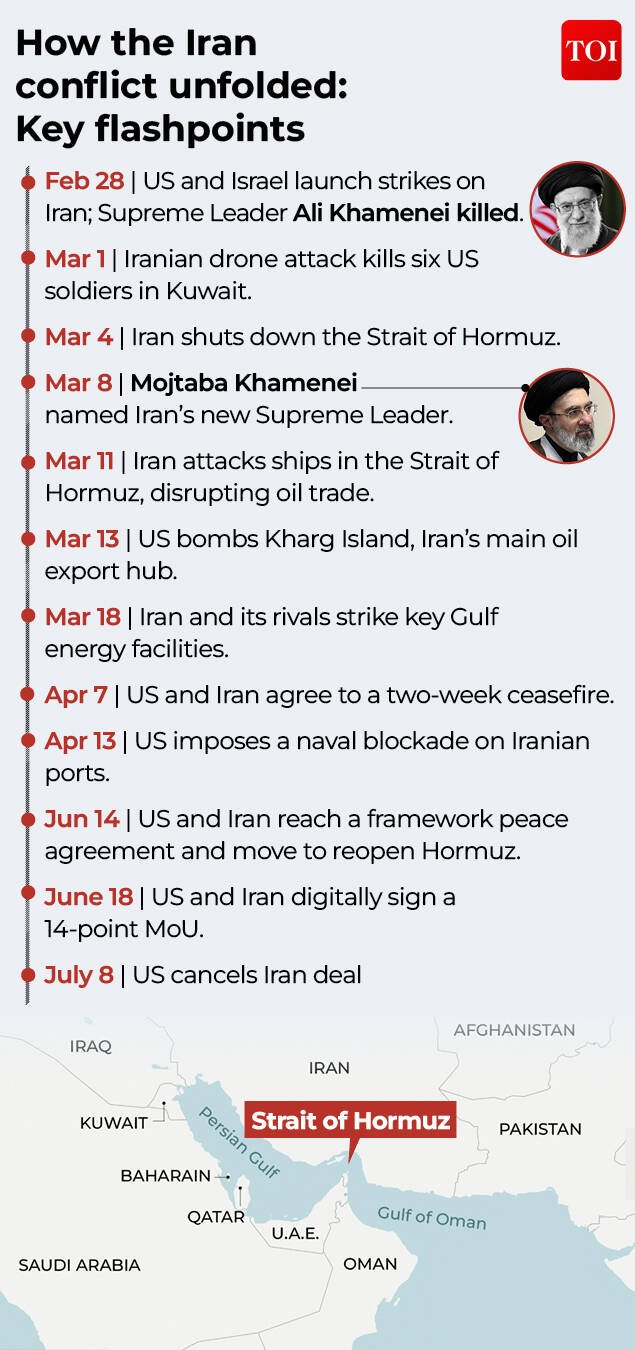
US and Iran returned to war after both sides accused the other of breaching the digattaly signed MoU on June 17
The details of the collapse are messy but instructive. American airstrikes killed at least 14 people and wounded 78 others in Iran, most of them members of the armed forces, according to Iran’s health ministry. Gulf states have been caught in the crossfire too. Kuwait’s military shot down missiles and drones after debris wounded a resident, while Bahrain and Jordan reported intercepting incoming fire from Iran. Even the mediation channel itself started fraying. Iran’s negotiators have made clear they do not trust Washington, and Israel has continued striking Lebanon despite terms meant to wind that front down too.This is the backdrop that matters for understanding Pakistan’s next move. Islamabad had built a diplomatic brand on being the one country that both Washington and Tehran would still speak to. But a ceasefire that unravels every few weeks does not make for a strong résumé. If Pakistan wants to keep its new reputation as a serious mediator, it needs another success story, ideally one further from the unpredictable churn of the Iran-Israel-US triangle. Libya, conveniently, offered exactly that kind of opportunity.
Enter Libya, a country that has been broken for fifteen years
Libya has not had a single, functioning government since Muammar Gaddafi was toppled and killed in 2011. The crisis has run through two civil wars, foreign military intervention, and tens of thousands of casualties since violence began in early 2011. Today the country is still split down the middle. The internationally recognised Government of National Unity in Tripoli controls the west, while the House of Representatives-backed administration in the east operates under the de facto rule of the Libyan National Army and its commander, Khalifa Haftar.
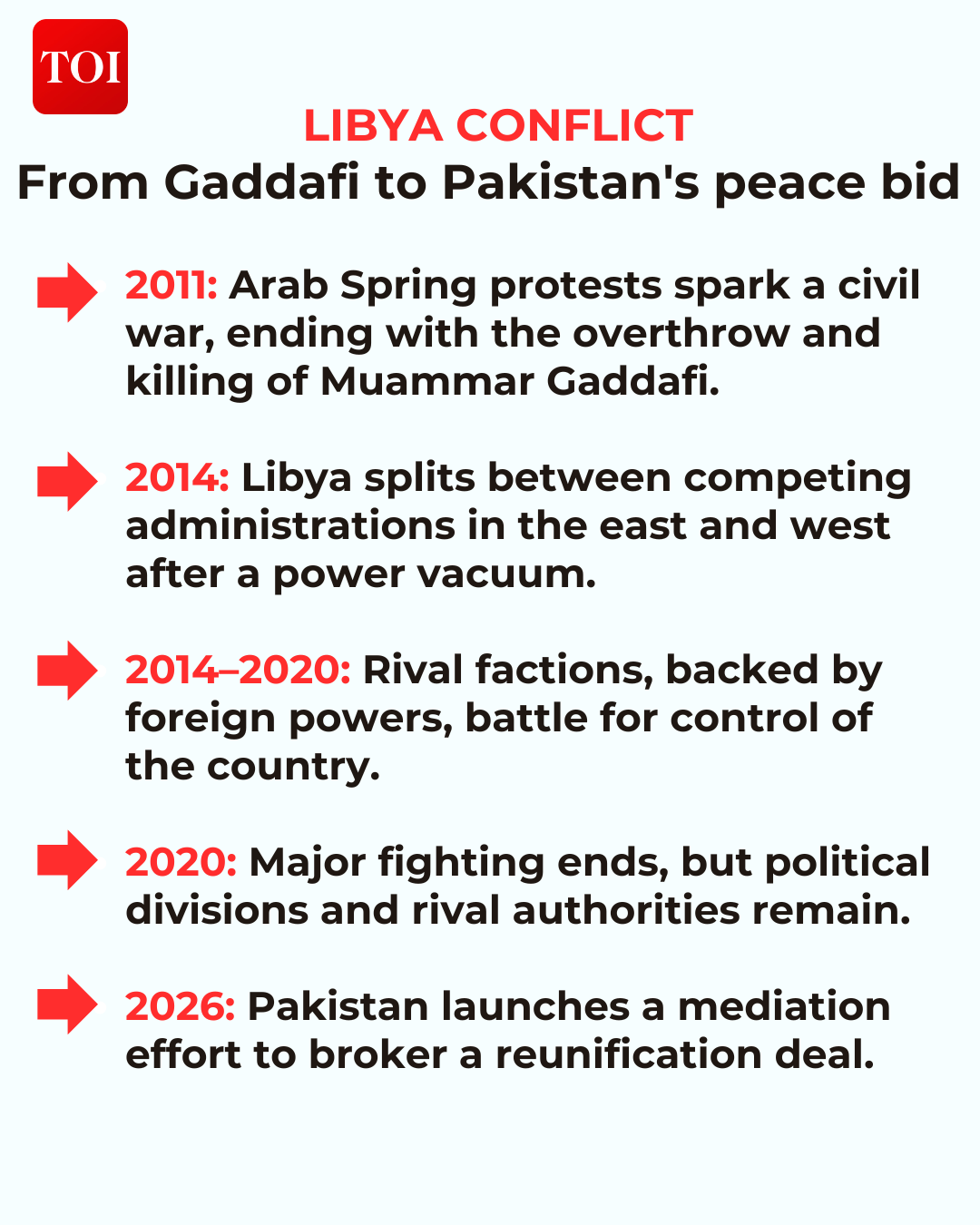
Pakistan’s mediation comes after years of failed international efforts, with Libya still split between rival administrations despite the 2020 ceasefire.
The human and economic cost has been staggering. A UN study found the conflict had already cost Libya more than 783 billion Libyan dinars, or roughly $576 billion, by the end of 2020 alone, and warned the bill would keep climbing without a lasting peace deal. Oil production, the backbone of Libya’s economy, collapsed from 1.6 million barrels a day under Gaddafi to as low as 100,000 barrels a day during the worst of the fighting. Ordinary Libyans have paid the price in every sense: the currency has been devalued repeatedly, public services have decayed, and in 2023 flooding that killed roughly 11,000 people in Derna exposed just how little capacity the divided state has left to protect its own citizens.Into this mess, Pakistan has reportedly stepped as an unlikely mediator. Pakistan is trying to help rival Libyan political factions move toward a lasting settlement, according to a Reuters report, with the effort coming as the United States increases pressure for a political solution. Libya’s western-based Government of National Unity has itself sought direct talks with Pakistan, and Qatar and Turkey have encouraged Islamabad to take on the mediation role because both back the western administration.
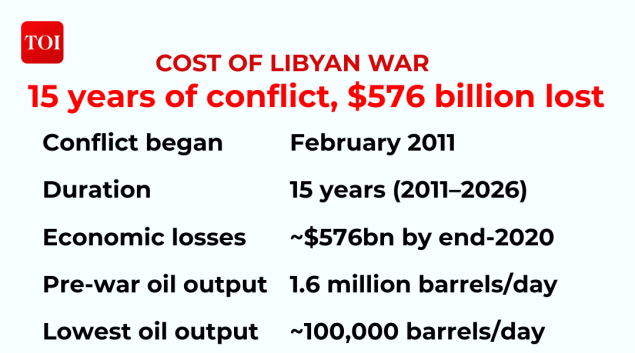
The economic damage extends far beyond lost oil revenue, with years of instability stalling investment, reconstruction and public services across the country.
The plan on the table is ambitious. A draft “Libya Reunification Plan” would set up a 36-month transitional power-sharing arrangement under a Government of National Consensus and a Presidential Council. Under the proposal, Abdulhamid Dbeibah would stay on as prime minister during the transition, Saddam Haftar would chair the Presidential Council, and his father Khalifa Haftar would be handed control of the national budget, reflecting his forces’ grip on Libya’s largest oilfields.
The $4 billion question
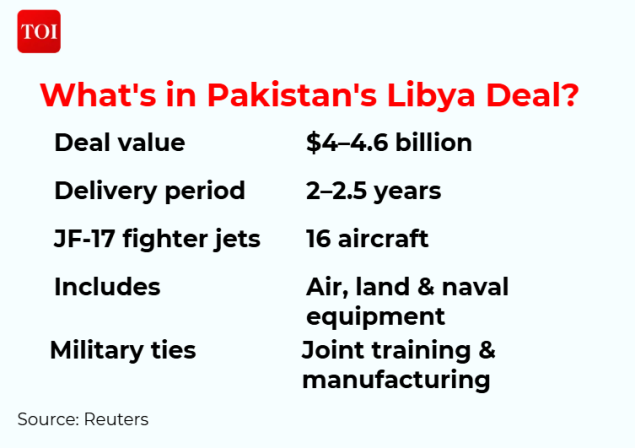
Here is where the story stops looking like straightforward peacemaking. Weeks before this mediation effort became public, Pakistan sealed an arms deal worth more than $4 billion to sell Chinese-designed warplanes to Khalifa Haftar’s Libyan National Army. The deal, one of Pakistan’s largest-ever weapons exports, was finalised in Benghazi after meetings between Pakistan’s military chief, Field Marshal Asim Munir, and Saddam Haftar.The scale of the package is significant. It reportedly includes 16 JF-17 fighter jets, a multirole combat aircraft jointly developed by Pakistan and China, along with equipment for land, sea and air forces, to be delivered over roughly two to two and a half years. The Libyan National Army’s own media wing confirmed the pact, describing it as a new phase of strategic military cooperation with Pakistan that includes weapons sales, joint training, and even military manufacturing.
If completed, the agreement would mark Pakistan’s biggest-ever defence export
There is an obvious problem here. Libya has been under a United Nations arms embargo since 2011, meaning any weapons transfer is technically supposed to require Security Council approval. That has not stopped anyone so far. A UN panel of experts has repeatedly described the embargo as “ineffective,” and foreign states have grown increasingly open about arming both sides of Libya’s divide. Pakistan is simply the latest, and one of the largest, players to test how little that embargo now means.Why would Islamabad take this risk? Money is the obvious answer. Pakistan has been on something of an arms-selling spree, having also agreed a $4.6 billion JF-17 deal with Azerbaijan and opened talks with Bangladesh, Indonesia, and Saudi Arabia over the same jet. Pakistan’s defence minister has openly boasted that orders were coming in so fast the country might not need the International Monetary Fund within six months. For a Pakistani economy that has spent years cap in hand at the IMF, a multi-billion-dollar defence contract is not a footnote. It is a lifeline.
Where China comes in
None of this happens without Beijing somewhere in the background. The JF-17 is not a purely Pakistani product; it is a multirole combat aircraft jointly developed by Pakistan and China, built on Chinese airframes, radar technology, and engines. Every JF-17 that Pakistan sells to a foreign air force also extends China’s industrial footprint and strategic reach, without Beijing ever having to sign the contract itself.This matters because China has struggled to sell its own military hardware directly into some of these markets, for political and reputational reasons that a country like Pakistan simply does not carry in the same way. Analysts have pointed out that the Libya deal strengthens China’s indirect influence in the country through the JF-17 platform, expanding Beijing’s strategic footprint in North Africa without China’s own flag appearing on the deal. Pakistan, in effect, becomes the sales agent and the delivery vehicle for Chinese military technology in a region where Beijing would rather not be seen taking sides.There is a wider pattern behind this single transaction. Pakistan has also been negotiating a defence package worth around $1.5 billion with Sudan’s army, another force fighting a brutal and complicated civil war, and has held JF-17 talks with buyers as varied as Bangladesh, Indonesia, and Saudi Arabia. Each of these deals plants a Chinese-designed weapons system, and by extension a small piece of Chinese industrial and strategic influence, in a new country, all under a Pakistani flag that draws far less international scrutiny than a Chinese one would.For Beijing, this is a low-cost way to compete with Western and Gulf arms suppliers across Africa and South Asia. For Islamabad, it is hard currency and a growing reputation as a defence exporter that can undercut everyone else on price. For Libya, and for the wider region watching this play out, it is one more foreign power with a financial stake in how the war ends, and in who ends up on top when it does.
A peace effort with a price tag attached
Pakistan wants to be seen as a country that can get rivals into the same room, whether they are in Tehran and Washington or Tripoli and Benghazi. Libya could give Islamabad the diplomatic victory that its increasingly shaky Middle East ceasefire has failed to deliver.But peace in Libya now comes with a rather large invoice attached.Pakistan is mediating between two rival camps while selling billions of dollars in weapons to one of them. China gets its military technology into another strategically important market without taking centre stage. Haftar gets fighter jets and military support. And Islamabad gets hard currency, defence exports and another chance to present itself as a global power broker.For Islamabad, the question is no longer whether it can be a peacemaker or an arms dealer. It is how long it can convincingly be both.