Just like that, the Fab Four of Test batting has been chopped in half, with the retirement on Friday of Kane Williamson, the affable former New Zealand captain who has called time on his glorious career midway through the ongoing tour of England.
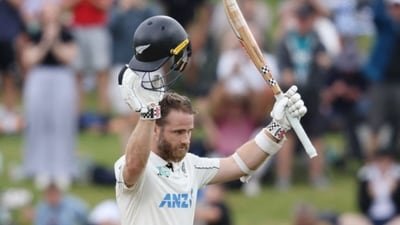
Some 13 months after Virat Kohli, his counterpart at the Under-19 World Cup in Kuala Lumpur in 2008, dramatically bid adieu to the five-day game, the soft-spoken Williamson followed suit, leaving Australia’s Steve Smith and Englishman Joe Root as the sole survivors of inarguably the most influential Test batters of their generation.
There was a touch of inevitability to Williamson’s retirement from the time he opted to forgo a central contract with New Zealand Cricket last September and instead entered into a casual playing agreement, which gave him greater flexibility in pursuing other interests while remaining committed to the national team for major tournaments and specific Test showdowns.
That a Williamson retirement decision was imminent became clear when Simon Doull, the former Kiwi pacer, hinted at a ‘big announcement’ on commentary a few days back. The 35-year-old Williamson, who hasn’t represented his country in T20Is since June 2024 and played the last of his 175 ODIs in October last year, signs off with not just every conceivable New Zealand batting record, especially in Test cricket, but also as a universally well-liked combatant who was the perfect counter to the long held myth that nice guys don’t finish first.
There was much to admire about Williamson’s batting, built around terrific basics as is the case with all successful batters, but which also boasted an adaptability that only the gifted few can embrace. He provided the first glimpses of his terrific skills on debut in Ahmedabad in November 2010 when, admittedly on a shirtfront that facilitated Harbhajan Singh’s first hundred, he danced to 131 in more than six and a half hours of technical exactitude. Williamson was only 20 at the time but watching him go about his business against Zaheer Khan, S Sreesanth, Harbhajan and Pragyan Ojha, one was convinced that unless things went horribly wrong, he would stack up numbers that would be the pride and joy of New Zealand and the envy of the rest of the cricketing world.
Williamson on song was like walking on water
Williamson didn’t disappoint. With an equanimity that is such an endearing feature of those from the land of the Kiwi, he systematically dismantled bowling attacks the world over, but not with bluster or bravado or an in-your-face aggression. There was calmness when he was in the middle as he brought his soft hands into play when the occasion demanded, especially in the subcontinent, but also when he naturally bossed the faster bowlers. A stickler for practice, he would spend long hours focussing on the imaginary kinks he felt needed ironing out, mentally insulated from the probing eyes of the media gathered just a few feet away, a luxury that the more relaxed air in New Zealand readily encourages.
His ascension to the captaincy in April 2016, when he succeeded Brendon McCullum, was an organic progression, given his exploits at the Under-19 level and his standing as not just the best batter in the team but also a wonderful student of the game. In his first assignment, the T20 World Cup in India, he orchestrated a coup against India in spin-friendly Nagpur and steered the team to the semifinals. Three years later, he experienced ultimate heartbreak when New Zealand came second best to England (on boundary countback) in the 50-over World Cup final at Lord’s despite the match ending in a tie in both regulation time and the Super Over. His demeanour at the press conference added several thousands more to his already burgeoning fan-collection; he neither moped nor moaned and groaned about the stupid playing conditions, conducting himself with greater dignity than almost every one of the assembled non-English media corps.
It was typical of Williamson to walk away just 85 short of becoming the first Kiwi to 10,000 Test runs (average 54.06, 33 hundreds in 110 games), because he has never played for individual glory. Team victories meant the world to him and while he knew that the Black Caps could never compete with rugby’s All Blacks for popularity back home, nothing delighted him more in his 15-and-a-half-year journey with the national side than lifting the inaugural World Test Championship Trophy in Southampton in June 2021.
There is no denying that it won’t be just New Zealand cricket that will be the poorer for his absence. Williamson will remain one of those rare champions loved, adored and backed wherever he went. The good news is that even though he is lost to the sport at the international level, he will still ply his wares elsewhere, so let’s soak in his genius till such time that he keeps entertaining us.