Captaincy stories in the IPL are usually written too quickly. Two wins and a captain is suddenly painted as a tactical genius. Three losses and the noise starts sounding like a verdict. But as per our impact methodology for IPL 2026 through Match 12, the picture is more layered than the points table alone suggests. A captain’s season is not shaped only by results. It is also defined by how much he contributes himself with bat and ball, and whether those contributions actually help his side control matches.
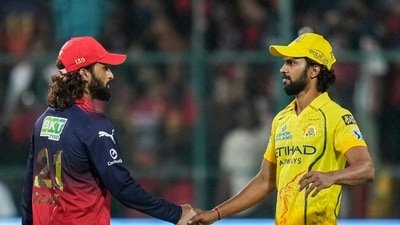
Rajat Patidar and Ruturaj Gaikwad during the CSK vs RCB match in IPL 2026. (PTI)
That framing matters even more this season because several teams have entered IPL 2026 with very different leadership contexts. Rajat Patidar is no longer a stopgap experiment. RCB appointed him captain ahead of IPL 2025, and he led the franchise to its first title that year. Shreyas Iyer, meanwhile, has been in charge of Punjab Kings since last year, with his reputation as one of the league’s most impactful leaders. Gujarat Titans have continued with Shubman Gill as captain, while Hardik Pandya’s early sample has already been shaped by absence, with Mumbai’s camp confirming he missed a game because he was unwell.
Patidar and Iyer have set the strongest early standard
The most impressive captain-player package so far has been Rajat Patidar. Across his first two matches as captain in our impact model, he has returned an average final score of 78.05, the best among captains with more than one game in charge. His individual captaincy scores of 70.63 and 85.47 show both quality and repeatability. The player-performance context makes that case even stronger: 79 runs in two innings, an average of 79.00, and a strike rate of 254.84.
That is a captain directly changing the shape of matches with the bat. And that aligns neatly with the larger RCB context around him. Patidar entered this season not as an untested call but as the man who had already been trusted to lead the franchise after their leadership reset, and his start in his second season suggests that trust is carrying over.
Shreyas Iyer’s case is just as strong, though slightly different in texture. He has two wins in two matches, an average final score of 61.95, and an average captaincy rating of 8.0, the joint-best among repeat captains in our analysis. With the bat, he has contributed 68 runs in two innings at a strike rate of 170.00.
If Patidar’s captaincy has looked explosive, Iyer’s has looked composed and directive. That broader sense is not new either. He is one of the most impactful leaders in the tournament’s recent history, and external coverage around Punjab’s start this season has already leaned into the idea of an “Iyer effect” on the side’s early shape. In our numbers, too, he looks like the captain whose leadership and batting are working in sync rather than in isolation.
Axar Patel is building value through control, not noise
Axar Patel’s case is quieter, but perhaps more structurally impressive. He has two wins in two, an average final score of 55.56, and an average captaincy rating of 7.25. Unlike Patidar or Iyer, however, Axar has not built those returns on batting. He has not contributed with the bat yet. His value has come through control: 2 wickets, an economy of 6.14, and a positive fielding impact.
That makes him the standout “control captain” in the early phase. His numbers suggest someone shaping matches through balance, discipline and calmer decision-making rather than through top-order fireworks. In a tournament that often rewards visible aggression, Axar’s start is a reminder that captaincy value can still come from steadiness.
Pant has the highest ceiling; Parag shows captaincy can outstrip player output
No captain in the sample has shown a wider swing than Rishabh Pant. In two matches, he has posted final captaincy scores of 26.06 and 89.00, giving him an average of 57.53. The player-performance layer explains why the ceiling is so high: 75 runs in two innings at an average of 75.00, plus the strongest fielding impact (being a wicketkeeper) among the main captains in the sample.
This is not random volatility. It is the profile of a captain who is deeply involved in the game and, therefore, capable of a huge positive influence when things line up. Pant’s question is not whether the upside exists. It is whether he can smooth out the swing.
Riyan Parag’s numbers tell a different story. He has two wins in two matches and an average captaincy rating of 8.0, but his individual player returns are far more modest: 22 runs in two innings, 1 wicket, and an economy rate of 11.00. That suggests his captaincy valuation is being driven more by leadership than by dominant personal output. He looks, in other words, like a captain-first success case rather than a player-captain carrying the whole narrative himself.
Rahane and Ruturaj are under pressure, but not in the same way
Ajinkya Rahane’s record looks poor on first glance: no wins, two losses and one abandoned match, with an average captaincy rating of -0.67. But the player context complicates that picture. Rahane has scored 83 runs in three innings, averages 41.50, and is striking at 148.21. Those are healthy T20 batting returns. His issue is not that he has collapsed personally. It is that his own contribution has not converted into enough collective lift.
That is where Rahane differs sharply from Ruturaj Gaikwad. Ruturaj has three losses in three matches, an average final score of just 6.22, and an average captaincy rating of -2.33. His batting has not offered cover either: 41 runs in three innings, an average of 13.67, and a strike rate of 113.89. So this is not simply a captain suffering because his team is losing. His personal returns are weak as well. That makes him the clearest early pressure point in the tournament.
Hardik and Gill need context before any hard judgment
Sample size matters, especially in a tournament this short. Hardik Pandya has only one captaincy sample in our analysis because he played one match and then missed the next after being unwell, a point confirmed by Mumbai’s camp. In that lone appearance, he still returned a final score of 55.80, while contributing 18 runs at a strike rate above 160 and 1 wicket. Useful, yes. Conclusive, no.
Shubman Gill falls into a similar bucket. Gujarat Titans have continued with him as captain this season, but his captaincy sample in our analysis is still just one match. In that game, he returned a final score of 61.08 and scored 39 at a strike rate of 144.44. It is an encouraging start, but not yet enough to compare fairly with captains who have already had two or three games to shape their story.
The early captaincy truth, then, is not just about who is winning. Patidar has been the most explosive captain-player package. Iyer has looked the most complete winning leader. Axar has offered the steadiest control. Pant has shown the biggest ceiling. Parag has proved that strong captaincy ratings do not always require huge player numbers beneath them. Rahane is contributing more than his results suggest. And Ruturaj is the one captain whose numbers, right now, offer almost no cushion.
That is the real picture of IPL 2026 captaincy so far: not one story, but several different kinds of leadership being tested at once.