The last time Australia arrived in South Africa in 2018, they were the Ashes winners. They walked in with the confidence of a side that had just beaten England 4-0 at home. A little over a month later, they left after losing the series 3-1, with their captain and vice-captain banned, three players sent home, and the culture of Australian cricket under serious scrutiny.
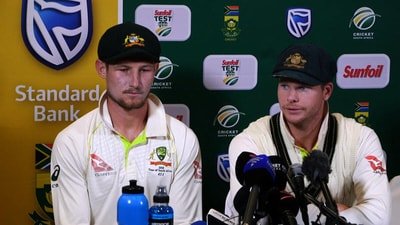
Eight years have gone by, and the Aussies have returned to the Rainbow Nation. Remarkably, they stand almost exactly where this story started. The opening Test of the tour will be played at Kingsmead in Durban, the same venue where they had taken a 1-0 lead eight years ago. By the time this series reaches its culmination, the Australian side will return to the venue that remained a witness to one of cricket’s most infamous scandals.
The 2018 Australia tour of South Africa is almost entirely remembered for Sandpapergate. What has actually escaped most of our memories is how much had already transpired in the series before Cameron Bancroft ever pulled out a small yellow thing from his pocket.
Australia had taken a 1-0 lead at Durban by winning the first Test by 118 runs on the back of a nine-wicket haul in the match from Mitchell Starc. But the temperature of the series was already on the rise. Nathan Lyon had been fined for dropping the ball near AB de Villiers following his run-out, and then David Warner and Quinton de Kock had one of the ugliest confrontations in the players’ staircase. The Australian had to be restrained by his teammates, and both players were later sanctioned.
Then Port Elizabeth added more fuel. South Africa apologised after officials were photographed with spectators wearing Sonny Bill Williams masks aimed at Warner and his family. On the field, it was Kagiso Rabada who dominated the visitors with 11 wickets in the match. With the bat, AB de Villiers scored 126 not out as South Africa won the match and levelled the series.
Rabada was then suspended for shoulder contact with Steve Smith. The ban was, however, overturned on appeal. By the time the caravan proceeded to Cape Town, the air had become increasingly combustible. The series was simmering.
Then came Newlands
On the third day of the Test match, broadcast visuals caught Cameron Bancroft rubbing the ball with a yellow object before hiding it back in his pocket. The initial explanation was that he had used granules stuck to tape to tamper with the ball’s shape. However, further investigation by Cricket Australia established that it was sandpaper.
As the investigation went on, things became increasingly damning. It was established that David Warner, the vice-captain of that team, had devised the plan and asked Bancroft to carry it out. The opener executed the plan, whereas the skipper, Steve Smith, despite having prior knowledge, failed to stop it.
Smith and Warner were immediately banned for 12 months, while Bancroft faced a nine-month ban. The three players were sent home, and Tim Paine took over the captaincy. Darren Lehmann, the then-head coach, announced that he would step down from his role after the final Test, despite being cleared of any prior knowledge. The tour unravelled abruptly for the visitors.
Also Read: What discarded India players can learn from Bhuvneshwar Kumar: Reinvent, adapt and make selectors need you again
South Africa then completed the demolition. They won the Johannesburg Test match by a massive 492 runs and sealed the series 3-1. It was South Africa’s first home series win against Australia in 48 years. While the tour started with an Australian win, it ended amid one of the darkest controversies in the sport’s history.
Now, after eight years, as Australia return to South Africa, there are members in the squad who lived through that tour. Steve Smith, Pat Cummins, Mitchell Starc and Nathan Lyon remember exactly what happened when Australia last visited South Africa. Although they will try to treat it as another series, once it reaches Newlands, it will be difficult to keep discussions about the infamous incident at bay.