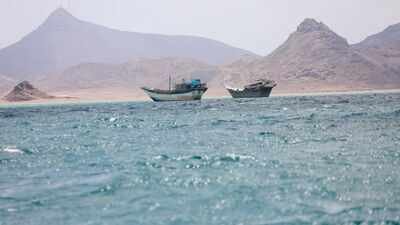
Saudi Arabia on Thursday announced a multinational maritime defence alliance to safeguard commercial shipping and energy routes in the Red Sea, the Bab el-Mandeb Strait and the Gulf of Aden, as the kingdom seeks to counter escalating attacks by Yemen’s Iran-backed Houthi rebels.The Saudi defence ministry said representatives from 43 countries and the European Union attended an international meeting that discussed the proposed coalition, including Saudi Arabia serving as its founding and leading state and hosting its headquarters.Saudi Arabia said the new coalition will coordinate efforts to secure freedom of navigation, protect commercial vessels and energy infrastructure, and strengthen maritime surveillance across the Red Sea region. The alliance will also facilitate intelligence sharing, joint naval patrols and coordinated responses to threats on the route.Fourteen countries, including Turkey, Pakistan, Egypt, Sudan and Djibouti, issued a joint statement endorsing the proposed coalition. However, Oman and the United Arab Emirates were not among the signatories to the joint statement.On July 20, Yemen’s Iran-backed Houthi movement declared a naval blockade against Saudi Arabia in the Red Sea and has since claimed responsibility for a series of attacks on Saudi-linked commercial shipping. In response, Saudi Arabia launched air strikes on what it described as Houthi military facilities in Yemen’s Hodeidah province, saying the sites were being used to threaten international maritime traffic and commercial vessels.Why the Bab el-Mandeb Strait mattersThe Bab el-Mandeb Strait is one of the world’s most strategically significant maritime chokepoints, connecting the Red Sea with the Gulf of Aden and the Arabian Sea. Together with the Suez Canal to its north, it forms the shortest sea route between Europe and Asia, carrying a substantial share of global trade, including crude oil, liquefied natural gas (LNG), container cargo and military traffic.Any disruption to shipping through the narrow waterway forces vessels to reroute around Africa’s Cape of Good Hope, adding thousands of nautical miles, increasing transit times by around 10–15 days, and driving up fuel, freight and insurance costs.The strait has become increasingly vulnerable in recent years due to attacks by Yemen’s Iran-backed Houthi movement, which has used drones, missiles and explosive-laden boats to target commercial vessels and warships.The latest tensions are rooted in Yemen’s decade-long conflict, where Saudi Arabia has been engaged in a military campaign against the Iran-backed Houthi movement since 2015.The conflict traces its origins to 2014, when Yemen’s Iran-aligned Houthi movement seized the capital, Sanaa, forcing the internationally recognised government of President Abd-Rabbu Mansour Hadi to flee. Saudi Arabia viewed the Houthi advance as a growing security threat on its southern border and an expansion of Iranian influence in the Arabian Peninsula.Saudi Arabia formed a military coalition of Arab states and launched a large-scale intervention in Yemen to restore Hadi’s government. The conflict soon evolved into a prolonged war that created one of the world’s worst humanitarian crises.Although a UN-brokered truce in 2022 reduced large-scale fighting, no comprehensive peace agreement was reached. The Houthis retained control over much of northern Yemen, including Sanaa, while sporadic clashes and cross-border attacks continued.