Shubman Gill’s absence from India’s T20 World Cup squad carried one obvious cricketing message. India had moved towards a quicker, more flexible top order, and Gill’s classical gifts were no longer enough to guarantee him a place in the format.
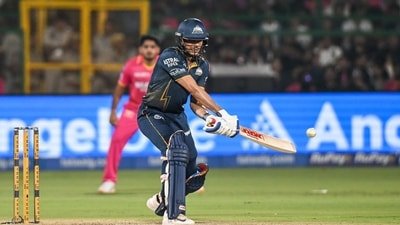
IPL 2026 has become his answer. Gill has not tried to become a chaos opener. He has not thrown away the grammar that built his batting. He has raised the pace of his game, kept the old control, and produced one of the cleanest consistency profiles among India’s opening options.
Gill’s tempo has changed without losing his base
The clearest number is the season strike rate. Gill is striking at 160.42 in IPL 2026, with 462 runs off 288 balls. That is already ahead of his IPL 2024 strike rate of 147.40 and his IPL 2025 strike rate of 155.88.
The rise is steady and significant: 147.40, 155.88, 160.42.
This is no cosmetic shift. Gill has moved into a faster scoring zone while still carrying volume. Among the Indian opening options around the T20 World Cup conversation, Abhishek Sharma remains the most explosive player, with 475 runs off 226 balls at 210.18. Ishan Kishan has 409 runs at 186.76, while Sanju Samson has 402 at 168.91.
Gill sits behind them on pure strike rate. His case begins when the strike rate is placed beside repeatability.
Gill has crossed 30 in eight of his 10 innings. Abhishek has done it seven times in 11 innings. Ishan has done it five times in 11. Sanju has done it four times in 10. Gill also has only one single-digit score this season, compared to three each for Abhishek and Ishan, and four for Sanju.
That gives Gill a serious argument. He has not simply lifted his strike rate. He has done it while becoming the least collapsible opener in the group.
Modern T20 does not forgive slow starts, but it also punishes teams that lose their shape too early. Gill’s IPL 2026 offers a middle path. He is scoring fast enough in the first six and still staying long enough to give the innings structure.
His powerplay numbers clearly show that shift. Gill has made 235 powerplay runs off 135 balls at 174.07. Abhishek is far ahead, with 319 off 138 at 231.16, and remains the clearest ball-one destroyer. Ishan has struck at 179.69 in the powerplay, while Sanju is at 153.27. (All IPL 2026 numbers)
Gill is no longer giving the impression of an opener easing into a T20 innings. He is taking the powerplay at a proper modern rate. The elegance remains, but the first-six-over tempo has changed.
The stronger part of his case comes after the powerplay. Gill has reached the post-powerplay phase in seven of his 10 innings and has faced 20-plus balls after the sixth over in four innings. Abhishek, despite his extraordinary season, has faced 20-plus post-powerplay balls only once. Sanju has done it three times. Ishan has done it four times in 11 innings.
Gill’s post-powerplay strike rate, 148.37, is not the highest in the group. Ishan and Sanju have been quicker after the field spreads. Abhishek has also attacked spin and pace with extreme force. Gill’s value lies in a different zone: he is the opener most likely to give a side a strong start and then stay available for the middle overs.
That is a real selection argument. India did not leave Gill out because he lacked pedigree. They left him out because the T20 structure had begun demanding immediate tempo, left-right combinations, wicketkeeping cover, and higher-risk opening options. Gill cannot solve the wicketkeeping part. He can solve the tempo part. IPL 2026 shows he is already doing that.
Spin strengthens the case in a quieter way. Gill has scored 190 runs off 117 balls against spin at 162.39. Abhishek and Ishan have struck faster against spin, but Gill has faced more spin than any of the other openers in this comparison. He has not merely survived the middle overs. He has absorbed them, scored through them, and continued to build innings beyond the fielding restrictions.
Also Read: Sanju Samson cut out MS Dhoni’s ‘face from Boost bottle sticker’, ‘stuck it on his diary’: ‘This guy with long hair…’
That is where the old Gill and the new Gill meet. The old Gill gave India timing, shape and repeatability. The new Gill is trying to add enough velocity to make those qualities relevant again in a harsher T20 market.
The debate around him should now change. Gill is not presenting himself as India’s most brutal opener. Abhishek owns that lane. Ishan brings wicketkeeping and left-handed aggression. Sanju brings flexibility and boundary range. Gill’s case is the high-tempo anchor: an opener striking at 160 overall, 174 in the powerplay, crossing 30 in 80 percent of his innings, and rarely giving his team a dead start.
That profile has value. It gives a team control without surrendering pace. It gives the middle order a platform without asking the opener to bat at ODI rhythm. It gives selectors a reason to separate Gill’s past T20 reputation from his current IPL evidence.
Gill was told, in effect, that modern T20 had become too fast for him. IPL 2026 has become his reply. The reply is not loud. It is not reckless. It is shaped like Gill: clean, repeatable, elegant and now fast enough to force the conversation open again.