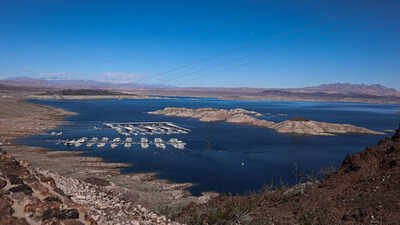
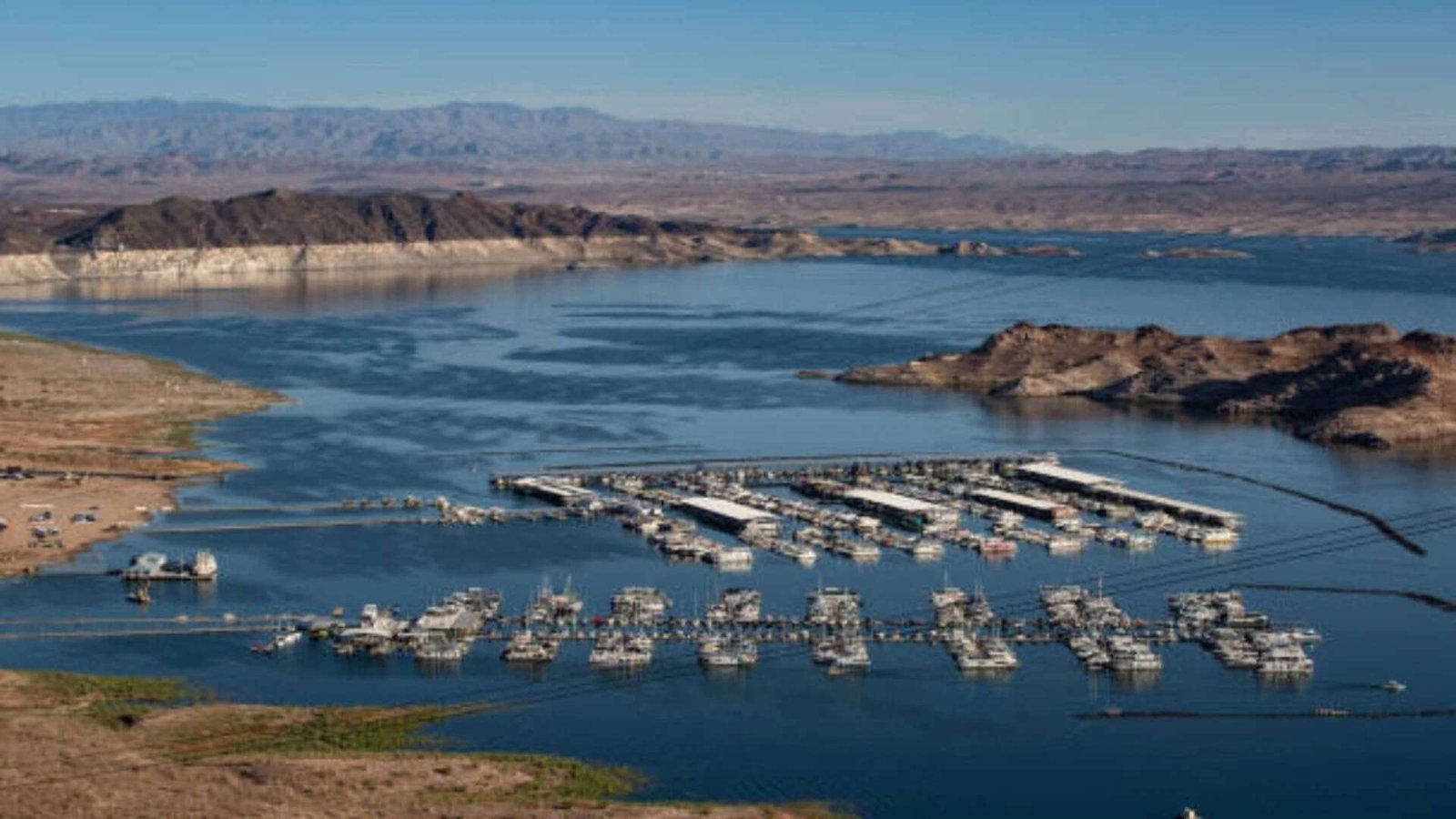
Lake Mead is a man-made lake that lies on the Colorado River, about 24 miles southeast of the city of Las Vegas, Nevada. Formed by the Hoover Dam, it is the largest reservoir in the United States and supplies water to about 20 million people in the states of Arizona, California, Nevada and some in Mexico.Currently, the lake is tacking historically low water levels, sitting at just 28% of its capacity. The lake is currently around 1,042 feet in elevation, less than two feet above its all-time record low set in 2022. A prolonged regional drought accompanied by high water demands on the Colorado River, is driving the decline.In an effort to address this issue, the Metropolitan Water District of Southern California approved an agreement with the federal government to help add water to the reservoir, according to a report by NBC Los Angeles. On Tuesday, the Metropolitan’s Board of Directors approved an agreement with the US Bureau of Reclamation which will provide the agency up to $65 million to keep 200,000 acre feet of its Colorado River supplies in the lake this year. That’s about $325 per acre-foot. An acre-foot is about 326,000 gallons, enough to serve roughly three Southern California households a year, as per MWD officials.
A federal effort
According to a report by Colorado State University, climate change is propelling a water change with above-average temperatures and precipitation deficits.
Federal funding comes from the 2022 Inflation Reduction Act’s Lower Colorado River Basin System conservation and Efficiency Program. Officials said they moved forward with the agreement because of major investments in water sources, storage and conservation efforts.The board also approved two other agreements with the Quechan Tribe and Bard Water District allowing the federal government to fund the addition of up to 19,000 acre-feet of conserved agricultural water to Lake Mead annually in 2027 and 2028.“Over the last 30 years, we’ve transformed how Southern California secures its water future. By investing in diverse water supplies, incentivising conservation, and capturing and storing water whenever it’s available, we’ve added resilience to our system,” Metropolitan Board Chair Adán Ortega Jr. said in a statement. He pointed out that MWD and its ratepayers have invested $1.7 billion in conservation, water recycling and groundwater recovery since 1990, producing over 8.8 million acre-feet of water.“Those decades of forward-thinking investments allow us to step forward and help stabilise the Colorado River when it needs us most,” he added.
A climate change consequence
These efforts come in the wake of the record-low snowpack in the Colorado River Basin this year, resulting in Lake Mead’s water level dropping to a near-historic low. If Lake Mead drops too low, hydropower generation capacity at Hoover Dam could be reduced by 70%, meaning a significant impact on electricity supply for the Southwest region.As of March 25, 2026, the snow water equivalent was just 38% of the 1991-2000 average, representing the lowest snowpack in more than 40 years and possibly ever in Colorado’s mountains. The first five months of the water year, from October through February, were Colorado’s warmest on record by a large margin. The warmth and high pressure have even prevented the usual snowstorms from moving into the states.According to a report by Colorado State University, climate change is propelling a water change with above-average temperatures and precipitation deficits.Metropolitan General Manager Shivaji Deshmukh emphasised that the agreements are temporary solutions and more long-term commitments are required which would require consensus among the seven Colorado River Basin states for how they would move forward after the current guidelines expire at the end of the year. The effects of these are not just for water, but can also lead to lower crop yields, higher costs of feeding livestock, increased risk of wildfires and reduced outdoor recreation opportunities, ultimately hurting the state’s tourism industry.“We’re grateful to be in the position this year to help reduce the impacts of drought on the Colorado River system as it faces unprecedented challenges,” Deshmukh said in a statement. “But while these agreements provide important near-term support, lasting progress will require long-term solutions. If we all commit to reducing our use, we can avoid deeper cuts and create lasting change that will benefit future generations who rely on the Colorado River Basin,” he added.