The demands of modern cricket are brutal. The calendar is a relentless, packed grind, and the pressure radiating from the stands and social media is immense. Players get tired. They burn out. In 2026, the cricket world is accustomed to this exhausting reality, but it was not prepared to lose two of its defining generational pillars in the span of a fortnight.
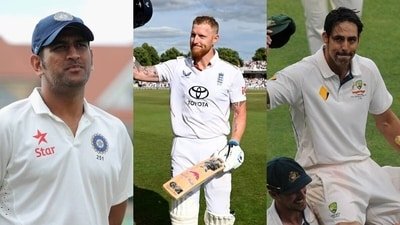
When Kane Williamson walked away from international cricket, after New Zealand’s first Test against England, the quiet finality of it was jarring. He had “thought about it for a while, but over the last few days, it [had] become clear now is the right time.” Two weeks later, Ben Stokes stood in his dressing room, looked at his teammates, and announced his own sudden exit. There was to be no farewell tour, no swansong or ceremony.
Two titans of the game, each elegance and energy personified, each drained by the relentless machine, simply choosing to walk away on their own terms. Elite sports, at the end of the day, exact a high cost, and the anatomy of a retirement is complex. Surprisingly, both chose to walk away in the middle of a series. But they were not alone. Over the years, several of cricket’s biggest names have retired before a series was over, regardless of its significance.
For some, the body makes that decision for them.
Somehow, legends always know
For Adam Gilchrist in his prime, it was a dropped catch of VVS Laxman off Brett Lee on Day 3 of the Fourth Test of India’s tour of Australia in 2008. Twenty-four hours earlier, he had broken the all-time record for most dismissals by a wicketkeeper in Test cricket. It was his 96th Test match; he was four away from a historic century, and was already looking forward to the tour of India, where he would achieve that rare honour. “Then, the next day, I attempted to take a catch off the outside edge of VVS Laxman and dropped it, an absolute soda, as simple as it gets,” he recalled. Gilchrist immediately knew his time was up.
For an ageing Anil Kumble, it was a deep cut to the finger sustained on Day 3 of the Third Test of Australia’s 2008 tour of India. By Day 4, he had decided that was it. By Tea on Day 5, the announcement was public, and at stumps, it was all over. He would play no part in the fourth and final Test of the series. He was 39, and with MS Dhoni ready to take over, the time was right.
For some, that decision is made for them by others. So they leave on their own terms, with their heads held high. “You either die a hero, or you live long enough to see yourself become the villain.” Virat Kohli and Rohit Sharma have experienced both sides of that coin. They retired from T20Is on a glorious high, winning the T20 World Cup in 2024, not long after the peaks of their respective careers. Rohit summed it up simply: “No better time to say goodbye to this format.”
Their Test cricket farewells were as unexpected as their T20I farewell had been beautiful. Both announced their decisions via social media within five days of each other in May 2025, a month before India’s tour of England. Both had struggled in India’s last Test series, the Border-Gavaskar Trophy in Australia just months prior – Rohit, in fact, had dropped himself for the final match of that series due to his poor form. Despite their name and status, especially Rohit’s as captain, neither of them was particularly guaranteed a long-term berth based on form and merit. So, they took the decision themselves and hung up the baggy blue before they could be stripped of it in ignominy.
Ashwin knew his time was up
Kohli and Rohit were just the latest victims of the fallout from that BGT loss. Ravichandran Ashwin had been the first. He had played the Second Test of that tour but had been benched for the First and Third. Seeing no guarantee of a playing XI spot going forward, he decided to retire with immediate effect. He did not want any fanfare, nor a farewell match. “I want to be honest with the game. Imagine if I want to play a farewell Test, but I do not deserve a place. Imagine, I am only in the team because it is my farewell Test. I don’t want that.”
“We play the game for the happiness it gives us,” said Ashwin. But eventually, that happiness runs out. Players grow old and tire. Survival at the highest level requires an almost psychotic level of hunger, and Mitchell Johnson simply “lost that hunger.” He shocked the world with his retirement in 2015, at the end of Day 4 of the Second Test versus New Zealand at the WACA in Perth. “Ultimately, I felt like I couldn’t compete at this level anymore.” The physical ability might have lingered, but the fire had extinguished.
And that, at the end of the day, is the simple truth of it all. For professional cricketers, the sports can feel like their entire life. But it is only one part of their lives, and far from the most important. Amidst the packed calendar and the exacting demands of a career at the highest level, players miss out on the simple joys of their lives – time spent with their families and loved ones.
The Dhoni call still shocks
Dhoni announced his Test retirement out of the blue, 44 minutes on from his final press conference as Captain after India’s Third Test against Australia in 2014. After the 2011 World Cup, Dhoni’s captaincy began to decline alarmingly, especially in Tests. He somehow survived the 0-4 drubbings in England and Australia, but with a young Kohli waiting with his in-your-face approach, the succession plan was ready.
“When you play international cricket, what you miss a lot is the family time. Till 2015, I was playing all the formats. I was barely home in between. I realised I actually want to spend a bit more time with the family… parents are ageing, you get married, but you’re not able to spend a lot of time with your wife… if you have a kid, they’re also growing up.”
Stuart Broad felt that exact same pull. He admitted he hadn’t “seen [daughter] Annabella and [partner] Mollie as much as I would like to at such a young age. I love everything about being a dad. Did it come into my decision [to retire]? Potentially. It’s certainly something that fills my heart with joy, the fact I’ll be spending a bit more time at home.”
Broad and Anderson: The fairytale ending?
Not everyone bids farewell like Jimmy Anderson – at the Home of Cricket, Lord’s, against the West Indies, 21 years on from his 2003 debut against Zimbabwe at the same venue. Some just find contentment in a career well done, a life well lived, an honours list that needs no more additions. A moment of clarity is all it takes.
Broad always wanted to finish at the top. He made his decision on the evening of Day 2 and retired at Stumps on Day 5 of the final Test of the 2023 Ashes. He saw the stage and decided that was it. This was his time. This was his end. His final bow was something out of a fairytale – he hit a six off his last ball as a batter and took a wicket with his last ball as a bowler to seal the England win and draw the series 2-2.
There was to be no fairytale for Williamson. The Kiwi icon, who had not been centrally contracted under New Zealand Cricket since 2024, instead making himself available on a series-by-series basis precisely because he wanted to spend time with his family, just quietly decided that he was sated.
Nor was there any beauty at the end for Stokes, suffering defeat in his final match for his country; that is of little relevance, though, in the larger scheme of things. The international arena will value, remember, and miss Stokes, always one of its most ferocious gladiators and entertainers. But Stokes has earned his peace, as all greats before him have and all after him will too.