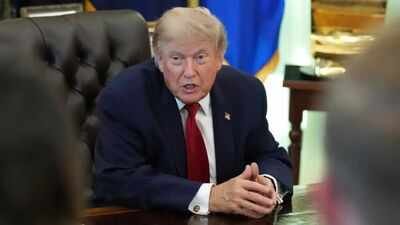
TOI correspondent from Washington: In the span of a few days, US President Donald Trump has torn up a prospective peace deal with Iran and aggravated fights with Nato allies, raising fresh questions about whether the post-World War II order, painstakingly assembled over eight decades, is being dismantled by presidential whim and social-media impulse.The latest turbulence began with Trump’s declaration that the peace deal with Iran was “over,” followed by renewed threats to bomb Iranian infrastructure if Tehran resumed activities that he deemed provocative. Even before officials could decipher the Iran message, Trump opened fire on another front, singling out Spain, which has not been supportive of the US war. “Spain is a wasted cause. We don’t want to do any more trade business with Spain by the way. Watch them come running back. Cut it off immediately. Don’t even talk to them,” Trump said, with Nato secretary general Mark Rutte, a purported Trump, whisperer by his side. A shocked Danish reporter later asked Rutte if Trump’s remarks “have any affect on your self-respect when you sit there and say nothing” — to which Rutte said it is important to acknowledge Trump has strengthened Nato by forcing an increase in defense spending. The US President also rebuked Denmark over not acceding to handing over Greenland, a recurring Trump fixation, saying it was more important to Washington than it is to Copenhagen. But the piece de resistance came when Trump posted an insulting meme directed at Italian PM Giorgia Meloni, once his closest ideological ally on the continent, showing she is captivated by him and needs a “restraining order.”Many Italians have not been amused by Trump taunting of Meloni, with one right-wing newspaper, Libero, capturing the public mood with a blunt headline: “Trump e un coglione” — “Trump is an idiot” — an epithet equivalent to the Hindi term “choo**ya.”The cumulative effect of the Trump tantrums is deepening anxiety in Europe that US security commitments and foreign policy have become increasingly personalized, contingent less on national interests than on Trump’s preferences, grievances and moods. A recent Wall Street Journal report chronicled what it called a widening rupture between Europe and America. European officials interviewed by the newspaper described growing concern that alliances once regarded as permanent now appear dependent on a single man’s impulses. Long-standing assumptions about trans-Atlantic solidarity, the report suggested, are being replaced by contingency planning and quiet discussions about strategic autonomy. One European official quoted in the report observed that dealing with Trump increasingly resembles managing “a constant state of unpredictability.“However, Trump supporters view such unpredictable disruptions as his greatest strength, arguing that previous administrations allowed allies to take advantage of the US, tolerated unfavourable trade arrangements and accepted endless diplomatic processes that produced little. From this perspective, Trump’s willingness to offend allies and shock adversaries demonstrates independence and toughness, they maintain. But critics see a presidency in which foreign policy increasingly resembles personal improvisation – shaped by grievances, likes and dislikes, social-media provocations, and an instinct for confrontation — of the kind he ignited with India, taunting it about its “dead economy.” The concern among many foreign-policy veterans is not merely the substance of individual decisions but the erosion of predictability itself. Hours after threatening to decimate Iran’s infrastructure, he was again reeling back the threats, saying said he did not think a full-fledged conflict with Iran would erupt in the wake of military strikes from both sides.Whether threatening to bomb Iran, berating Spain, reviving arguments over Greenland or joking about restraining orders against friendly leaders, the US President has once again reminded the world that, in his second presidency, geopolitics remains intensely personal and Trumpian.