
Japanese scientists may have found a crucial missing piece in the puzzle of hair loss. It looks as though the prayers of people struggling with thinning hair are finally being answered. Scientists at Japan’s RIKEN Institute and the Tokyo-based OrganTech have discovered a previously unknown ‘third cell’ that can fully reconstruct hair follicles, potentially clearing a path towards regenerative treatments for baldness and hair thinning. The findings have been published in the journal Biochemical and Biophysical Research Communications.
Bye-bye baldness

About 80% of men and 50% of women will experience pattern hair loss at some point in their lives. For many, thinning hair can be a distressing and deeply personal concern. It may affect confidence and self-image. From hair oils to transplants, there are countless treatments available; however, most of them focus on slowing hair loss, not reversing it. In the breakthrough study, the researchers may have identified a ‘third cell’ that works alongside two previously identified cellular components to complete the biological machinery needed for hair to grow and shed in a normal cycle. The researchers successfully re-created the complete hair-growth cycle in mice by adding the newly identified cell type to two already known components of hair follicles, the tiny organs in the skin that produce hair. This new finding suggests a way forward.
The third cell
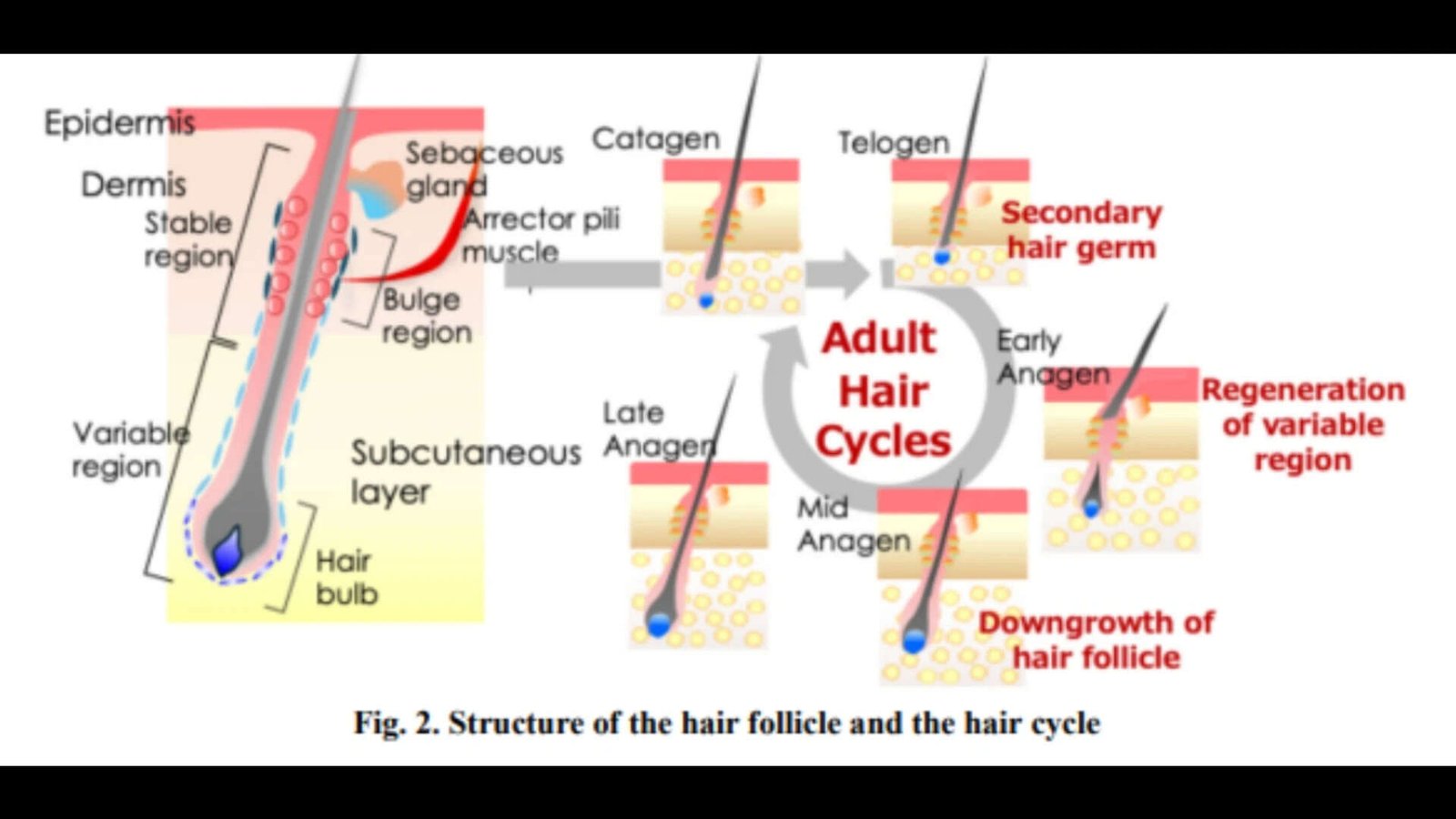
The study was led by Takashi Tsuji, a visiting senior researcher at RIKEN and chairperson of OrganTech. He and his team spent nearly two decades developing techniques to regenerate organs from adult stem cells. Hair grows in a natural cycle, which includes phases such as anagen (growth), catagen (transition), telogen (rest) and exogen (shedding). While scientists had already successfully generated hair follicle precursors from two cell types in laboratory conditions, they had not managed to sustain the full cycle of hair loss and regrowth outside a living body—at least not until 2012.
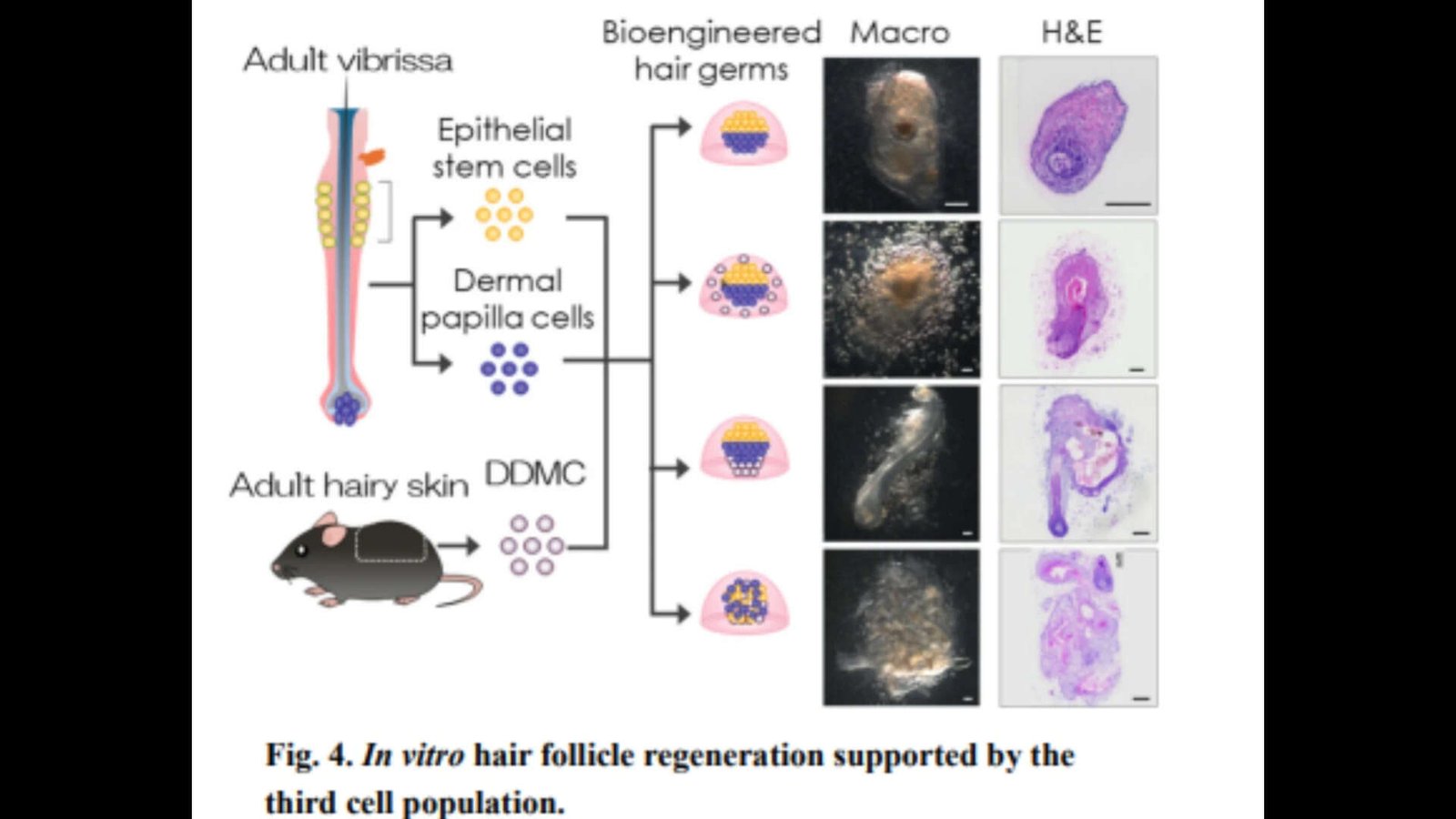
In that year, researchers combined epithelial stem cells and dermal papilla cells extracted from adult mouse whiskers to create the foundation of hair follicles. When these follicles were transplanted, the cells could induce new hair growth. Yet something remained incomplete in the system.In those experiments, after transplantation into living tissue, additional cells from the surrounding tissue migrated to the laboratory-grown follicle precursors. This suggested that the transplanted structures could not function as complete, independent hair follicles without external cellular support. That is when the researchers understood that there was a missing component, something the body naturally supplied but that had not yet been isolated or characterised.The researchers then began working to identify this missing piece. The team applied specialised cell-isolation techniques to identify around-bulge mesenchyme (ABM) cells, a type of cell found in the tissue near the hair follicle. When layered together with the two previously known cell types, epithelial stem cells and dermal papilla cells, and transplanted into engineered skin, all three cell varieties worked in concert. They found that these three cells together could reproduce the complete hair cycle in laboratory settings. This included repeated phases of growth and replacement. The experiments succeeded in mice, a standard model organism for testing regenerative approaches.
The researchers observed that the newly identified cells are instrumental in triggering the transition from a resting state to the growth phase. They also promote the elongation of the follicle itself. The research revealed something unexpected about the mechanics of hair growth.As hair extends upwards through the skin, the follicle itself does not simply push the shaft outward. Instead, the hair bulb, which forms the base of the follicle, gradually shifts downwards towards the subcutaneous fat layer beneath the skin. This ‘downgrowth’ phenomenon occurs when the regeneration-supporting cells around the bulb differentiate and drive the downward extension of the follicle’s tubular structure.Understanding this movement offers a crucial insight into a biological process that had not been clearly documented before. Hair does not grow by simple upward force alone; the follicle itself migrates deeper into the skin layers as the visible hair shaft rises.Current treatments for alopecia and thinning hair operate on a different principle. Most drugs and interventions available at present focus on slowing the progression of hair loss rather than regenerating lost follicles. They work within the body’s existing system rather than introducing new cellular material to rebuild damaged structures. According to the researchers, harvesting regeneration-supporting cells from patients, expanding them in culture and reintroducing them to the affected areas could form the basis of a new therapy.“This work defines a foundational cellular configuration for functional hair follicle regeneration. Beyond hair biology, it reinforces our broader strategy of organ-level regenerative medicine, where precisely orchestrated epithelial and mesenchymal interactions enable stable and functional tissue reconstruction,” OrganTech CEO Yoshio Shimo said.