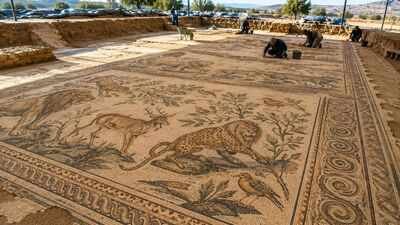
Mehmet Emin Sualp had woken up with the thoughts of a normal day on the farm. Residing in eastern Türkiye, the farmer was digging holes to plant seedlings of cherry trees on his land when he stumbled upon something that helped him change the history of the country. Buried less than 50 centimetres from the ground was a huge Roman mosaic covering the entire length of the land.
An accidental discovery
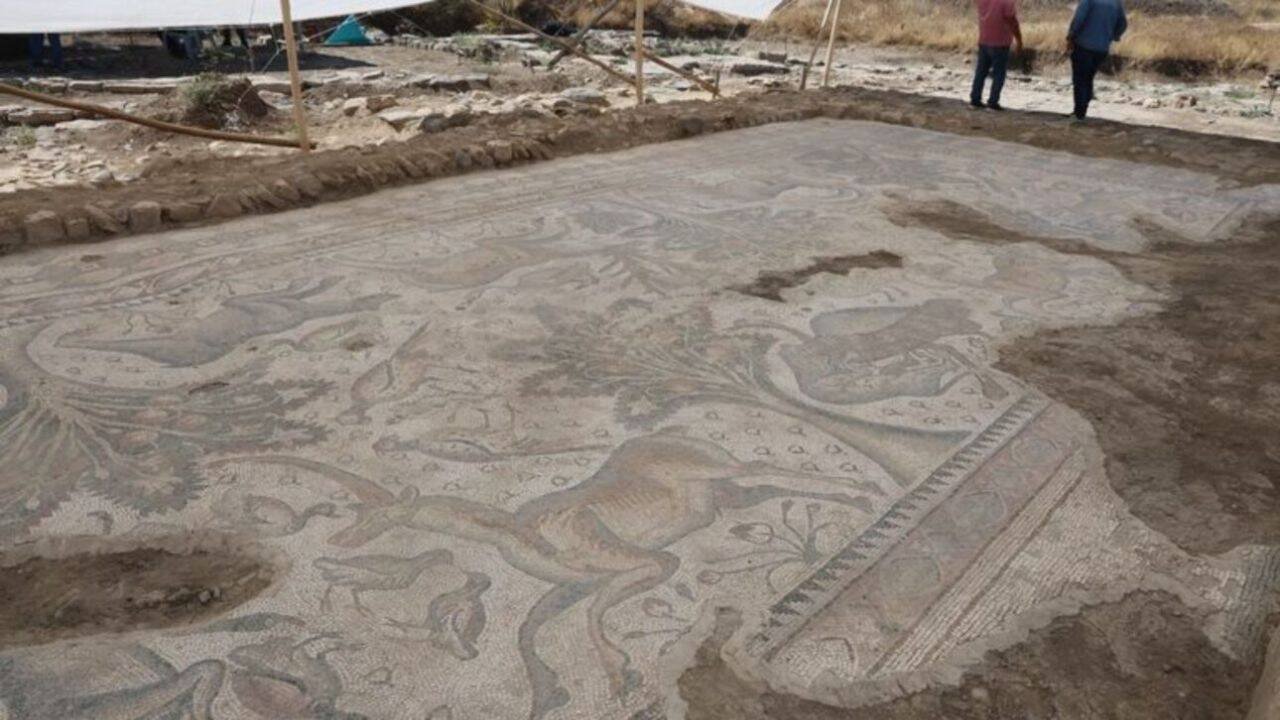
While digging holes in the soil, he noticed pieces of coloured stone forming patterns.
Sualp is a resident of the village of Salkaya, in the province of Elazig in eastern Türkiye. He had purchased a plot of land a few years ago and decided to prepare the land to cultivate seedlings. He was doing his daily workout routine when his life changed completely.While digging holes in the soil, he noticed pieces of coloured stone forming patterns. What initially seemed like a rock turned out to be a ground carrying an entire Roman mosaic.Instead of continuing to dig or trying to keep the pieces to himself, Sualp reported the discovery to the authorities, notifying the regional museum’s directorate and the local gendarmerie.Soon the case became an archaeology project. The Elazığ Museum Directorate, in coordination with the Ministry of Culture and Tourism, organised the excavation that would fully reveal the size and richness of the Roman mosaic hidden in that field.
An ancient tale of Anatolia
As soon as the archaeologists began to clear the area, what was revealed was an enchanting piece of history. The Roman mosaic extended over about 84 square meters in a single piece, a considerable size for this type of decorative floor. Experts assume that it probably covered the floor of an important building of the time.What is more surprising is the theme of the images in the mosaic. Instead of plain geometric figures, the floor is filled with animals and plants of all kinds. It is a true catalogue of the flora and fauna that inhabited Anatolia during the period, all in colourful stones.As per reports, the Roman mosaic shows lions, Anatolian leopards, mountain goats, deer, wild boar, bears, hunting dogs, ducks, geese and pheasants along with various trees and plants.
Timing and truth
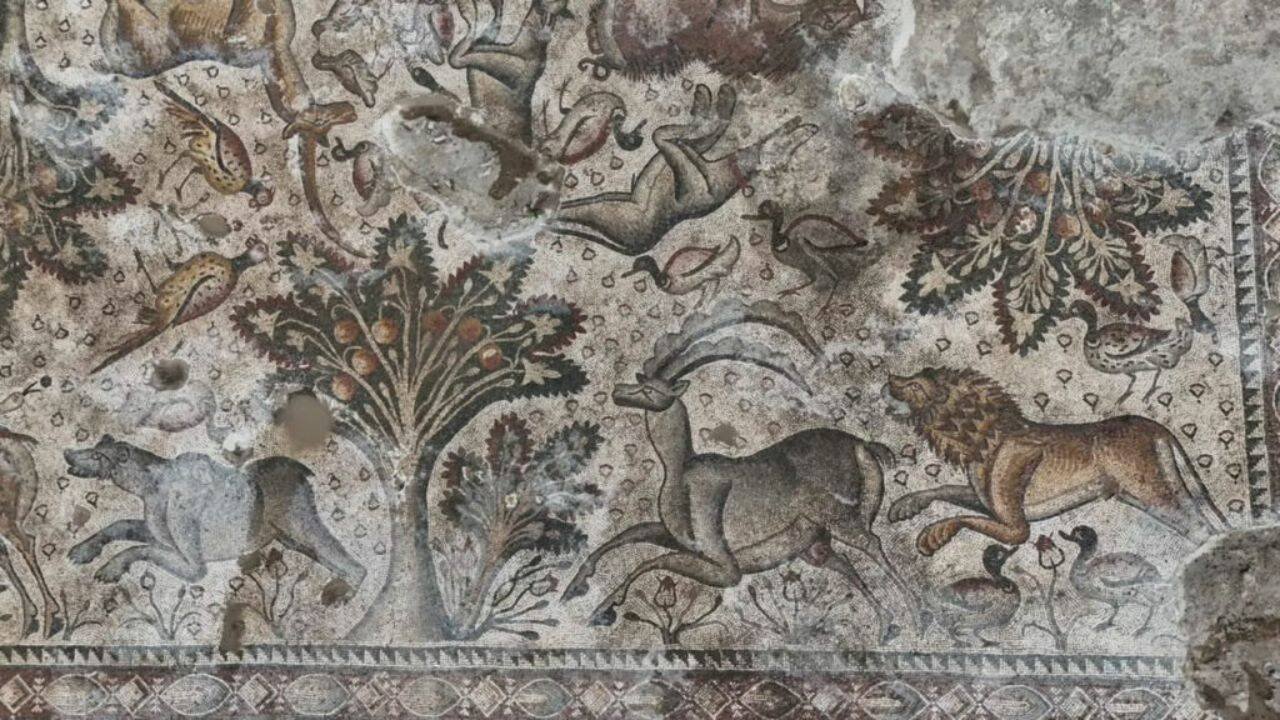
For archaeology, the species chosen to decorate the floor helps understand the society’s relationship with the surrounding nature.
The mosaic has a scientific value as well. For archaeology, the species chosen to decorate the floor helps understand the society’s relationship with the surrounding nature. Lions and Anatolian leopards are extinct or very rare in the region and thus, the mosaic works as an environmental record, showing the history of the fauna over the centuries.Moreover, the age of the floor places it at a moment of transition. At about 1,700 years old, the mosaic dates from a period that marks the end of the Roman Empire and the beginning of the Byzantine era. This is when present-day Türkiye was an important centre of the ancient world.Floors like this were status symbols. Detailed mosaics, made with thousands of small stones called tesserae, decorated the houses of wealthy families, villas, and public buildings. Commissioning such a large and elaborate Roman mosaic required money and specialised labour, a sign of who ruled the region.Researchers are still investigating which building the floor belonged to. A Roman mosaic of this size typically covered the hall of a luxurious villa, a wealthy rural property or a public building. Identifying the type of building will help figure out who lived there and the importance of the location at the time. The mosaic also goes beyond size and depiction to make history. As per reports, it is the first Roman mosaic in Türkey to survive intact and to depict together the animals that lived in the area.Türkiye is among the richest places in the world in ancient remains with numerous layers of overlapping civilisations underground. Romans, Greeks, Byzantines and many others left the cities, temples and decorated floors there. The ancient city of Zeugma, in southern Turkey, houses spectacular Roman mosaics, now gathered in a museum dedicated solely to them.Findings like the one in Salkaya show just how much of the country’s treasure still remains hidden across the land, waiting for someone to discover it.