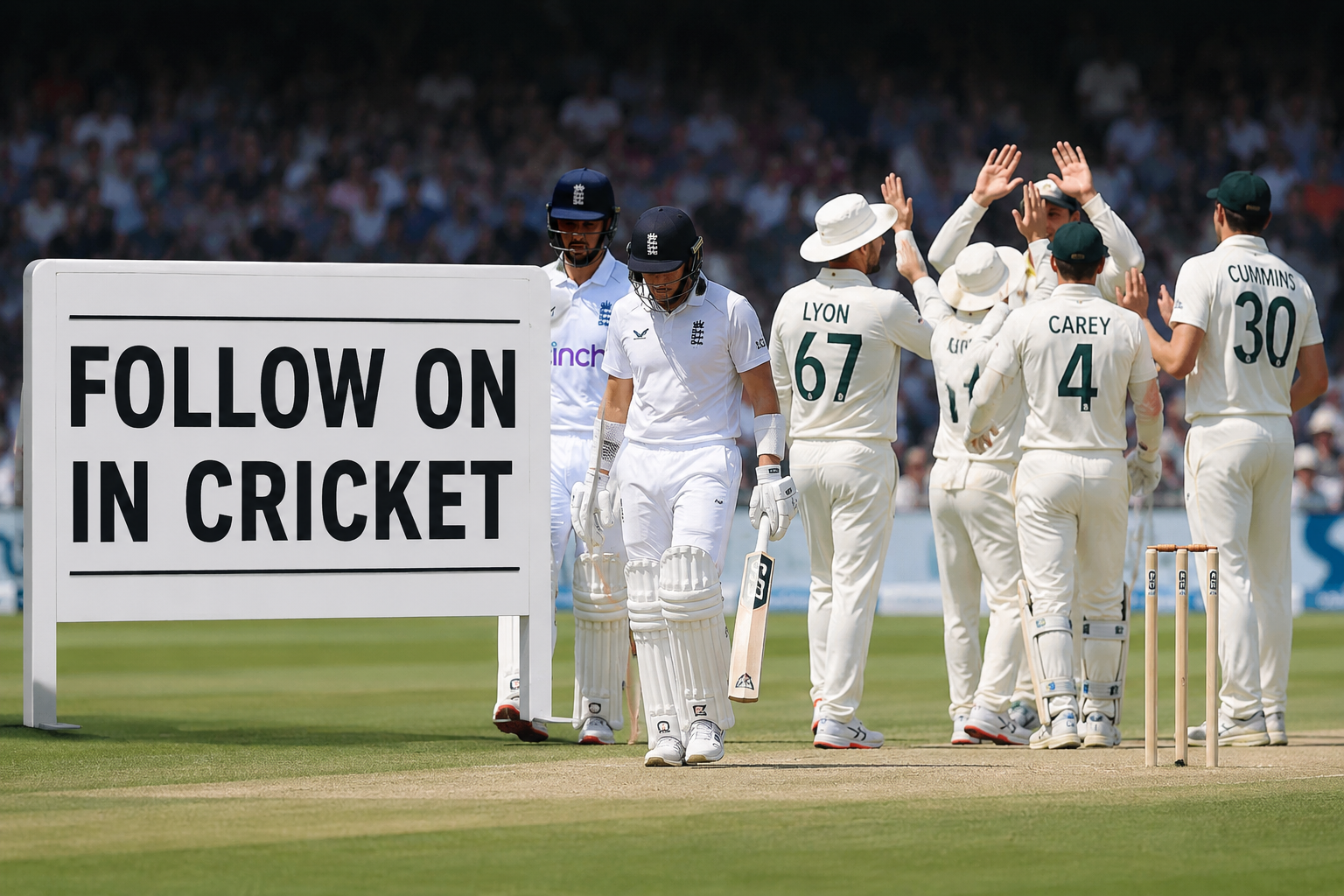
The follow-on rule is one of the special rules used only in Test cricket. It allows the team that batted first to make the other team bat again immediately if they are far behind after the first innings. This rule is used to save time and give the leading team a better chance of winning the match.
What Is the Follow-On?
A follow-on happens when the team batting second scores much fewer runs than the team batting first. If the difference in scores is large enough, the captain of the team batting first can ask the other team to bat again instead of batting a second time. The captain can choose to enforce the follow-on or bat again first.
Follow-On Rules
| Rule | Simple Explanation |
|---|---|
| Used in | Test cricket only |
| Who decides? | Captain of the team batting first |
| 5-day Test requirement | 200-run lead |
| Is it compulsory? | No, it is the captain’s choice |
| Purpose | Save time and increase the chance of winning |
Why Do Teams Enforce the Follow-On?
Teams may choose the follow-on to:
- Save time in the match.
- Put more pressure on the opposition.
- Increase their chances of winning.
- Avoid a draw.
Why Do Some Captains Not Enforce It?
Sometimes captains decide not to enforce the follow-on because:
- Their bowlers need rest.
- The pitch may become easier for batting later.
- They want to build a bigger lead before bowling again.
- They want to avoid tiring their fast bowlers.
Has a Team Ever Won After Following On?
Yes. Although it is very rare, a few teams have won after being asked to follow on. These matches are remembered as some of the greatest comebacks in Test cricket.
The follow-on rule is an important part of Test cricket. It allows the team with a big first-innings lead to make the opposition bat again immediately. While it can help a team win faster, captains must carefully decide whether enforcing the follow-on is the best strategy based on the match situation.